Economic Survey recommends Railway reforms & higher public investment
While the survey urges for greater public investment in railways to boost growth, it has recommended reform of railway's structure, commercial practices, overhaul of technology, etc
BS B2B Bureau Mumbai The Economic Survey 2014-15, presented in the Parliament today, has recommended that greater public investment in the railways would boost aggregate growth and the competitiveness of Indian manufacturing substantially. Observations are in line with Rail Budget, tabled yesterday by Railway Minister Suresh Prabhu, which has proposed greater public investment in its annual plan of Rs 1 lakh crore.
Survey said that there is merit in the case for reviving public investment as a key engine of growth in the short run - not to substitute for private investment but to compliment and promote further private investment. Economic Survey says that public investment in an efficient rail network can have positive effect on both manufacturing and aggregate output and the effects are permanent.
It advocated that there is a need for bold, accelerated programme of investment in dedicated freight corridors (DFCs) that can parallel the Golden Quadrilateral in the road sector along with associated industrial corridors. This impetus has the potential to boost greater private investment and do so without jeopardising India’s public debt dynamics. Such an initiative will transform Indian manufacturing industry with ‘Make in India’ becoming a reality.
The Economic Survey has called for large public investment in railways as there is a strong case for channelling resources to transport infrastructure in India given the widely known spillover effects of transport networks to link markets, reduce a variety of costs, boost agglomeration economies, and improve the competitiveness of the economy, especially manufacturing which tends to be logistics-intensive.
The Survey indicates that successive plans have allocated less resources to the railways compared to the transport sector and the share of railways in the total plan outlay is currently only 5.5% compared to about 11% for the other transport sectors and its share in overall development expenditure has remained low at below 2% over the past decade. China invests eleven times as much in per capita terms and underinvestment in the Indian Railways is also indicated by congestion, strained capacity, poor services, and weak financial health. Greater public investments once utilised efficiently can help the railways to overcome some of these problems.
In the long run, the railways must be commercially viable and public support for the railways should be restricted to equity support for investment by the corporatised railways entities and for funding the universal service obligations that it provides. In the interim, there is scope for public support of railways, including through assistance via the general budget.
However, any public support should be clearly linked to serious reform: of the structure of the railways; of their adoption of commercial practices; of rationalising tariff policies; and through an overhaul of technology, recommended the Economic Survey 2014-15.

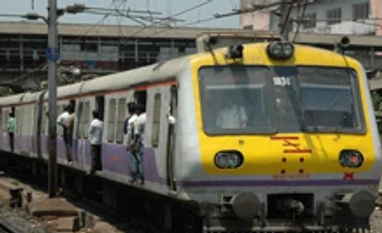 "Economic Survey recommends Railway reforms & higher public investment")


 Connect with us on WhatsApp