India’s aspiration to become atmanirbhar (self-reliant) relies on the success of its micro, small, and medium enterprises (MSMEs), which make up 90 per cent of businesses, some 30 per cent of the gross domestic product, and employ more than 120 million people. However, these firms face longstanding challenges in accessing working capital, hindering their operational continuity and growth. Reports indicate a staggering credit gap of Rs 25 trillion, with only 14 per cent of the 64 million MSMEs having access to credit.
Trade Receivables Discounting Systems (TReDS) – a digital bill-discounting platform – helps MSMEs convert their receivables into instant liquidity. Through digitisation of the invoice-discounting process, they gain access to working capital without recourse to traditional lenders, making finance more accessible and secure for them. Digitisation has quickly gained acceptance and witnessed consistent year-on-year growth, helping MSMEs in Tier-II and -III cities gain access to formal financing options that were previously out of their reach. By digitising invoices and leveraging them as collateral, these businesses can secure fundas quickly and efficiently.
It has led to a significant surge in adoption rates, exemplified by cumulative bill discounting of Rs 76,000 crore across the three TReDS platforms in 2022-23 (FY23). This impressive compound annual growth rate of 143 per cent since inception, can be attributed to the rising number of MSMEs and their buyer-companies opting for TReDS to ensure timely availability of financing against invoices.
Efforts are underway to integrate the TReDS platforms with various government initiatives and systems such as the Government e-Marketplace (GeM), the e-invoice Goods and Services Tax Network (GSTN) portal, and the Udyam-MSME registration platform. This integration is expected to streamline the documentation process by enabling real-time data sharing through a single access point for authenticated invoices. It will facilitate direct approval of MSME invoices and enable payment for goods procured through GeM via TReDS as a payment gateway. Additionally, this will help the government monitor invoice creation and the sanction and rejection rates, thereby encouraging more participation from state-run entities in TReDS.
These initiatives will enhance lender confidence, and expedite the loan-underwriting and -sanctioning process. Accessing information directly from the GSTN platform will provide greater assurance and credibility for invoices. Furthermore, the integration will contribute to the development of an alternative credit database, benefitting MSMEs with limited or poor credit histories.
The recent announcement by the Reserve Bank of India regarding the enhancement of TReDS with Trade Credit Insurance has opened opportunities for insurance companies to participate on the platforms and provide trade credit insurance coverage to financiers. Trade credit insurance of this nature will boost financier confidence by mitigating risk of payment for underrated buyers. This will lead to an expansion of financiers’ credit appetite, allowing them to offer higher credit limits and better terms. With reduced risk exposure and improved liquidity, financiers are more motivated to engage in more transactions on TReDS platforms and thereby attract more MSMEs.
It is truly surprising that around 5.9 per cent of the gross value added in the economy, equivalent to approximately Rs 10.7 trillion, is tied up in delayed payments. Despite the introduction of the Micro, Small and Medium Enterprises Development Act, 2006, to ensure timely payments, the issue persists.
To overcome this, discussions are ripe about integrating all digital public infrastructure to enable single-window access to e-invoices. The backbone of a unified digital ecosystem will be the TReDS platform.
It will be exciting to watch upcoming integrations that seamlessly provide supply-chain financing to MSMEs and help them unlock liquidity trapped in unpaid invoices.

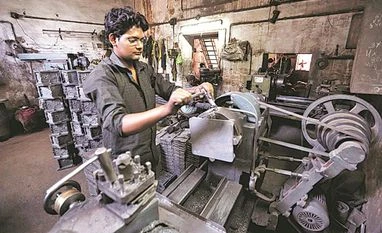 "Credit access for MSMEs depends on digitisation, integration of services")












 Connect with us on WhatsApp