Battlegrounds in the global AI war

A revolution is underway in several aspects of our life. "When AI Rules the World" details these groundbreaking changes
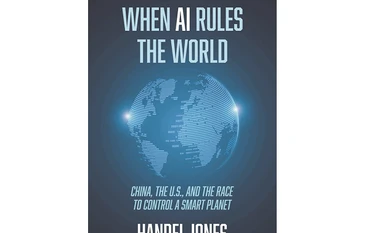
Book cover
When AI Rules the World: China, the U.S., and the Race to Control a Smart Planet
Ajit Balakrishnan
4 min read Last Updated : Nov 29 2022 | 10:57 PM IST
When AI Rules the World: China, the U.S., and the Race to Control a Smart Planet
Author: Handel Jones
Publisher: Post Hill Press
Pages: 224
Price: Rs 2,451

Handel Jones’ basic message is that the United States government must pour big money into Artificial Intelligence (AI) projects, otherwise, hold your breath, the US will lose it all to China in the international battle for world supremacy using AI. He says the war is already underway.
 

Also Read

Mr Jones believes that a revolution in several aspects of the world that we inhabit now has begun: In warfare, healthcare, cars, virtual reality and wireless. The author devotes his book to describing the revolutionary changes that are underway using AI in these five areas. The true value of the book lies in the detailed descriptions of these efforts.
 
Consider his chapter on the use of AI to improve healthcare. He points out that in the US, every year, more than 800 million medical X-ray scans are done creating 60 billion images. The real challenge, he says, is finding human medical technicians who can interpret these scanned images fast and accurately enough. Using AI techniques this job can be done much faster and more accurately than human radiologists, each of whom cost $400,000 a year. He also points to the critical role that AI can play in spotting skin cancer, a condition that, he says, afflicts more than 5 million Americans a year. The American healthcare industry, the largest employer in the US, employing 12 per cent of Americans, contributes heavily to making healthcare virtually unaffordable to most Americans. AI can bring their costs under control, the author says.
 
Each of the five chapters analyses in depth the challenges in these specific industries, both from the point of view of affordability as well as reliability and describes how the use of AI can do wonders.
 
But each stellar chapter ends on a note comparing American efforts to apply AI/machine Learning  with Chinese efforts, and points out how Chinese achievements in, for example, healthcare, are progressing faster, thanks to the intervention and funding by the Chinese government. And, he believes, the US government needs to step up its funding for American private sector efforts in these areas so that America can show its supremacy to the world.
 
Mr Jones, has authored another book titled Chinamerica: The Uneasy Partnership that Will Change the World, and has worked for decades in the technology and defence industries and has extensively travelled to China. He believes that the United States’ response to the AI revolution is ineffective largely because it is “weighed down by politics, bureaucracy, and an absence of clear strategy”.
 
He analyses why US companies are not taking the AI-revolution seriously and his comments on this are a serious indictment of the American political economy. He believes that since the 1980s, American companies have been increasingly focused on return on capital at the expense of long-term R&D and technology development. He also believes that the typical American investor holds any company’s shares for less than a year and thus does not emotionally engage in the long-term plans of these companies. And what is worse, American corporate leadership and capital markets focus on quarterly stock performance rather than any long-term goals. These factors make American companies avoid long-term bets on technologies like AI. He suggests revolutionary measures like a US government policy that will provide tax incentives to American companies and people for holding equity positions longer and “developing new metrics to measure long-term corporate performance that includes the value of R&D.”
 
The author stresses that the military applications of AI are also critical and that “the distance that separates Silicon Valley from the Pentagon stands in dramatic contrast to the situation in China. There, the Chinese government can insist that a company or a scientist work for the defence establishment. In fact, the Chinese government is so close to its technology sector that it is sometimes hard to tell whether there is any boundary line at all separating the military from the nation’s tech giants where work on AI is moving ahead at a fast clip”.
 
I could not but help thinking that if this analysis of how and why America is falling behind China in the emerging AI era makes sense, what can we say about India’s own meagre efforts in this area? This is what makes this book required reading for India’s policymakers.

The reviewer is an internet entrepreneur. ajitb@rediffmail.com

One subscription. Two world-class reads.

Already subscribed? Log in

Subscribe to read the full story →
*Subscribe to Business Standard digital and get complimentary access to The New York Times

Smart Quarterly

₹900

3 Months

₹300/Month

SAVE 25%

Smart Essential

₹2,700

1 Year

₹225/Month

SAVE 46%
*Complimentary New York Times access for the 2nd year will be given after 12 months

Super Saver

₹3,900

2 Years

₹162/Month

Subscribe

Renews automatically, cancel anytime

Here’s what’s included in our digital subscription plans

Exclusive premium stories online

  • Over 30 premium stories daily, handpicked by our editors

Complimentary Access to The New York Times

  • News, Games, Cooking, Audio, Wirecutter & The Athletic

Business Standard Epaper

  • Digital replica of our daily newspaper — with options to read, save, and share

Curated Newsletters

  • Insights on markets, finance, politics, tech, and more delivered to your inbox

Market Analysis & Investment Insights

  • In-depth market analysis & insights with access to The Smart Investor

Archives

  • Repository of articles and publications dating back to 1997

Ad-free Reading

  • Uninterrupted reading experience with no advertisements

Seamless Access Across All Devices

  • Access Business Standard across devices — mobile, tablet, or PC, via web or app

Topics :Artificial intelligenceBOOK REVIEWLiteratureChinaUnited States

Next Story



