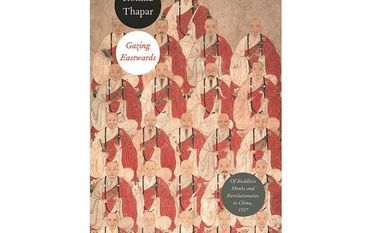
This book by the well-known historian Romila Thapar is a record of her travels and work in China in 1957, unmediated by hindsight and, therefore, evoking a past that comes sharply alive. She was in China for only a couple of months, undertaking field studies at two of the country’s outstanding Buddhist sites, Maijishan and Dunhuang. But her book is not about art history as much as about the country and the people she encounters during her travels. She feels comfortable in her relationships with individual and ordinary Chinese, even a strong affinity, and yet, as she observes, India and China are such different civilisational entities. Chinese ideograms are unique as is its obsessive recording of history. In India, the written word has little value and history is a distraction.
But the defining and enduring medium through which China and the Chinese have, over the centuries, related to India is, of course, Buddhism which since its entry into China in the 2nd century CE became an integral component of Chinese culture. The art history project that took Dr Thapar to China itself reflected that history of cultural borrowing and assimilation that eventually transformed China into an alternate Buddhist universe with its own places of pilgrimage and doctrinal interpretations. India attracted Chinese monks in search of authentic Buddhist scriptures and much besides. Indian monks came to China to preach and translate Sanskrit texts for their patrons. But while the Chinese visitors to India left behind invaluable accounts of the country they called the Western Paradise, we find little reciprocal interest or curiosity among their Indian counterparts. This lack of curiosity has continued and there are very few people in India with a deep and granular understanding of China and its people. Despite her short stay in China, it is truly remarkable that Dr Thapar formed impressions of China that appear far more discerning and insightful than many scholarly readings available today. There is just one minor mistake. Lao She, the celebrated Chinese writer, is not female as mentioned in the book.

 "China's past in the present")












 Connect with us on WhatsApp