India's tryst with free enterprise

Merchants from the north or south of India looked up to the state for mainly one role and that was the provision of political security
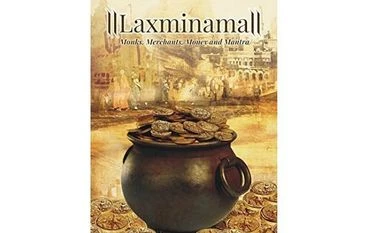
book
Image: Amazon.in
Subhomoy Bhattacharjee
Last Updated : Dec 26 2018 | 8:25 PM IST
Laxminama: Monks, Merchants, Money and Mantra 
Anshuman Tiwari & Anindya Sengupta
Bloomsbury India, 
Rs 699, 435 pages

If India and China have been the two leading economies for a decent part of recorded history, it should follow that the two countries were doing something right in their approach to trade and business. There must have been one, or even more than one, congruent line of thought on business, on money and on fiscal matters. Did no one take notes, or had Kautilya’s Arthashastra written about 2,000 years ago solved all these questions for the future? To presume that would be a bit rich. 

Laxminama does not get around to answering that question. But this book from business journalists Anshuman Tiwari and Anindya Sengupta is rich with amazing details about the business life of India beginning from the Harappan civilisation till the present era and can be considered a fine entry to start thinking about these issues. It recounts Indian history from this fresh perspective rather than letting the economic life remain an addendum to other strands. 

The narration serves as a clear reminder that India had a cheerful respect for free enterprise till it brushed up against the political economy of government control, an idea that was clearly Europe-centric. Merchants from the north or south of India looked up to the state for mainly one role and that was the provision of political security. When the state failed to do even that, the merchants stepped into the breach. This is illustrated in the development of the concept of Nagarseth, first in Ahmedabad and then in other cities in the 18th century. 

“In 1724 amidst a general atmosphere of chaos and lawlessness, Ahmedabad fell to the invading Maratha marauders. As a petrified city waited for absolute plunder, head of the jewellers guild…Khushalchand came forward and paid an enormous ransom out of his own pocket...A grateful city, particularly the business community hailed Khushalchand as the saviour and decided that Khushal and his family would receive a small share of each business transaction in the city in perpetuity” (sic). Messrs Tiwari and Sengupta remarked that Nagarseth merchants like Khushalchand did not head any corporate body of merchants, but were, instead, the bridge between the rulers and the most influential group of citizens in the city.

The merchants seemed to have little respect for the fluid political geographies of Asia, working instead as one economic community, ranging from Astrakhan to Varanasi. Thus, Armenian merchant Hovhannes Joughayetsi travelled, in Marco Polo mode, from Bandar Abbas in Iran landing at Surat in India. He took in Tibet and Nepal too. His business as cloth merchant made him visit “almost all the important towns of India…(operating) essentially as an arbitrage trader”. That a foreigner could do such business across vastly contrasting political entities demonstrates what the authors classify as a “larger Asian world system of traders”. They go on to argue that an element of this system was the development of mercantilism before Europe cottoned on to it, though one feels the depth of a transcontinental monetary arrangement was the more impressive line of development. Traders seem to have dived into international trade floating blithely on this robust arrangement of clearing houses. There is also a tantalising promise of an excursion into the role of religion in the flowering of business but the topic is strewn across the chapters instead of being assessed in its own right. 

In fact, it is pity, that although Messrs Tiwari and Sengupta eschew their media hats to take on a masterly survey of Indian business history, they do not delve further into the details of what constituted this pan-Asian system that worked for millennia, except to offer vignettes like Joughayetsi’s business voyage. This weakness could be the result of the multiple historical events that the book explores, forcing it to skim across subjects rather than examine them in greater depth. There are granular details of episodes in Indian history that could have been packed into appendices for those interested. For instance, the first chapter adds little to the development of the book since the themes examined there do not recur in later chapters. The same could be said of the last section that dwells on Indian business in the modern era, which offers little by way of fresh insights. 

The book may have been enriched had the authors examined the strands of economic principles over the centuries instead of tackling the subject matter chronologically. They certainly demonstrate the ability to harness these disparate strands to provide a perspective on a line of work that they have begun so well.

One subscription. Two world-class reads.

Already subscribed? Log in

Subscribe to read the full story →
*Subscribe to Business Standard digital and get complimentary access to The New York Times

Smart Quarterly

₹900

3 Months

₹300/Month

SAVE 25%

Smart Essential

₹2,700

1 Year

₹225/Month

SAVE 46%
*Complimentary New York Times access for the 2nd year will be given after 12 months

Super Saver

₹3,900

2 Years

₹162/Month

Subscribe

Renews automatically, cancel anytime

Here’s what’s included in our digital subscription plans

Exclusive premium stories online

  • Over 30 premium stories daily, handpicked by our editors

Complimentary Access to The New York Times

  • News, Games, Cooking, Audio, Wirecutter & The Athletic

Business Standard Epaper

  • Digital replica of our daily newspaper — with options to read, save, and share

Curated Newsletters

  • Insights on markets, finance, politics, tech, and more delivered to your inbox

Market Analysis & Investment Insights

  • In-depth market analysis & insights with access to The Smart Investor

Archives

  • Repository of articles and publications dating back to 1997

Ad-free Reading

  • Uninterrupted reading experience with no advertisements

Seamless Access Across All Devices

  • Access Business Standard across devices — mobile, tablet, or PC, via web or app

Next Story



