Book review: Capturing 365 historical events, one for each day of the year

A TV presenter makes history come alive by focusing on an event that took place on each day in the calendar, but from an essentially Western perspective
weekend
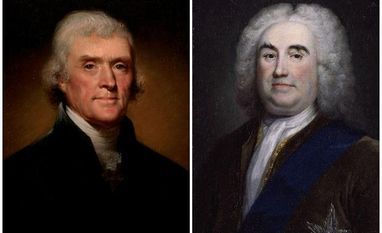
The 1804 purchase of France’s Louisiana Territory by American President Thomas Jefferson; and the appointment of Robert Walpole as Britain’s First Lord of the Treasury
Rajiv Shirali
Last Updated : Dec 21 2018 | 10:32 PM IST

Don't want to miss the best from Business Standard?

ON THIS DAY IN HISTORY
Author: Dan Snow
Publisher: Hachette India
Price: Rs 699
Pages: 412

Dan Snow writes in his introduction to On This Day in History that the book is an attempt to explore our past by focusing on a single event that took place on each day of the calendar, from January 1 through December 31, and providing a little context “about the events that we choose to remember, and others that we have forgotten”. The descriptions are succinct, with each event dealt with on a single page. Each of the 366 entries, the author aptly points out, is the merest tip of the iceberg; an entire book could be written about each event. The result is a collection of fascinating accounts, but also many more forgettable ones. 

Some events are well-known, others less so. Did you know, for example, that the income tax in its modern form was levied for the first time on January 9, 1799 (in Britain); or that The Age of Oil dawned on January 10, 1901 when black gold was discovered in Texas; or that the Russian Revolution in 1917 was heralded by women, not men, taking to the streets on March 8 that year; or that on March 10, 1804 the then American President Thomas Jefferson purchased France’s Louisiana Territory for $15 million (Napoleon needed the cash to finance his European wars) and doubled the size of the United States, transforming it from a collection of states on the East Coast to a continental power; or that the first-recorded post mortem in history was conducted on the body of Roman dictator Julius Caesar, who was assassinated on March 15, 44 BCE; or that Napoleon and Hitler invaded Russia on the same day (June 22), 129 years apart, with the same disastrous consequences; or that the setting up of the world’s first central bank (the Bank of England), which would transform government finances and be copied the world over, took place as far back as July 27, 1694?

One event of great consequence was the appointment on April 4, 1721 of Robert Walpole as Britain’s First Lord of the Treasury — the man who during his 20-year tenure forged the role of prime minister and created the institution of cabinet government, which has been borrowed by parliamentary democracies around the world. He also served as a bridge between the monarch and Parliament at a time when the relationship between the two was ill-defined. A grateful George II presented him with a house — 10, Downing Street. Walpole accepted, on the condition that it went strictly with the territory, and his successors have inherited it with the job of prime minister ever since.

The 1804 purchase of France’s Louisiana Territory by American President Thomas Jefferson; and the appointment of Robert Walpole as Britain’s First Lord of the Treasury
Coming to a more recent event, it is common knowledge that the British broke German military codes during World War II, which helped shorten the war and changed its outcome. Snow tells us that this became possible because a handful of Royal Navy sailors from the HMS Bulldog boarded a sinking German U-boat (which the destroyer had crippled with a depth charge) in the Atlantic on May 9, 1941 and secured an Enigma decryption device and codebooks. 

But many of the entries relate to minor European events that can have little interest outside the countries where they occurred. The book is highly Euro-centric and, even more, Anglo-centric. For instance, the entry for January 31, 1953 focuses entirely on British casualties during the catastrophic floods that struck Britain and its North Sea neighbours that day, when the death toll in the Netherlands (a country not once mentioned in the account) was six times higher. The selections for other countries sometimes defy explanation. The entry for August 15 is for the year 1281 CE, when Chinese emperor Kublai Khan’s naval fleet was destroyed in a typhoon while preparing to invade Japan. Indian independence is nowhere mentioned, though India was considered the “jewel in the crown” of the British Empire.

Snow writes that his aim was to “choose days whose events continue to reverberate today”. Many entries almost certainly fail this test, undermining the attempt to make it a unifying theme. There are three Indian entries — the crowning of Bahadur Shah I as Mughal Emperor on June 19, 1707, the departure of the last British troops from India on February 28, 1948 and the celebration of January 26 by Indians as Republic Day (and by Australians as Australia Day — the day the British arrived in that country). However, the reason for including Bahadur Shah I, an unremarkable ruler who died less than five years later, isn’t clear. Nowhere is it mentioned that this was the dawn of a new era of weak rulers following the death of Aurangzeb.

Snow, who is not an academic historian, has taken history to a popular level as a television presenter. And he has made history — of kings and commoners as well as industry and the sciences — come alive in these pages. But his is a Western perspective, and he has elevated British and European trivia to the status of events that “continue to have an influence on the present and the future”.

One subscription. Two world-class reads.

Already subscribed? Log in

Subscribe to read the full story →
*Subscribe to Business Standard digital and get complimentary access to The New York Times

Smart Quarterly

₹900

3 Months

₹300/Month

SAVE 25%

Smart Essential

₹2,700

1 Year

₹225/Month

SAVE 46%
*Complimentary New York Times access for the 2nd year will be given after 12 months

Super Saver

₹3,900

2 Years

₹162/Month

Subscribe

Renews automatically, cancel anytime

Here’s what’s included in our digital subscription plans

Exclusive premium stories online

  • Over 30 premium stories daily, handpicked by our editors

Complimentary Access to The New York Times

  • News, Games, Cooking, Audio, Wirecutter & The Athletic

Business Standard Epaper

  • Digital replica of our daily newspaper — with options to read, save, and share

Curated Newsletters

  • Insights on markets, finance, politics, tech, and more delivered to your inbox

Market Analysis & Investment Insights

  • In-depth market analysis & insights with access to The Smart Investor

Archives

  • Repository of articles and publications dating back to 1997

Ad-free Reading

  • Uninterrupted reading experience with no advertisements

Seamless Access Across All Devices

  • Access Business Standard across devices — mobile, tablet, or PC, via web or app

Next Story


