
Climate change will decrease number of fish species, says report
The researchers noted that previous studies of shifting habitat ranges focused on the direct impacts of climate change on individual species
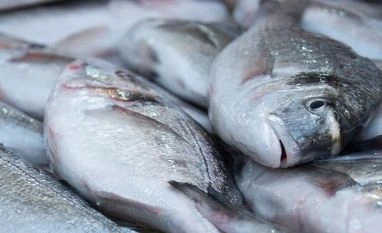 "Climate change will decrease number of fish species, says report")
WebinarsNew
Deep DiveNew
Explore Business Standard
The researchers noted that previous studies of shifting habitat ranges focused on the direct impacts of climate change on individual species
Warming of the oceans due to climate change will lead to decline in productive fish species in the future, according to a study.
The research, published in the journal Proceedings of the Royal Society B, found that as temperatures warm, predator-prey interactions will prevent species from keeping up with the conditions where they could thrive.
The researchers noted that not only will large species and commercially important fisheries shift out of their historical ranges as climate warms, but they will likely not be as abundant even in their new geographic ranges.
For example, a cod fisherman in the Atlantic might still find fish 200 years from now but in significantly fewer numbers, they said.
"What that suggests from a fisheries perspective is that while the species we fish today will be there tomorrow, they will not be there in the same abundance," said study co-author Malin Pinsky, an associate professor at the Rutgers University in the US.
"In such a context, overfishing becomes easier because the population growth rates are low. Warming coupled with food-web dynamics will be like putting marine biodiversity in a blender," Pinsky said.
The researchers noted that previous studies of shifting habitat ranges focused on the direct impacts of climate change on individual species.
While these "one-at-a-time" species projections offer insights into the composition of ocean communities in a warming world, they have largely failed to consider how food-web interactions will affect the pace of change, the researchers said.
The latest study looked at trophic interactions -- the process of one species being nourished at the expense of another -- and other food-web dynamics to determine how climate change affects species' ranges.
Using sophisticated computer models, the researchers determined that predator-prey interactions cause many species, especially large predators, to shift their ranges more slowly than climate.
"The model suggests that over the next 200 years of warming, species are going to continually reshuffle and be in the process of shifting their ranges," said study lead author E W Tekwa, a former Rutgers postdoc, now at the University of British Columbia in Canada.
"Even after 200 years, marines species will still be lagging behind temperature shifts, and this is particularly true for those at the top of the food web," Tekwa said.
As climate warms, millions of species are shifting poleward in a dramatic reorganisation of life on Earth.
However, our understanding of these dynamics has largely ignored a key feature of life -- animals and other organisms must eat.
The researchers have filled this knowledge gap by examining how the basic need for nourishment affect species' movements.
They developed a "spatially explicit food-web model" that included parameters such as metabolism, body size and optimal temperature ranges.
By accounting for climate change, their model revealed that dynamic trophic interactions hamper species' ability to react quickly to warming temperatures.
They also found that larger-bodied top predators stay longer than smaller prey in historical habitats, in part because of the arrival of new food sources to their pre-warming ranges.
"These dynamics will not only be in one place but globally. That does not bode well for marine life, and this is not an effect that has been widely recognised," Pinsky added.
(Only the headline and picture of this report may have been reworked by the Business Standard staff; the rest of the content is auto-generated from a syndicated feed.)
First Published: Apr 13 2022 | 5:28 PM IST


 Connect with us on WhatsApp