Excess irrigation affects Indian monsoon, fuels extreme weather: Study
Excess irrigation over north India shifts the September monsoon rainfall towards the northwestern part of the subcontinent and increases widespread weather extremes across central India
Press Trust of India New Delhi Excess irrigation over north India shifts the September monsoon rainfall towards the northwestern part of the subcontinent and increases widespread weather extremes across central India, according to a latest climate study.
These meteorological hazards expose the vulnerable farmers and their crops to risks of failure.
The study, which establishes that monsoon precipitation is sensitive to the choice of irrigation practices in South Asia, can help plan agricultural practices in this region.
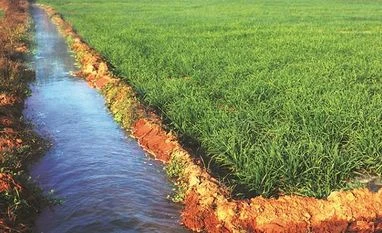
South Asia is one of the most heavily irrigated regions of the world, largely using groundwater, and its major summer crop is paddy, which is cultivated in water-flooded fields.
Hence, it was pertinent to study how such practices can influence the monsoon, which form the fulcrum of this agro-based economy, according to the researchers.
The impact of agricultural water use on the Indian summer monsoon was investigating using a climate model by Subimal Ghosh, Professor in Department of Civil Engineering and Convener at Interdisciplinary Programme in Climate Studies (IDPCS) at IIT Bombay with support from the Department of Science and Technology and his climate group.
The research published in the journal 'Geophysical Research Letters' recently showed that monsoon precipitation is sensitive to the choice of irrigation practices in South Asia.
In another study, Professor Subhankar Karmakar from IIT Bombay and his research group identified for the first time that risks for rice and wheat have increased in the recent decade, with wheat at a two-fold higher magnitude than rice.
The study followed the Assessment Report 5 of IPCC definition to quantify 'Risk' and has been published in 'Environmental Research Letters.'
Increasing crop risk is predominantly driven by the decreasing number of farmers and the wheat risk is also attributed to increasing minimum temperatures during the crop growing season, it said.
This study provided compelling evidence indicating that the hydro-climatic hazards related to precipitation extremes and drought are specifically alarmingly increasing the crop risk as compared to temperature extremes.
Another finding obtained from this study was that extreme rainfall in recent decades in central India has been increasing, and this is also caused by an increase in irrigation and consequent increase in evapotranspiration (the sum of evaporation from the land surface plus transpiration from plants).
The findings on irrigation-monsoon feedbacks and the agri-cartographic products will directly benefit the National Initiative on Climate Resilient Agriculture by the government.
(Only the headline and picture of this report may have been reworked by the Business Standard staff; the rest of the content is auto-generated from a syndicated feed.)

 "Excess irrigation affects Indian monsoon, fuels extreme weather: Study")


 Connect with us on WhatsApp