On the road adjoining the Singur Bazar area, Lakshmikanta Ghosh, is waiting expectantly for a customer to walk into his sweet shop, Rakshamata Mistanna Bhandar. But no one does, and his hopes are fast fading. The worry lines show up as Ghosh says, "In the next one hour also, no one may come." Since the West Bengal government allowed relaxations for sweet shops during the lockdown earlier this week, there have hardly been any customers, which is making the owner anxious.
Ghosh is one of the few in the area who owns 8 cows and two buffalos. The daily cattle feed for each costs about Rs 180-200. Right now, the loss per day is about Rs 1,500-2,000. Is there a point in keeping the shop open? Either way, we will lose, he explains, as about 15 litres of milk is being wasted every day. "If this continues, we might have to sell the cows or buffalos," he says.
The lockdown has hit Singur's inhabitants hard in more ways than one. Forty-five-year-old Aurobinda Das is finding it hard to get labourers to work on his two-bigha agricultural land. His vegetables produce has come down by half. "The labourers would have done the treatment on the land and the yield would have been much higher. Like, children, they need to be looked after," he said.
Potatoes, however, have given him good prices. Singur produces around 2-3 per cent of West Bengal's potatoes and the state is one of the largest producers of potatoes in the country. The store loading of potatoes has just been completed.
Das's income has gone down, while prices of daily items has gone up. "Is it possible to make ends meet like this," he asks. But he has heard that from next week, he will get free ration.
As part of the relief package amid the coronavirus outbreak, the West Bengal government has decided to offer free ration till September. People getting subsidised rice at Rs 2 a kg and wheat at Rs 3 a kg will now get it free. The maximum cap is 5kg a month. But Das and his family need close to a kilo of rice a day.
Of the 1,000 acres allocated for the factory, 400 acres was used for agriculture. Bagui says, "Times are not good, I have to borrow to keep things going."
Singur is where Tata Motors had decided to set up its Nano plant in 2006. But a land agitation, led by Mamata Banerjee, forced it to pull out and unseated the Left Front ending its 34-year rule in Bengal, paving the way for Trinamool Congress. At the height of the agitation and after, the decibel level at Singur has always been high; the Covid-19 scare, however, appears to have tempered it.
Save for some people at the bazar, Singur is near-deserted. The usual huddle around the deep tube well, at the nooks and corners is missing. About forty kilometres from Kolkata, it has been replaced by heightened awareness about the virus pandemic.
"In the first three days of the lockdown, I sold masks worth Rs 1000-1,500 a day," says a man selling them at Rs 10 and Rs 20 a piece. Supplies are coming from a local hosiery factory that is now shut. But now the frenzy appears to be dying down. Most of them have already bought masks, he points out to a few at the bazar.
The bazar is well stocked for now. There is no dearth of vegetables; the only issue is with the supplies from Kolkata. The bigger kirana stores source a lot of supplies from Posta Bazar, the wholesale market in Kolkata. In turn, they serve the smaller ones. But Posta Bazar is fully functional, a fraction of the shops are open on rotational basis.
Jagadhatri Bhandar got its supply of pulses, soyabean and spices last week from there. But people have been buying double of what they normally do. So he will have to stock up again. But vehicles are not available from Kolkata. Even if they are, charges are much higher, says Anup Dey. He now has to hire a small van from Singur and take it to Kolkata, which works out cheaper.
Supplies are getting choked all over the country due to restrictions on movement of trucks. At Dunkuni, about 18km from Singur, and along the national highway, scores of trucks are seen parked. The only ones moving are the LPG tankers.

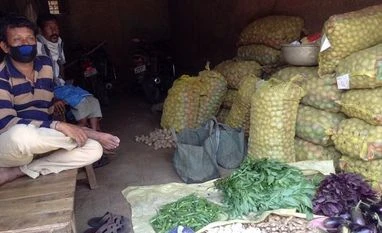 "West Bengal's Singur facing difficult times amid the coronavirus lockdown")










 Connect with us on WhatsApp