Centre permits conversion of surplus rice to ethanol for hand sanitisers

Move will lead to use of part of a stockpile of 30.57 million tonnes, which is almost 126% more than the buffer stock and strategic requirement norms
coronavirus, sanitiser, police
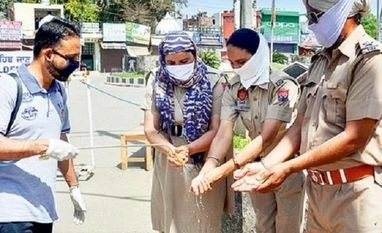
The ethanol produced will be used for making alcohol-based hand-sanitizers and for blending in petrol.
Shine JacobSanjeeb Mukherjee New Delhi
3 min read Last Updated : Apr 21 2020 | 2:11 AM IST
The government on Monday allowed the conversion of surplus rice, available with the Food Corporation of India (FCI), to ethanol. The development comes at a time when loopholes in the Public Distribution System (PDS) are keeping people away from getting free or subsidised grains.
 
This will lead to utilisation of part of a huge stockpile of 30.57 million tonnes (mt) of rice (as of March 10) —almost 128 per cent more than the buffer stock and strategic requirement norms. Ethanol produced from this will be used for utilisation in making alcohol-based hand sanitizers and blending in petrol.
 
The decision was taken by a group of experts under the National Biofuel Coordination Committee (NBCC), chaired by Petroleum Minister Dharmendra Pradhan, on Monday. The National Policy on Biofuels, 2018, states that during an agriculture crop year, when there is projected oversupply of food grains as anticipated by the ministry of agriculture and farmers welfare, the policy will allow conversion of these surplus quantities of food grains to ethanol.

At present, the government is saddled with huge rice stock from previous years. The stock does not include the 19.23 mt of unmilled paddy lying with millers on behalf of FCI.
 
On March 26, the government had decided to give 5 kg wheat or rice and 1 kg of preferred pulses free of cost to 800 million people, under the National Food Security Act (NFSA).
 
The 5 kg grains are over and above the regular PDS allotment. This will, according to estimates, absorb close to 11 mt more rice from the Centre’s pool.

However, many poor people are unable to get the benefit out of it, due to loopholes in the PDS network. For example, in several states, a large chunk of ration card holders may not be eligible for the free grains, as they are not covered under the food security act.
Other than this, the National Food Security Act implemented in 2013 based on the Census of 2011, had not factored in the population increase in over nine years, leaving a large chunk of people out of the government sop.
 
The government had already clarified that the disposal would be strictly monitored to allay any misconception that food stock was wasted for fuel, when millions of children remain malnourished.
 
Using surplus rice for ethanol will address the concern of about 750 million litres of grain-based distillery capacities lying idle, due to lack of feedstock, to some extent. Further, this would absorb some of the surplus rice lying with the FCI, which is estimated to be several times the required quantity.
 
The total capacity of grain-based distilleries in the country is close to 2 billion litres, of which around 38 per cent (750 million litres) was lying unused a few months back on account of lack of feedstock availability.
 

One subscription. Two world-class reads.

Already subscribed? Log in

Subscribe to read the full story →
*Subscribe to Business Standard digital and get complimentary access to The New York Times

Smart Quarterly

₹900

3 Months

₹300/Month

SAVE 25%

Smart Essential

₹2,700

1 Year

₹225/Month

SAVE 46%
*Complimentary New York Times access for the 2nd year will be given after 12 months

Super Saver

₹3,900

2 Years

₹162/Month

Subscribe

Renews automatically, cancel anytime

Here’s what’s included in our digital subscription plans

Exclusive premium stories online

  • Over 30 premium stories daily, handpicked by our editors

Complimentary Access to The New York Times

  • News, Games, Cooking, Audio, Wirecutter & The Athletic

Business Standard Epaper

  • Digital replica of our daily newspaper — with options to read, save, and share

Curated Newsletters

  • Insights on markets, finance, politics, tech, and more delivered to your inbox

Market Analysis & Investment Insights

  • In-depth market analysis & insights with access to The Smart Investor

Archives

  • Repository of articles and publications dating back to 1997

Ad-free Reading

  • Uninterrupted reading experience with no advertisements

Seamless Access Across All Devices

  • Access Business Standard across devices — mobile, tablet, or PC, via web or app

Topics :Coronavirusethanol productionethanolBiofuelNational Biofuel PolicyDharmendra Pradhanfood securityPDSIndia's PDS systemNational Food Security ActFood Corporation of India

Next Story



