Banks have weathered Covid-19 shock better than expected: RBI Governor

Gross NPAs and capital adequacy ratios of scheduled commercial banks have further improved in September from June levels
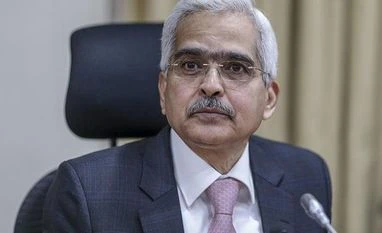
RBI Governor Shaktikanta Das
RBI Governor Shaktikanta Das | Photo: Bloomberg
Subrata Panda Mumbai
4 min read Last Updated : Nov 16 2021 | 6:06 PM IST
Endorsing the fact that the banking system has come out of the pandemic relatively unscathed, Reserve Bank of India (RBI) governor Shakitkanta Das said banks have weathered the Covid-19 shock better than expected and as per early trends, the gross non-performing assets (NPAs) and capital adequacy ratios of scheduled commercial banks have further improved in September 2021 from their levels in June.

“Banks have also been prudent in raising capital, profitability metrics of several banks are also at the highest level in several years. The improved parameters partly reflect regulatory relief provided to banks during Covid-19 as well as fiscal guarantees and fiscal support given by the government," the governor said at the SBI economic conclave on Tuesday.

Several private sector and public sector banks have posted record quarterly profits in the July-September quarter, driven by lower provisions.

The governor, however, cautioned that going forward, there are risks and challenges which require serious introspection and action on the part of the banking system. “First, the Covid-19 episode provides a real-life episode to take a fresh look at certain aspects of existing prudential regulatory norms for financial entities regulated by the RBI,” the governor said.

We are faced with question of capital and provisioning buffers of banks, their adequacy and resultant usability during a crisis. I would strongly urge the banks to focus and further improve their capital management processes with a forward looking, scientific, and prudent approach, he said. Both public and private sector banks had raised capital in the past to deal with disruptions and the challenges posed by the pandemic and provide adequately against the vulnerable assets.

“The key point is to envisage the capacity for loss absorption as an ongoing responsibility of the lending institutions. It is expected that the banks will exhibit prudent risk-taking behaviour and use their capital efficiently,” the governor said.

He also stressed on the fact that good-governance is a necessity for having a well-functioning, strong, and resilient financial institution.

Since banks have the privilege of raising deposits from the public, it puts the onus on them to conduct their business in a very responsible manner.

“The board of directors carry the responsibility of being guardians of the trust that the depositors have reposed in a bank. A bank’s responsibility towards a depositor should therefore be weighed against its responsibility towards shareholders of the bank,” Das said.

To ensure good governance, the RBI has high expectations from the oversight role of the board of directors of the banks, he added. Hence, business priorities need to be complemented with responsible governance and ethical actions.

"In their endeavor to grow, banks should avoid herd mentality and look for differentiated business strategies. At the RBI, we have started taking a closer at the business model and strategies of banks. Certain banks had followed the high risk and high return strategy with a skewed priority for serving only the interest of their investors," Das said.

Therefore, the active role of the board in challenging the proposals of the management thus becomes critical.

Das also cautioned the banking system that as the regulatory measures unwind, stress in the system may rise, something which the bankers themselves have been pointing out.

“As the support measures start unwinding, some of these restructured accounts might face solvency issues over the coming quarters. Prudence would warrant proactive recognition of such non-viable firms for pragmatic resolution measures,” Das said.

Speaking on the economy, Das said, while the economy is getting back on its feet, the recovery process has been uneven. “Contact-intensive services are still to regain the lost capacity despite rapid improvement in the recent period. The Q1:2021-22 data on GDP revealed that there still exists a significant gap in both private consumption and investment, relative to their pre-pandemic levels in 2019-20,” Das said.

Hence there is a case for sustained impetus so that growth could return to, or better still, exceed the pre-pandemic trend. “I firmly believe that India has the potential to grow at a reasonably high pace in the post-pandemic scenario,” Das said. 

One subscription. Two world-class reads.

Already subscribed? Log in

Subscribe to read the full story →
*Subscribe to Business Standard digital and get complimentary access to The New York Times

Smart Quarterly

₹900

3 Months

₹300/Month

SAVE 25%

Smart Essential

₹2,700

1 Year

₹225/Month

SAVE 46%
*Complimentary New York Times access for the 2nd year will be given after 12 months

Super Saver

₹3,900

2 Years

₹162/Month

Subscribe

Renews automatically, cancel anytime

Here’s what’s included in our digital subscription plans

Exclusive premium stories online

  • Over 30 premium stories daily, handpicked by our editors

Complimentary Access to The New York Times

  • News, Games, Cooking, Audio, Wirecutter & The Athletic

Business Standard Epaper

  • Digital replica of our daily newspaper — with options to read, save, and share

Curated Newsletters

  • Insights on markets, finance, politics, tech, and more delivered to your inbox

Market Analysis & Investment Insights

  • In-depth market analysis & insights with access to The Smart Investor

Archives

  • Repository of articles and publications dating back to 1997

Ad-free Reading

  • Uninterrupted reading experience with no advertisements

Seamless Access Across All Devices

  • Access Business Standard across devices — mobile, tablet, or PC, via web or app

Topics :CoronavirusBanksRBI Governor

Next Story



