RBI's core income growth takes a hit as global interest rates decline

The central bank's core earnings or interest income from its rupee and forex assets were up just 2.3% year-on-year in FY20 despite 30% rise in its assets during the year
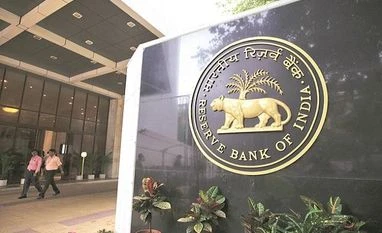
RBI, reserve bank of india
Analysts see a further decline in yield on investment in current year due to a rapid accumulation in foreign exchange reserves and a sharp decline in bond yield in United States and India post Covid-19 pandemic.
Krishna KantAnup Roy Mumbai
6 min read Last Updated : Aug 29 2020 | 1:08 AM IST

Don't want to miss the best from Business Standard?

The global decline in interest rates has begun to weigh on the Reserve Bank of India’s (RBI’s) earnings. The central bank’s core earnings, or interest income from its rupee and foreign exchange assets, were up just 2.3 per cent year-on-year in FY20, despite a 30 per cent rise in its assets during the same period.

India’s central bank earned an interest income of Rs 1.09 trillion in FY20 against Rs 1.06 trillion in FY19. Over the same period, its assets jumped to Rs 53.3 trillion from around Rs 41 trillion. This translated into an annual yield of 2 per cent on its assets in FY20, down from 2.6 per cent in FY19. The biggest decline was in RBI rupee assets. The interest yield on its rupee assets declined to 3.4 per cent in FY20 from 4.6 per a year ago and 4 per cent in FY18. It was as high as 6.9 per cent in FY15.

In comparison, the yield on forex assets was down to 1.4 per cent in FY20 against 1.6 per cent in FY19. (See the adjoining chart.) With the aggressive accumulation of foreign exchange reserves, which are mostly in US treasury bonds, the yields are under pressure, considering the low interest rate regime in developed countries.

Analysts see a further decline in yield on investment in the current year due to a rapid accumulation in foreign exchange reserves and a sharp decline in bond yields in the United States and India after the pandemic broke out. The data released by the US Treasury showed India held $182.7 billion in US treasury bills, up from $162.7 billion in June 2019.

At the end of March 2020, India had a US treasury holding of $156.5 billion. This means, in three months, the RBI invested $26.2 billion in its instruments. The RBI’s foreign exchange res­e­rves have risen to $507 billion, from $476 billion in March, a rise of $31 billion. This also means that most of the reserves accumulated may have been invested back in US Treasury bills.

For now, India’s foreign exchange reserves of $534.6 billion are enough to cover 13.4 months of imports but they come at a cost. That impacts the profitability of the Reserve Bank of India (RBI). “Large forex reserves, while acting as insurance against exchange rate volatility, results in the familiar policy quadrilemma of financial integration, exchange rate stability, monetary policy independence and financial stability,” said Soumyakanti Ghosh, chief economic advisor to the State Bank of India (SBI) group.

Analysts also say the reserves are not due to a trade surplus that the country is enjoying (India is a net importer). Rather, they are the result of portfolio inflows and such current account flows can reverse at any time. As such, the RBI is essentially a custodian of dollar flows, and not necessarily the owner.


“High foreign exchange reserves are the first guard against any external shocks, though India’s reserves are more off capital account surplus than trade. High reserves help raise external funding and trade finances, by ensuring a stable currency and reduction in swaps cost. This is also a step towards full convertibility,” said Soumyajit Niyogi, associate director at India Ratings and Research.

A decline in its core income was partly compensated by other income. The RBI reported other income of Rs 40,300 crore in the last fiscal year against Rs 86,200 crore a year earlier.

Other income largely came from foreign exchange gains on selling foreign exchange assets.


Experts, however, say a decline in bond yields in India and abroad may make it tough for the RBI to push its income growth. This may make it difficult for it to transfer ever larger surplus or dividend to the central government. The RBI paid a dividend of Rs 57,128 crore to the central government in FY20, down from Rs 1.76 trillion a year earlier and Rs 50,000 crore in FY18. The numbers suggest stagnation in the dividend payout by the RBI in the past five years as its core income takes a hit. For example, it has made dividend payment of around Rs 66,000 crore in FY15. As yields on assets decline, the RBI has to expand its balance sheet at a faster clip. In the last five years, the RBI balance sheet has expanded by 85 per cent against a 47 per cent rise in its interest income.

“The dollar index (at 92.22) is at a year’s low, and the rupee is not as strong as other currencies. So, it should continue to appreciate and could reach 72.80-72.50 against the dollar,” said Pramit Brahmbhatt, head of Veracity.

According to Rahul Gupta, head of research (currency) at Emkay Global Financial Services, risk appetite globally still remains in place due to the ample liquidity infusion from major central banks as well as the Fed.

Sooner or later, the RBI will come back to the spot market and intervene. For now, it seems to be focused on the forwards markets. 

According to Abhishek Goenka, managing director and chief executive officer of IFA Global, nationalised banks are “relentlessly paying forwards on behalf of the RBI. The RBI has been buying dollars in the spot market and sterilising the liquidity infused as a result by swapping the USD forward i.e. doing a sell-buy swap.”

The banks are receiving premiums for the near term maturity and paying them for the longer tenure in the forwards markets, steepening the forwards rate curve, Goenka said. The three-month forward rates have gone up from 3.6 per cent to 3.90 per cent over the last three weeks, and the one-year rate has gone up from 3.85 per cent to 4.35 per cent as a result.

One subscription. Two world-class reads.

Already subscribed? Log in

Subscribe to read the full story →
*Subscribe to Business Standard digital and get complimentary access to The New York Times

Smart Quarterly

₹900

3 Months

₹300/Month

SAVE 25%

Smart Essential

₹2,700

1 Year

₹225/Month

SAVE 46%
*Complimentary New York Times access for the 2nd year will be given after 12 months

Super Saver

₹3,900

2 Years

₹162/Month

Subscribe

Renews automatically, cancel anytime

Here’s what’s included in our digital subscription plans

Exclusive premium stories online

  • Over 30 premium stories daily, handpicked by our editors

Complimentary Access to The New York Times

  • News, Games, Cooking, Audio, Wirecutter & The Athletic

Business Standard Epaper

  • Digital replica of our daily newspaper — with options to read, save, and share

Curated Newsletters

  • Insights on markets, finance, politics, tech, and more delivered to your inbox

Market Analysis & Investment Insights

  • In-depth market analysis & insights with access to The Smart Investor

Archives

  • Repository of articles and publications dating back to 1997

Ad-free Reading

  • Uninterrupted reading experience with no advertisements

Seamless Access Across All Devices

  • Access Business Standard across devices — mobile, tablet, or PC, via web or app

Topics :Reserve Bank of IndiaCoronavirusRBI Annual ReportsbiForeign exchange reservesIndian Economy

Next Story



