
Reputation of AstraZeneca's Covid-19 vaccine marred by missteps
AstraZeneca's release Monday of encouraging data about its coronavirus vaccine from its U.S. trial raised hopes that the drug company could put a troubled rollout behind it.
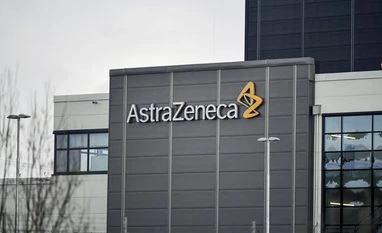 "Reputation of AstraZeneca's Covid-19 vaccine marred by missteps")
WebinarsNew
Deep DiveNew
Explore Business Standard
AstraZeneca's release Monday of encouraging data about its coronavirus vaccine from its U.S. trial raised hopes that the drug company could put a troubled rollout behind it.
AstraZeneca's release Monday of encouraging data about its coronavirus vaccine from its U.S. trial raised hopes that the drug company could put a troubled rollout behind it.
But just hours after its announcement, American officials issued an unusual statement expressing concern the company had included outdated information from its study and that it may have provided an incomplete view of the efficacy data.
Coupled with earlier missteps in reporting data and a recent blood clot scare, experts said the new stumble could cause lasting harm to the shot that is key to global efforts to stop the pandemic and erode vaccine confidence more broadly.
I doubt it was (U.S. officials') intention to deliberately undermine trust in the AstraZeneca vaccine, said Dr. Paul Hunter, a professor of medicine at the University of East Anglia. But this will likely cause more vaccine hesitancy.
AstraZeneca said Tuesday that the results it released a day earlier included information through Feb. 17 but appeared to be consistent with more up-to-date data.
It promised an update within 48 hours. Those results showed its shot was about 79% effective in stopping symptomatic COVID-19 and that there were no severe illnesses or hospitalizations among vaccinated volunteers, compared with five such cases in participants who received dummy shots.
The back-and-forth over the latest release is not the first time the company has run into problems.
Partial results from its first major trial which Britain used to authorize the vaccine were clouded by a manufacturing mistake that researchers didn't immediately acknowledge.
Insufficient data about how well the vaccine protected older people led some countries to initially restrict its use to younger populations before reversing course. And U.S. officials suspended an AstraZeneca study for an unusual six weeks while they sought details about problems reported in Britain before deciding the vaccine wasn't to blame.
Then last week, more than a dozen countries temporarily halted their use of the AstraZeneca shot after reports of rare blood clots in some people who received it.
The European Medicines Agency concluded the shot did not increase the overall incidence of clots, but the unwanted attention appears to have left a mark.
In Norway, a top official warned on Monday it might not be able to resume its use of the vaccine because so many people were rejecting it.
People clearly say that they do not want the AstraZeneca vaccine, Marte Kvittum Tangen, who heads a Norwegian doctors' association, told broadcaster NRK.
Last week in Bucharest, Romania, vaccination coordinator Valeriu Gheorghita said 33,000 AstraZeneca immunization appointments had been canceled in 24 hours and that about a third of the 10,000 people scheduled to receive the vaccine did not show up.
In Belgrade, Serbia, a sprawling exhibition center set up for people to get the AstraZeneca vaccine was mostly deserted on Monday.
This is unfortunately more about perception than it is the science, said Dr. Bharat Pankhania, an infectious diseases specialist at Britain's University of Exeter.
We have now seen, on several parameters, that the AstraZeneca vaccine provides protection and is safe, he said. But the narrative for the public has not been as clear.
France is a prime example of the confusion.
French President Emmanuel Macron initially suggested the vaccine wasn't effective for older people, before backtracking.
Still, France only authorized AstraZeneca's vaccine for use in adults 65 and under, citing a lack of data. Then the government changed its mind, based on new data, and said it's fine for all adults.
But when there were reports of rare blood clots in some vaccine recipients, the government suspended use of the shot all together. When France restarted AstraZeneca, it banned the shot for anyone under 55.
The whiplash-inducing messages come at a time when France like much of continental Europe is struggling to speed up its vaccination drive while also facing a spike in cases that is close to overwhelming its hospitals and prompting threats of new lockdowns.
Even if the company clears up the latest misunderstanding, it could have a lasting impact.
Julian Tang, a virologist at the University of Leicester, pointed to the decades-old controversy over the measles vaccine as a cautionary tale.
There was absolutely no evidence to prove the (measles, mumps and rubella) vaccine caused autism, he said.
But despite the retraction of the paper that made that claim, Tang said some people still worry about the vaccine.
The tepid support for the AstraZeneca vaccine in Europe stands in contrast to governments in the developing world that are desperate for supplies.
Because the shot is cheaper and easier to store than those of many rivals, AstraZeneca's vaccine is expected to be used widely in the poorer countries.
Dr. Bruce Aylward, a senior adviser at the World Health Organization, said the U.N. agency has a long list of countries very keen to get the shot as soon as possible. We simply cannot get enough of it, he said.
But some experts have worried that the skepticism in Europe could eventually cast a pall over the vaccine worldwide.
They suggested one measure that could reassure a jittery public about the shot: a green light from the U.S. Food and Drug Administration.
(Only the headline and picture of this report may have been reworked by the Business Standard staff; the rest of the content is auto-generated from a syndicated feed.)
First Published: Mar 23 2021 | 9:24 PM IST


 Connect with us on WhatsApp