Silicon Valley Bank loans could be letdown for private equity giants

The FDIC has a broad mandate to try to sell Silicon Valley Bank and Signature Bank assets at the best possible price to aid recoveries, whether that's as a whole or in pieces

Silicon Valley Bank, SVB, SVB Bank
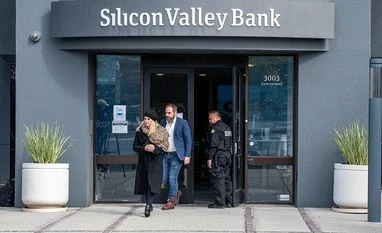
Photo: Bloomberg
Bloomberg
4 min read Last Updated : Mar 16 2023 | 9:26 AM IST
Private equity firms circling the $74 billion loan book at Silicon Valley Bank may find that the Federal Deposit Insurance Corp. is unwilling to sell the assets — or at least not at bargain-basement prices. 
 
More than half of the bank’s lending program — $40.5 billion as of the fourth quarter — consists of lines of credit to firms backed by capital-call commitments from their investors, according to bank documents. Those loans typically have terms of one to two years, with low interest and default rates, meaning they’re not likely to deliver high-octane returns. 

During the 2008 financial crisis, private equity investors negotiated huge discounts on distressed and defaulted assets purchased from troubled banks. That’s not likely to be the case with Silicon Valley Bank, whose performing loan book might not yield the kind of discounts that private equity buyers typically look for, according to lawyers.

The FDIC has a broad mandate to try to sell Silicon Valley Bank and Signature Bank assets at the best possible price to aid recoveries, whether that’s as a whole or in pieces. 

Historically it has a preference for selling a bank as close to whole as possible, said Ken Achenbach, a partner at Bryan Cave Leighton Paisner who focuses on bank regulation and corporate risk.

“Any asset is sellable at the right price,” he said in an interview. But assets being marketed by the FDIC in this cycle “should be assets that, in many ways, are less distressed from a credit quality perspective than the assets we saw coming out of receivership in 2008 and 2009.” 

Apollo Global Management Inc., Ares Management Corp., Blackstone Inc., Carlyle Group Inc. and KKR & Co. are among the alternative-asset managers looking to buy pieces of Silicon Valley Bank, Bloomberg previously reported. The private equity firms declined to comment.

Deep ties
 
Buying Silicon Valley Bank as a whole would allow a new buyer to inherit the deep ties the bank had to venture capitalists. The bank pitched itself as a one-stop shop to tech founders, and aggressively cross-sold everything from venture debt to fund subscription lines to bank accounts for founders. 

Part of the value of the firm being sold as a whole, rather than broken up into parts, is that a new owner would keep those relationships. Separating the loan book from the company could scare off potential buyers.

A group of venture capitalists including Kleiner Perkins and Greylock Partners said last weekend that if a buyer emerged, they would encourage their portfolio companies to continue working with the bank, according to a statement.

As the FDIC has created a bridge bank and bought some time to work out a resolution, it may not be in a rush to secure a deal for the loan book, particularly given the short-term time horizon on the loans, said Randy Katz, a lawyer at Clark Hill who advises companies on corporate finance and mergers and acquisitions. 

They could choose to just let the borrowers refinance or repay them as they come due, he said.

“Although the loans are performing, there’s no readily ascertainable market value for them,” he said. By contrast, selling the firm’s Treasury holdings is more straightforward given the public pricing. If the loans needed to be sold quickly, “that’s where the arm wrestle comes in,” he said. 

Representatives for the FDIC and Signature Bank declined to comment. Silicon Valley Bank didn’t immediately respond to a request for comment.

Silicon Valley Banks’s capital-call loan portfolio has experienced only one net loss since inception, according to a March 8 update. Non-performing loans made up 0.18% of its total loans in 2022, compared with 1.57% in 2008.

Some venture capital firms that have subscription lines with Silicon Valley Bank have been reaching out to other lenders in recent days to pursue alternative financing options, according to a person with knowledge of the matter.

Either way, the FDIC is likely to face significant public scrutiny of any deal to sell Silicon Valley Bank, in whole or in parts, Katz said.

“No matter how it shakes out, people are going to be unhappy and pointing fingers that it wasn’t done fairly,” he said.

One subscription. Two world-class reads.

Already subscribed? Log in

Subscribe to read the full story →
*Subscribe to Business Standard digital and get complimentary access to The New York Times

Smart Quarterly

₹900

3 Months

₹300/Month

SAVE 25%

Smart Essential

₹2,700

1 Year

₹225/Month

SAVE 46%
*Complimentary New York Times access for the 2nd year will be given after 12 months

Super Saver

₹3,900

2 Years

₹162/Month

Subscribe

Renews automatically, cancel anytime

Here’s what’s included in our digital subscription plans

Exclusive premium stories online

  • Over 30 premium stories daily, handpicked by our editors

Complimentary Access to The New York Times

  • News, Games, Cooking, Audio, Wirecutter & The Athletic

Business Standard Epaper

  • Digital replica of our daily newspaper — with options to read, save, and share

Curated Newsletters

  • Insights on markets, finance, politics, tech, and more delivered to your inbox

Market Analysis & Investment Insights

  • In-depth market analysis & insights with access to The Smart Investor

Archives

  • Repository of articles and publications dating back to 1997

Ad-free Reading

  • Uninterrupted reading experience with no advertisements

Seamless Access Across All Devices

  • Access Business Standard across devices — mobile, tablet, or PC, via web or app

Topics :Private equity firmsloansUS banks

Next Story




