September was another quarter of muted corporate earnings growth, with companies struggling to push volumes amid a slowdown in demand.
Saurabh Mukherjea, chief executive officer - institutional equities, Ambit Capital, tells
Puneet Wadhwa it is not the global slowdown which is holding back Sensex EPS growth but Prime Minister Modi's resets around black money, crony capitalism and Aadhaar. Modi, Mukherjea says, is changing the way consumption and capex takes place in India and corporate India is finding it hard to come to terms with these changes. Edited excerpts:
How do you see the global markets playing out over the next few months? My reckoning is that the beginning of rate rises by the US Federal Reserve in December, combined with debilitating weakness in the Chinese economy, will be a potent combination for volatility generation. We have the world's two largest economies pulling in opposite directions, and that cannot be good news.
You put out a Sensex target of 22,000 a few months ago. Do you still hold this view? To be sure, what I have repeatedly said is that while the FY16-end fair value for the Sensex is 28,000, there is a high risk of the Sensex falling to as low as 22,000, on account of the ongoing weakness in the real estate sector, the continued rise in bank NPAs (non-performing assets) and the global instability.
What is your analysis of the September quarter corporate earnings? We have not seen meaningful growth in Sensex EPS for six quarters. This quarter is no different. It is not the global slowdown which is holding back Sensex EPS growth; if anything, by crunching commodity prices, the global slowdown is helping Sensex EPS show a little bit of growth. What is hitting EPS growth in India is Prime Minister (Narendra) Modi's resets around black money, crony capitalism and Aadhar. Modi is changing the way consumption and capex takes place in India and corporate India is finding it hard to come to terms with these changes.
What is the road ahead for the banking sector? I don't think the NPA cycle has peaked out for the banking sector. However, one could argue that the NPA woes are largely reflected in banks' share prices now. What is not reflected in banks' share prices is what I call 'Raghuram Rajan's reset of the BFSI (banking, financial services and Insurance) sector'. Now that Rajan is introducing competition into the sector and that FII (foreign institutional investment) debt is entering India at a nice clip, large Indian private banks and NBFCs (non-banking financial companies) will face structural pressure on their ROEs (return on equity). This ROE pressure is clearly not reflected in most of the large private banks' and NBFCs' share prices.
How long before we see a revival in the manufacturing sector and how would you deal with the related stocks, say capital goods? I reckon it will take another couple of years before Modi and Rajan's resets combine to help the Indian manufacturing become more competitive. After all, land prices are now falling, rural wage growth is at its 10 year low and the cost of the capital is steadily falling. All of these will allow Indian exporters of light industrial products become more competitive in the global context. However, this is a slow process.
By when do you see a pick-up in domestic consumption that gets translated into the financials of the large-and mid-cap companies like HUL, ITC, etc? Would you buy these stocks as a contrarian bet from a two-year horizon? I don't see a generalised story here for large-and mid-cap corporates. Some FMCG (fast-moving consumer goods) companies like HUL (Hindustan Unilever), ITC and Marico will benefit as the PM's Direct Benefits Transfer (DBT) platform bites over the next year or so. Other large-cap companies, like Asian Paints and UltraTech Cement, find that top-and bottom-line growth will be difficult to generate even in FY17, as the real estate stays in a funk thanks to the attack on black money.
Which sectors and stocks have you been overweight and underweight in the Indian context in 2015? What is the strategy for the next 12 months? We have been underweight cyclicals this year (since March) and we continue to take that point of view going towards the years end. I think the bulk of the Nifty will face earnings pressure over the next six months and, hence, I don't see any great merit in loading up on Nifty constituents.
To profit from Modi and Rajan's resets, one has to find efficient exporters like PI Industries and contra plays on real estate like Trent (a company that uses real estate as part of its service offering). Another interesting theme is the move of Indian savings away from real estate and towards financial savings. A stock like Motilal Oswal can be used to play that dynamic.
Foreign investors put in around $3.4 billion in the Indian capital markets in October, the highest in seven months. Could the reverse once the US Fed hikes rates?
The tide of FII equity is clearly receding and will continue to recede as Global Emerging Market (GEM) funds face redemption pressure. Two factors drove the dizzying rise of GEM funds over the past decade – the rise of China and the rise of cheap/free money. With both of these factors on the wane, GEM funds will simply not have as much money as they once used to have to invest in India.
Do you see corporates deferring fund raising through the primary markets over the next one year?
Small cash generative companies will continue finding traction. Large IPOs (initial public offers) which promise jam tomorrow in return for investments today will find it harder to fly. Thankfully, the IPO pipeline in India seems to be more of the former and less of the latter.

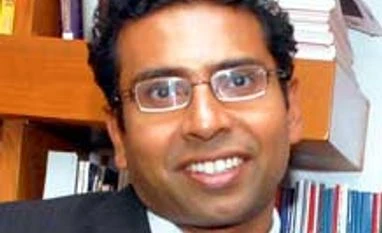 "Nifty will face earnings pressure over the next 6 months: Saurabh Mukherjea")


 Connect with us on WhatsApp