Parliamentary panel again says phase out STT
The Committee, in an earlier report on the Direct Taxes Code (DTC) Bill, had favoured abolition of STT
Sanjeeb Mukherjee New Delhi
Parliament’s standing committee on finance has urged the ministry of finance for a study on the impact of the Commodities Transaction Tax (CTT) on food inflation over a period of one year and has also, again, recommended abolition of the Securities Transaction Tax (STT).
The Committee, in an earlier report on the Direct Taxes Code (DTC) Bill, had favoured abolition of STT.
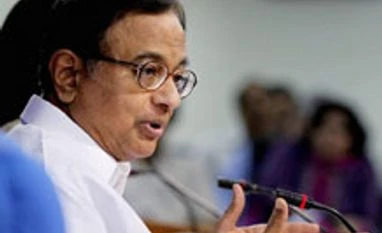
Finance Minister P Chidambaram had announced imposition of a CTT on non-agro commodities in the 2013-14 budget, at a rate of 0.01 per cent or Rs 10 for every transaction worth Rs 1 lakh. It is to be paid by the seller.
“There is no distinction between derivative trading in the securities markets and derivative trading in the commodities markets. Only the underlying asset is different. It is time to introduce a CTT in a limited way. Hence, I propose to levy CTT on non-agricultural commodities futures contracts at the same rate as in equity futures,” Chidambaram had said in his Budget speech.
He’d said trading in commodity derivatives would not be considered a speculative transaction and, hence, CTT would be allowed as a deduction if the income from such transaction forms part of the business income.
On STT, Chidambaram had reduced the rate from 0.1 per cent to zero in the case of a purchaser for delivery-based purchase of units of an equity-oriented fund through a recognised stock exchange. And, from 0.1 per cent to 0.001 per cent for the seller of a delivery-based sale of units of an equity-oriented fund, entered in a recognised exchange. The rate on sellers in a sale of futures in securities was cut from 0.017 per cent to 0.01 per cent and from 0.25 per cent to 0.001 per cent on the seller for sale of a unit of an equity-oriented fund to a mutual fund.
Chidambaram had first proposed a CTT in the 2008-09 Budget but it was held back due to opposition from the ministry of food and the commodity exchanges.
The proposal was to levy 0.017 per cent tax on the commodity derivatives trade, on the same lines as the STT.
Imposition of a CTT affects the Multi Commodity Exchange, National Commodities and Derivatives Exchange, National Multi Commodity Exchange, Indian Commodity Exchange and Ace Derivatives and Commodity Exchange.
A study by the Indian Council for Research on International Economic Research (ICRIER) had said CTT would raise transaction costs, leading to higher volatility and lower trading activity.
According to the commodities market regulator, the Forward Markets Commission, the cumulative value of the commodities futures market fell six per cent to Rs 170 lakh crore in the financial year ended March 31. Bullion volumes fell 23 per cent, to Rs 78 lakh crore.

 "Parliamentary panel again says phase out STT")


 Connect with us on WhatsApp