UTI AMC pay hike: SC asks Sebi boss to submit key documents
The court asked for the document during hearing of a writ petition filed by Bangalore lawyer Arun Agrawal challenging the appointment of UK Sinha as Sebi chief
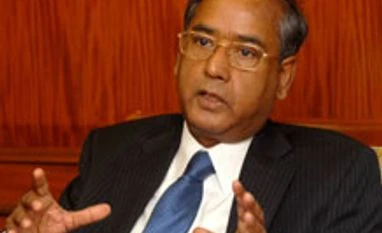
BS Reporter New Delhi The Supreme Court today asked Securities and Exchange Board of India (Sebi) chairman U K Sinha to submit the minutes of an April 2008 board meeting of UTI Asset Management in which the asset manager decided to hike the salary of the top management on par with market.
The court asked for the document during the hearing of a writ petition filed by Bangalore-based lawyer Arun Agrawal challenging the appointment of Sinha as Sebi chairman.
Earlier, Prashant Bhushan, counsel for Agrawal, said that Sinha had deliberately filed a different document in place of the minutes in an attempt to mislead the court.
The Supreme Court on Tuesday asked the Securities and Exchange Board of India (Sebi) chairman U K Sinha to submit the minutes of an April 2008 board meeting of UTI Asset Management, in which the asset manager decided to hike the salary of the top management on a par with market rates. The court asked for the document during the hearing of a writ petition filed by Bangalore-based lawyer Arun Agrawal challenging the appointment of Sinha as Sebi chairman.
Earlier, Agrawal’s counsel Prashant Bhushan said Sinha had deliberately filed a different document in place of the minutes to mislead the court. Bhushan presented his arguments in detail about the alleged irregularities in the appointment of the Sebi chairman.
He contended Sinha’s selection for the post was vitiated on the same grounds as in the selection of Central Vigilance Commissioner (CVC) in the P J Thomas case. In 2011, the apex court struck down the appointment of Thomas on the grounds that the high-powered committee that selected the CVC did not consider certain vital information about the pending disciplinary proceedings, which was withheld from the committee.
Bhushan said in Sinha’s appointment, the failure to disclose the salary of over Rs 4 crore per annum drawn by him at UTI AMC “vitiated the appointment on the grounds of official arbitrariness”.
According to the lawyer, if the appointment committee had known the salary, it would have raised several questions. “It was deliberately not done. Somebody wanted to conceal this vital information because they wanted him to be made the chairman,” he added.
Explaining how the appointment of Sinha was “malafide and a result of deep rooted conspiracy”, Bhushan said, “Omita Paul, the then advisor to the then finance minister Pranab Mukkherjee, ensured that the earlier Sebi chairman CB Bhave could not get further extension though he was entitled to get extension of two years,” despite several officers in the ministry certifying his performance as ‘good’.
The composition of search-cum-selection committee to select the Sebi Chairman and whole-time members was changed arbitrarily to give primacy to the finance ministry so that Sinha’s appointment could be ensured, it was argued.
The developments subsequent to Sinha’s appointment show it was done to benefit some of the big corporations, Bhushan said, adding the secondary objective was to appoint the brother of the finance minister’s advisor to the post of UTI AMC chief. “This did not fructify as the foreign firm, which had picked 26 per cent stake, objected to the appointment.”
Bhushan also strongly objected to the contention of attorney-general earlier that the petitioner had suppressed the fact that three writ petitions were filed in the same matter. “The same petition was filed thrice as the court objected to certain references in the first two instances and was admitted in July 2012,” he said.
A counsel for former IPS officer Julio Ribeiro - who had also filed a similar petition on Sebi appointments - wanted to present his arguments, challenging the changes made to the selection process. However, the court decided to hear the matter separately. The attorney-general will present his counter arguments on behalf of the government on Thursday.

 "UTI AMC pay hike: SC asks Sebi boss to submit key documents")


 Connect with us on WhatsApp