Beijing's dangerous groupthink epidemic

The virus spreading across China carries lessons for us all
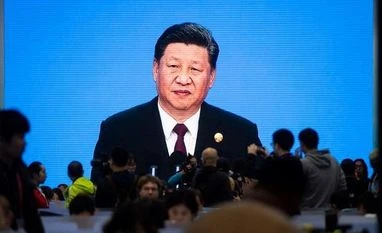
Xi Jinping
Photo: Twitter @arabnews
Rahul Jacob
5 min read Last Updated : Feb 11 2020 | 9:12 PM IST
The eruption of anger on China’s so­cial media platforms after the death late last week of Li Wenliang, a doctor in Wuhan who raised the alarm about the outbreak of a mysterious pneumonia-like virus witnessed at the city’s hospitals several weeks before the local and national government declared an emergency on January 22, has been so unrestrained that it appeared as if Communist censors have gone on strike. There have been images of the brave doctor wearing a respirator in the last days of his life, but also remarkably copies of his “confession” to the police who prosecuted him for rumour-mongering and “illegal be­ha­vi­our”. China’s Supreme Court, usually the imprimatur of such a Kafkaesque upending of the principles of justice, was sufficiently outraged to exonerate Li before he died. 

What has played out recently on the Chinese equivalents of Twitter and Fa­cebook amounts, by Communist China’s standards, to an online mutiny. There have been repeated references to the official cover-up after the Chernobyl disaster in 1986 in the former Soviet Union and not so veiled references to the absence of President Xi Jinping who had until Monday been seen only sporadically at public events. Chinese have shared online the rousing anthem, “Do you hear the people sing?” from Les Miserables. The song is a favourite of protest movements, but notably has been sung by protesters in Hong Kong at demonstrations against China and the local government over the past six months, which made its appearance online in China doubly shocking.

Well before the outbreak of the coronavirus claimed more than 1,000 fatalities and infected upwards of 40,000, China had unflattering past form in suppressing news of unfolding health catastrophes, thus making them infinitely worse. The SARS outbreak in China was not publicly ack­nowledged for a couple of months before an infected visitor from mainland China carried the virus to a hotel in Hong Kong in early 2003. Only then was the source of the virus and the high fatalities in China revealed. Last year, early reports of swine flu were also suppressed until it had become an epidemic large enough to push up China’s inflation rate. In 2008, the Communist government similarly suppressed a scandal involving the adulteration of infant milk powder with me­la­mi­ne, the substance used to make plastic products, which led to several thousand babies developing kidney stones. The government allegedly did so to ensure the success of the Beijing Olympics in August 2008. Some 300,000 infants suffered as a result, with more than 50,000 requiring hospitalisation. One of my first stories as South China correspondent for the Fi­na­ncial Times in 2010 involved a plea for leniency by Hong Kong legislators after a harsh court sentence imposed on the father who led the group of parents seeking justice for their children and help with high medical costs. Zhao Lianhai was initially sentenced to more than three years in prison by a Beijing court for “trouble-making”. I struggled to write that article not just out of empathy, but because the logic of Chinese courts is difficult to explain except as a form of virulent groupthink.

In macrocosm, these incidents — 10 and 15 years apart — reveal a great deal about the sickness that infects the Communist China’s leadership — rather than the building of hospitals and bridges in record time. Each is the product of a top-down system that is not merely hierarchical and characterised by kowtowing to the powerful in the way that India’s often is, but also infused with fear. The Wuhan mayor who delayed declaring the health emergency for weeks is reported to have been awaiting Beijing’s views on what to do. Beijing in turn alerted the World Health Organization several days before it publicly declared a national emergency. It took until Monday, February 10, for President Xi Jinping to publicly visit a Be­ijing neighbourhood and do a video call with Wuhan, prompting China’s People’s Daily to devote its entire front page to this in palpable relief. Until then, Xi had relied on Pre­mier Li Keqiang to visit Wuhan, the epicentre of the virus. The logic can only be that the omnipotent Xi wanted to distance himself from the health catastrophe. Ironically, February 25 will mark two years since the Communist Party Congress amended China’s constitution and abolished term limits, anointing Xi dictator for life.

Circa 2020, overcentralisation of decision-making and the resultant collateral damage is an aspect of state power witnessed in Washington DC, New Delhi and London, but arguably it is in Xi’s China that its costs are most visible. In a searing essay widely circulated this week, Xu Zhangrun, a professor at Tsinghua University, writes, “Ours is a system in which The Ultimate Arbiter (an imperial honorific repurposed by official media for Xi Jinping) monopolises power. It results in “organisational discombobulation” that has enabled a dangerous “systemic impotence”. The virus spre­ading across China and the world thus carries lessons for us all.

One subscription. Two world-class reads.

Already subscribed? Log in

Subscribe to read the full story →
*Subscribe to Business Standard digital and get complimentary access to The New York Times

Smart Quarterly

₹900

3 Months

₹300/Month

SAVE 25%

Smart Essential

₹2,700

1 Year

₹225/Month

SAVE 46%
*Complimentary New York Times access for the 2nd year will be given after 12 months

Super Saver

₹3,900

2 Years

₹162/Month

Subscribe

Renews automatically, cancel anytime

Here’s what’s included in our digital subscription plans

Exclusive premium stories online

  • Over 30 premium stories daily, handpicked by our editors

Complimentary Access to The New York Times

  • News, Games, Cooking, Audio, Wirecutter & The Athletic

Business Standard Epaper

  • Digital replica of our daily newspaper — with options to read, save, and share

Curated Newsletters

  • Insights on markets, finance, politics, tech, and more delivered to your inbox

Market Analysis & Investment Insights

  • In-depth market analysis & insights with access to The Smart Investor

Archives

  • Repository of articles and publications dating back to 1997

Ad-free Reading

  • Uninterrupted reading experience with no advertisements

Seamless Access Across All Devices

  • Access Business Standard across devices — mobile, tablet, or PC, via web or app

More From This Section

Disclaimer: These are personal views of the writer. They do not necessarily reflect the opinion of www.business-standard.com or the Business Standard newspaper

Topics :CoronavirusChinaBeijing

Next Story



