Learning disabilities

Schooling in India remains subpar
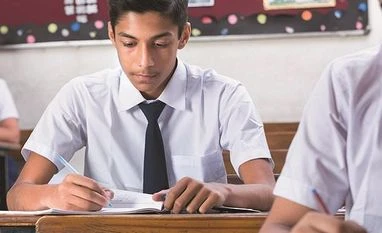
education, students, schools, books, studying, exams, entrance
Business Standard Editorial Comment Mumbai
3 min read Last Updated : Oct 07 2021 | 12:22 AM IST
It is now clear that the Covid-19 pandemic has taken its toll on school education, deepening the digital divide between urban affluent haves and the urban poor and rural have-nots. But deep systemic weaknesses in education delivery have serious implications for India’s future, too. This was the broad point of Unesco’s 2021 State of the Education Report. Its title, “No Teachers, No Class”, succinctly captures the crisis. The findings suggest a staggering 1,10,000 schools are single-teacher entities, and that nearly a fifth (19 per cent) of positions in schools lie vacant, the bulk (69 per cent) in rural areas. In other words, Indian children, especially in the rural hinterland, are either getting poor or no education. 
 
This big picture points to the key failure of the governmental school enrolment programmes that had focused on getting higher numbers of kids enrolled in schools. This has been a success: The gross enrolment ratio for elementary schools has increased from 81.6 in 2001 to 93.03 in 2018-19 and stands at 102.1 in 2019-2020. But getting them to stay there has been the challenge and highlights the linkage with poor teaching standards or the lack of it. Retention at 74.6 per cent for elementary education and 59.6 per cent for secondary education, though an improvement on earlier years, is hardly a desirable state of affairs for a country that aspires to move up the value chain of economic development. The Unesco report says that 7.7 per cent of teachers in pre-primary, 4.6 per cent at the primary level and 3.3 per cent upper-primary are under-qualified, pointing to weaknesses at foundational levels. These findings echo those of non-governmental organisation Pratham’s Annual Status of Education Report of 2019, which focused on early-stage learning in rural India. That report found that most children in government schools could not read texts or do math of the prescribed standards. This situation would have worsened during the prolonged pandemic-induced school shutdown. 

No less concerning is the fact that these deficiencies are skewed towards states with relatively fast-growing populations — Uttar Pradesh, with a shortage of 3,30,000 teachers, Bihar 2,20,000 and West Bengal 1,10,000. The bulk of the vacancies, the Unesco report says, are in rural schools. This implies that a large cohort of India’s future workforce will be insufficiently educated at a time when technological transitions in both services and manufacturing demand a high minimum standard of education. No country can afford this level of poor human resources and hope to make the great leap forward in development. The example of the Asian Tigers in the sixties and seventies and China in the nineties and noughties offer potent proof of this truism. The real problem here is to expand the universe of good and dedicated teachers as well as the ambit of the curricula. Successive pay commissions have ensured that teachers are no longer underpaid but career paths tend to be limited and demoralisation high owing to poor infrastructure. The report recommends building teachers’ career pathways and introducing special education, music, arts and physical education to provide children with a more rounded education. These requirements, of course, are basic to any school education system. The fact that they are conspicuous by their absence only underlines the degree of learning deficiency in India’s schooling system.

One subscription. Two world-class reads.

Already subscribed? Log in

Subscribe to read the full story →
*Subscribe to Business Standard digital and get complimentary access to The New York Times

Smart Quarterly

₹900

3 Months

₹300/Month

SAVE 25%

Smart Essential

₹2,700

1 Year

₹225/Month

SAVE 46%
*Complimentary New York Times access for the 2nd year will be given after 12 months

Super Saver

₹3,900

2 Years

₹162/Month

Subscribe

Renews automatically, cancel anytime

Here’s what’s included in our digital subscription plans

Exclusive premium stories online

  • Over 30 premium stories daily, handpicked by our editors

Complimentary Access to The New York Times

  • News, Games, Cooking, Audio, Wirecutter & The Athletic

Business Standard Epaper

  • Digital replica of our daily newspaper — with options to read, save, and share

Curated Newsletters

  • Insights on markets, finance, politics, tech, and more delivered to your inbox

Market Analysis & Investment Insights

  • In-depth market analysis & insights with access to The Smart Investor

Archives

  • Repository of articles and publications dating back to 1997

Ad-free Reading

  • Uninterrupted reading experience with no advertisements

Seamless Access Across All Devices

  • Access Business Standard across devices — mobile, tablet, or PC, via web or app

Topics :educationBusiness Standard Editorial CommentUrban poorgovernment schools

Next Story



