Perils of 'self-reliance'

Protectionism will hurt India's economy and its people
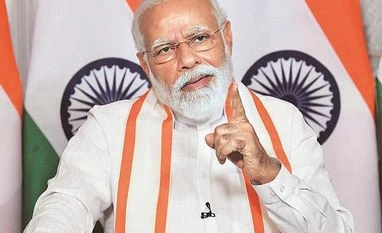
Narendra Modi
Narendra Modi
Business Standard Editorial Comment
3 min read Last Updated : Jun 04 2020 | 1:53 AM IST
When Prime Minister Narendra Modi introduced the concept of “aatmanirbharta” or self-reliance to the nation in his televised address on the subject of the government’s relief and stimulus package, he was careful to distinguish India’s efforts from isolationist policies and said that self-reliance would allow a more vigorous embrace of the global economy. In subsequent days, some senior government officials also sought to emphasise that self-reliance, in this context, did not mean protectionism. Yet this messaging seems to have been walked back more recently. Twice now in the past week — once in his radio broadcast, and again while addressing the Confederation of Indian Industry — the prime minister has spoken of reducing imports as a goal. This could theoretically, of course, be merely the consequence of an increase in Indian competitiveness. But Home Minister Amit Shah was even more explicit in recent comments to the media, where he urged Indians to use only products made in India. On being asked if this would isolate and weaken the economy, he argued instead that he strongly believed “that our economy will not be weak because of this, neither will we be isolated because the entire world needs India's 130 crore-strong consumer market.”

When these statements are taken together, it is hard to avoid the conclusion that the government has turned towards protectionism and import substitution as a foundation of its economic policy. The motivation for such a move is understandable. India continues to import a large proportion of the manufacturing go­ods it consumes, and even many of those that are finally completed in this cou­ntry have minimal value addition locally. Globally, countries are expressing some disquiet about their dependence on imports, particularly from China, in the context of the pandemic. Thus, an increased role for domestic manufacturing at the expense of imports, particularly from China, is not out of line with current thinking. However, while this is an understandable aim, the methods are crucially importa­nt. An outright turn to protectionism, as opposed to manufacturing-friendly re­forms, would harm India’s exports, domestic competitiveness, and consumer welfare.

The dangers of import substitution and protectionism should be well understood in India. The liberalisation of 1991 was introduced precisely because of the long stagnation and occasional crises imposed upon the economy by an inward-looking economic model. Some revisionists would like to claim that the problem was domestic licensing regulations and not autarkic policy. This is both economically and historically inaccurate. The fact is that the effects of policy designed to substitute imports are widely known and understood, not just through India’s economic experience but that of many other countries. It leads to the protection and persistence of uneconomic, wasteful and uncompetitive production, which in turn soak up an unjustifiable and unaffordable proportion of domestic capital and foreign exchange. Rather than preventing external dependence and increasing domestic prosperity, it reduces consumer welfare and job growth. The root problem is that Indian manufacturing is uncompetitive, and it is this issue that should continue to be the focus of government policy and reform. It is dangerous if lists of proscribed products and substitutable imports are made and followed up on. Unfortunately, it appears that the perils of “aatmanirbhar” India are now becoming clearer, and that the earlier clarifications that this would not lead to India shutting its doors on the world were meaningless.

One subscription. Two world-class reads.

Already subscribed? Log in

Subscribe to read the full story →
*Subscribe to Business Standard digital and get complimentary access to The New York Times

Smart Quarterly

₹900

3 Months

₹300/Month

SAVE 25%

Smart Essential

₹2,700

1 Year

₹225/Month

SAVE 46%
*Complimentary New York Times access for the 2nd year will be given after 12 months

Super Saver

₹3,900

2 Years

₹162/Month

Subscribe

Renews automatically, cancel anytime

Here’s what’s included in our digital subscription plans

Exclusive premium stories online

  • Over 30 premium stories daily, handpicked by our editors

Complimentary Access to The New York Times

  • News, Games, Cooking, Audio, Wirecutter & The Athletic

Business Standard Epaper

  • Digital replica of our daily newspaper — with options to read, save, and share

Curated Newsletters

  • Insights on markets, finance, politics, tech, and more delivered to your inbox

Market Analysis & Investment Insights

  • In-depth market analysis & insights with access to The Smart Investor

Archives

  • Repository of articles and publications dating back to 1997

Ad-free Reading

  • Uninterrupted reading experience with no advertisements

Seamless Access Across All Devices

  • Access Business Standard across devices — mobile, tablet, or PC, via web or app

Topics :CoronavirusLockdownprotectionismmanufacturing PM Narendra ModiModi 2.0

Next Story



