Protecting power

The sector requires special attention
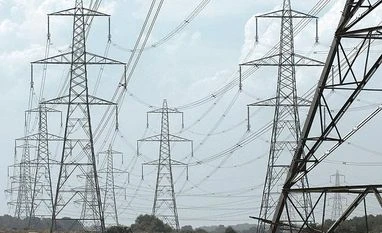
power
Power
Business Standard Editorial Comment
3 min read Last Updated : Mar 31 2020 | 11:39 PM IST
Part and parcel of the nationwide lockdown announced to combat the spread of Covid-19 is that most industrial units are either shut or operating at a fraction of their capacity. One consequence is that demand for electricity has fallen sharply, hitting a five-month low on just the first day of the national lockdown. Industrial demand, together with the offtake from Indian Railways — passenger services of which have also been suspended — constitutes 40 per cent of national power demand. The other issue is that the industrial segment of the market is the paying section, which helps cross-subsidise domestic and household power consumption. This comes at a bad time for electricity distribution companies, or discoms, which already owe over Rs 80,000 crore to generation companies. The number of consumers not able to pay their power dues will increase in this period, further hampering the discoms’ liquidity situation. If discoms are not able to buy power from generation companies, there is a real possibility of widespread load shedding — which would not only hamper the output of those working from home but might have serious public-health effects if hospitals, quarantine centres, and other medical installations find themselves without power to run lifesaving equipment. 

The government has stepped in to try and ameliorate the situation by announcing a package targeted at the power sector. This would include a moratorium on debt repayment for three months as well as an instruction that generating companies should continue to supply to discoms. It has also relaxed the payment security mechanisms built into newer power-purchase agreements (PPAs). This might help manage the situation for some time. Yet both on a temporary and on a permanent basis, a more solid solution must be found. Given that India’s fragile banking sector is also overexposed to the power sector, a breakdown there will have severe effects on the broader economy and cripple India’s recovery from the sudden stop imposed by the national lockdown. 

Also suffering is the one part of the power sector that had been a good-news story — the renewable energy sector. Capacity addition in the sector has been hit by a double whammy. First, the supply of new components that depends upon global supply chains, including those anchored in the People’s Republic of China, has been interrupted, and that has affected the speed of capacity build-up as well as the financial indicators of the sector. Second, the scarcity of dollars for emerging-market companies at the moment means that the renewables sector is having trouble raising money and repaying its debts. This section of the power sector requires special attention, given the government’s ambitious targets. Over the next few weeks, the government must come to a conclusion as to how to deal with this crisis in the power sector. One possibility is for the Union government to shell out the money required to, first, guarantee the revenue flow for renewables and, second, to buy out the power-purchase agreements attached to older and less efficient and environmentally-friendly generators. This will free discoms to make newer and more sensible power-purchase agreements, which will have to be backed by the state government’s own guarantees.

One subscription. Two world-class reads.

Already subscribed? Log in

Subscribe to read the full story →
*Subscribe to Business Standard digital and get complimentary access to The New York Times

Smart Quarterly

₹900

3 Months

₹300/Month

SAVE 25%

Smart Essential

₹2,700

1 Year

₹225/Month

SAVE 46%
*Complimentary New York Times access for the 2nd year will be given after 12 months

Super Saver

₹3,900

2 Years

₹162/Month

Subscribe

Renews automatically, cancel anytime

Here’s what’s included in our digital subscription plans

Exclusive premium stories online

  • Over 30 premium stories daily, handpicked by our editors

Complimentary Access to The New York Times

  • News, Games, Cooking, Audio, Wirecutter & The Athletic

Business Standard Epaper

  • Digital replica of our daily newspaper — with options to read, save, and share

Curated Newsletters

  • Insights on markets, finance, politics, tech, and more delivered to your inbox

Market Analysis & Investment Insights

  • In-depth market analysis & insights with access to The Smart Investor

Archives

  • Repository of articles and publications dating back to 1997

Ad-free Reading

  • Uninterrupted reading experience with no advertisements

Seamless Access Across All Devices

  • Access Business Standard across devices — mobile, tablet, or PC, via web or app

Topics :CoronavirusLockdownState electricity distribution companies

Next Story



