After actively involving itself in drawing up an Action Agenda on Sustainable Agriculture during the recent climate summit in Glasgow, India opted not to ratify it. The decision seems odd, especially because India is one of those countries that need such an agenda the most. New Delhi’s explanation that the country already has a National Mission on Sustainable Agriculture as part of its broad National Action Plan on Climate Change does not cut much ice. This Mission’s track record is quite uninspiring. The country’s greenhouse gas (GHG) emissions from the farm sector, instead of abating, have continued to soar. India overtook China in 2011 to become the world’s top polluter in terms of agricultural emissions. Its farm sector GHGs are now 7 per cent higher than China’s and 30 per cent above those of Brazil. Worse still, the pace of the annual spike in these discharges has accelerated from 0.5 per cent in 2016 to 0.83 per cent in 2017 and 1.3 per cent in 2018. Though the firm data for subsequent years is not available, it is safe to presume that emission has surged further as the two main methane-spewing activities — paddy cultivation and livestock rearing — have continued to expand. Such a dismal situation, being an indicator of farming inefficiencies, cannot be allowed to endure. It vitiates the environment and exacerbates the degradation of vital natural resources like land and water.
Sustainable agriculture requires technologies and agronomic practices that are efficient, least injurious to the environment, and yet profitable for farmers. Fanciful concepts like organic farming or zero-budget cultivation, though theoretically ideal for sustainable agriculture, may not be the right choice for adoption on a mass scale. These would not be able to meet the massive and rapidly growing demand of farm products. The need, therefore, is to explore ways and means to lift the overall proficiency of farm operations. One way of doing so is to mix the modern productivity-boosting technologies, including environment-resilient crop varieties and animal breeds, with traditional knowledge and norms of living in harmony with nature.
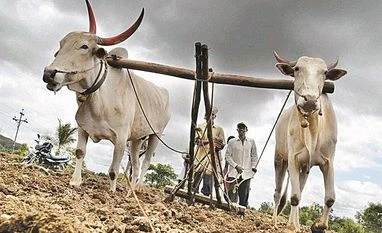
The basic modus operandi to consolidate sustainability of agriculture is neither unknown nor hard to carry out. Widely practised mono-cropping and unchanged cropping cycles need to give way to diversified farming involving a judicious mix of agriculture, horticulture, animal husbandry, fisheries, and agro-forestry. Cropping sequences need to include land-restoring and fertility-enhancing crops like legumes and quick-growing vegetation, which could be incorporated into the soil to improve its physical, chemical, and biological health that determines its overall fertility. Physical churning of soil needs to be avoided or minimised. Novel concepts like conservative agriculture involving zero or minimum tillage and direct seeding of crops can help doing so.

 "Sustainable agriculture")












 Connect with us on WhatsApp