Telecom needs to be put back on its feet

Hyper-competition, leading to significantly squeezed margins, rising debt and falling revenues, is the reason behind telecom sector's acute financial distress
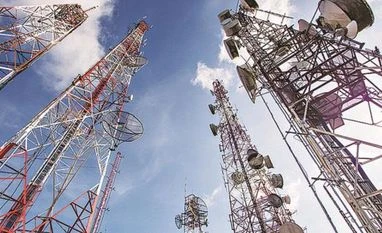
The other side of 5G sale: High base price, lesser spectrum a worry
Rajan S Mathews
5 min read Last Updated : Jul 27 2019 | 10:16 PM IST
The emergence of a dynamic telecom sector that has taken connectivity to the remotest villages with perhaps the lowest tariffs in the world has been one of the key success stories for India in the 21st century. Seamless mobile connections along with robust data have meant that a host of services, including those from the government, are riding the airwaves and making lives better and simpler for every Indian. Uninterrupted telecom services are as critical as power and fuel supplies for India’s rapidly expanding economy, which is tipped to touch $5 trillion in the next few years. 

The telecom industry has invested over Rs 10.44 trillion over the years to take mobile services to every Indian at rock-bottom tariffs. The same industry that has emerged as the backbone for several other sectors, including start-ups, is now struggling to stay afloat, due to multiple challenges. The combination of high levies, double taxation and rising debt has meant that telecom is now under tremendous financial stress with doubts arising over its viability and sustainability. Even as tariffs have continued to head southwards, the need for regular and sizeable investments for upkeep of the network and telecom infrastructure has meant that debt on the books of telecom operators has risen nearly 10-fold, from a mere Rs 0.8 trillion in FY2009 to Rs 7.7 trillion in FY18.

The telecom industry is seeking favourable regulatory initiatives and policy reforms that will help revive it. The once thriving sector, which provided jobs and brought returns to all stakeholders, is now in a dismal state. It is in dire need of an efficient blueprint for growth, minus uncertainties, multiple cascading taxation and various anomalies, so that it regains its past glory. The industry is looking to adopt a growth framework that takes into account recommendations made by the regulator and negates the reasons for the current financial distress. It is crucial for policymakers to devise effective strategies that can alleviate the industry’s woes, including provision of incentives on the lines of concessions for other sectors. 

The return on investment of the private sector has also plummeted from a healthy 14 per cent to a meagre one to two per cent. While falling tariffs are benefiting customers, the industry is struggling to make ends meet. In just over 18 months, listed players’ market capitalisation plummeted to Rs 2.03 trillion on July 23, 2019, from Rs 2.59 trillion on December 29, 2017. Ballooning debt has meant that interest payments as a percentage of EBITDA rose to nearly 71 per cent in FY19. The financial stress can be gauged from the fact that the Reserve Bank of India, leading financial institutions and credit rating agencies have raised a red flag over the sector’s viability. In February 2019, Morgan Stanley and Moody’s downgraded India’s telecom sector.

As a result, the Indian telecom industry, which once comprised more than a dozen established players, is now left with only three large players, courtesy the consolidation that happened over the last one year. Incapacitating hyper-competition leading to significantly squeezed margins, rising debt and falling revenues, is the reason behind the sector’s acute financial distress today. Such market dynamics, where a few players dominate, can also leave consumers vulnerable. 

Despite such worrying numbers, the telecom sector has continued to contribute to the exchequer in the form of taxes and levies such as licence fees, spectrum usage charges and revenue sharing. In fact, the telecom sector is one of the largest taxpayers, contributing Rs 10,000 crore every year to the government treasury, though that too has come under pressure now owing to falling revenues. Telcos, in addition to building a world-class telecom infrastructure, have also spent around Rs 76,000 crore in spectrum auctions to transition from 2G to 3G and 4G services. The cumulative payout at spectrum auctions is a whopping Rs 3.68 trillion since 2010.  

Apart from mammoth investments that went into the successful rollout of the 4G network, duplication of taxes and levies took a further toll on the financial health of telecom players. The Indian telecom sector pays 29-32 per cent in terms of taxes and levies — one of the highest in the world. Chinese companies, on the other hand, pay just 11 per cent. With the commercial rollout of 5G expected to begin by early next year, the requisite spectrum will come at a very high price, further crippling the sector financially.  

In light of the challenges, the industry is asking for a practical policy roadmap designed to revitalise the sector and the allied ecosystem. The need of the hour is to take brave decisions, as the government did in 1999, when the sector shifted to a revenue sharing regime. The result was that telecom saw explosive growth and the government ended up earning more revenue than in the fixed licence fee regime. It’s time to get the industry back on its feet, so that it can become a major contributor to fulfilling the Digital India vision and building a nation that is digitally and economically robust.     

The writer is Director General, COAI


One subscription. Two world-class reads.

Already subscribed? Log in

Subscribe to read the full story →
*Subscribe to Business Standard digital and get complimentary access to The New York Times

Smart Quarterly

₹900

3 Months

₹300/Month

SAVE 25%

Smart Essential

₹2,700

1 Year

₹225/Month

SAVE 46%
*Complimentary New York Times access for the 2nd year will be given after 12 months

Super Saver

₹3,900

2 Years

₹162/Month

Subscribe

Renews automatically, cancel anytime

Here’s what’s included in our digital subscription plans

Exclusive premium stories online

  • Over 30 premium stories daily, handpicked by our editors

Complimentary Access to The New York Times

  • News, Games, Cooking, Audio, Wirecutter & The Athletic

Business Standard Epaper

  • Digital replica of our daily newspaper — with options to read, save, and share

Curated Newsletters

  • Insights on markets, finance, politics, tech, and more delivered to your inbox

Market Analysis & Investment Insights

  • In-depth market analysis & insights with access to The Smart Investor

Archives

  • Repository of articles and publications dating back to 1997

Ad-free Reading

  • Uninterrupted reading experience with no advertisements

Seamless Access Across All Devices

  • Access Business Standard across devices — mobile, tablet, or PC, via web or app

Topics :telecom sectortelecom markettelecom services

Next Story



