From 2015 onwards, the RBI has committed to delivering year-on-year CPI inflation of 4 per cent. Most of the discussion on inflation targeting has emphasised how low and predictable inflation stabilises the macroeconomy. Expectations of stable 4 per cent inflation change many things about how we plan for the future. In this article, we show implications for wage hikes, borrowing, public finance, rupee depreciation, corporate investment and fund management.
The new world of low inflation: A long inflation crisis began in February 2006. The policy community was persuaded that institutional reform of monetary policy was required, which led up to the Monetary Policy Framework Agreement (MPFA), signed on February 20, 2015. The RBI has been transforming itself to deliver on the transparent single-objective of 4 per cent inflation. So far, the points of pain have been inflation that is too low, not too high.
When inflation rates come down, for some time, the economy keeps going with old assumptions about inflation. Perhaps hiring by firms has been slower than usual in recent years because wages have been too high compared with the growth of the top line (that has declined because of lower inflation). Perhaps we will get back to a more normal environment on the labour market once firms recalibrate down to lower wage hikes.
Impact on borrowing: Lower inflation changes how we think about debt. High nominal growth has a way of making old loans subside. In India, we had got used to the assumption of 15 per cent growth in the balance sheet every year. This gave a doubling every 4.6 years. So a loan which feels like a stretch today is half as worrisome within 4.6 years; both sides have to only fight it out for the first 4.6 years.
This was particularly important for banks and banking regulation. Banks were used to racking up bad debt and then growing out of it. Banks would lend 100, of which 20 went bad. Accounting and regulatory tools were used to postpone the bad news, so the bad debt was only confronted after 4.6 years. At this point there was a recovery of five and a loss of 15, but the loss of 15 was expressed on total assets of 200, and that was survivable.
The old environment of sharp growth of the balance sheet has changed. When balance sheet growth drops to 11 per cent a year, in the low-inflation environment, this is a doubling every 6.3 years. Alongside this, the willingness to play the old game of hiding bad news has reduced at all levels: The Department of Financial Services, RBI, bond markets and corporate boards. These two factors have induced a valuable sea change in the behaviour of the debt market. The lending process needs to become much more analytical, away from the old ways of doling out debt without studying the borrower.
Impact on public finance: The key number that drives the budget process is the assumption about future nominal GDP growth. Traditionally, big numbers went in — 6 per cent growth and 8 per cent inflation was 14 per cent nominal GDP growth. But now we should be more cautious: 6 per cent growth and 4 per cent inflation give 10 per cent nominal GDP growth.
Impact on INR depreciation: When Indian inflation was at 8 per cent and the world was at 2 per cent, this created a systematic pressure of about 4 per cent rupee depreciation every year. With an inflation target of 4 per cent, that systematic pressure is largely out of the way.
There will, of course, be substantial exchange rate volatility. When emerging markets float the exchange rate, they get to about 12 per cent volatility. When India fully graduates to a modern monetary policy capability, we will get much higher INR volatility. But there will be no systematic pattern of INR depreciation.
Impact on rates of return: Assumptions about rates of return in India tend to be very high. We tend to look back at the BSE Sensex performance from 1979 to 1990, and the Nifty returns from 1990 onwards, and form a very optimistic sense of the rates of return on public equity. These assumptions need to change because inflation has come down by 4 percentage points, and because the equity index got a one-time surge when India opened up.
When inflation rates come down, for some time, the economy keeps going with old assumptions about inflation. Perhaps investment by firms has been slower than usual in recent years because it has been hard to find projects that are viable at excessively high hurdle rates. Perhaps we will get back to a more normal environment in investment when we recalibrate to lower required rates of return.
The writer is a professor at National Institute of Public Finance and Policy, New Delhi

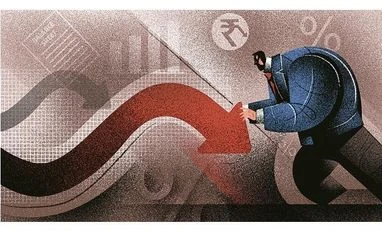 "The new world of 4% inflation")












 Connect with us on WhatsApp