Where are India's mobility experiments?

Policy needs to incentivise experimentation with mobility models
Where are India's mobility experiments?
Vandana Gombar
Last Updated : Apr 18 2018 | 5:59 AM IST
A collision involving Uber’s self-driving autonomous SUV was, unfortunately, the cause of death of a pedestrian in Arizona last month. The three main questions being raised are:

  • What exactly went wrong with the automatic sensors?
  • Why was the back-up driver not able to control it?
  • What should be done to prevent a repeat?

This tragedy in the US is likely to prompt some soul-searching among car companies and regulators around the world, about how to maximise safety as additional autonomous miles are clocked. According to a Bloomberg New Energy Finance report of February, almost 60 cities globally had started hosting pilot programmes for autonomous vehicles, while another 30 were in the planning process.

In India, the issue may be a bit less pressing because chaotic traffic conditions pretty much rule out autonomous driving as an option in the near future. Instead, vehicle sharing looks likely to be the main focus of intelligent mobility efforts in the short term.

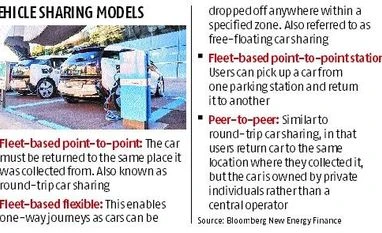
This car-sharing could be fleet-based or peer-to-peer: you could hire and pick up a car at any point and drop it at any location, or at a pre-specified location, say, a metro station. That would help reduce the demand for parking, and road space per user. Different models of vehicle sharing are being tried around the world, with ordinary bicycles, electric two-wheelers and electric cars too.


There aren’t enough ongoing experiments on mobility for a country that needs to move over a billion people every day. India is still largely thinking in analogue mode—more road and more parking for more vehicles. The reality is that the shortage of roads and parking will only intensify in the foreseeable future.

You may occasionally spot an electric car or bus on the road and also possibly a newly-installed charging station. Delhi’s chief minister has laid out a road map for buying 1,000 electric buses by March 2019, as well as another 905 electric “feeder” vehicles. The capital city state is also working on an EV policy that will seek to replace inefficient “two-wheelers, taxi fleets and commercial goods carriers with fully electric vehicles”. Some other states are also procuring electric buses, so expect to see more e-vehicles on the road, but is that enough?

Making electric buses ubiquitous in cities is the easy step. There is a case for seeing more mobility models originating from India. How about experimenting with a standalone EV charging station powered by the sun? There is a Californian company—Envision Solar—that is already selling these high-upfront-cost stations.

Policy needs to incentivise experimentation with mobility models. It was encouraging to see Niti Aayog place on its website a draft model concession agreement for ropeways last month. “They have amongst the lowest carbon emissions among all urban transit options and are extremely low on noise-related pollution,” the body said, adding that they cause little obstruction to public life when being set up, and can be up and running in about 24 months.

Meanwhile, there are some who are seeing the solution in airborne self-driving drone-like taxis: if they can deliver packets, why not passengers?
The author is the editor, Global Policy, Bloomberg New Energy Finance. 

She can be reached at vgombar@bloomberg.net

One subscription. Two world-class reads.

Already subscribed? Log in

Subscribe to read the full story →
*Subscribe to Business Standard digital and get complimentary access to The New York Times

Smart Quarterly

₹900

3 Months

₹300/Month

SAVE 25%

Smart Essential

₹2,700

1 Year

₹225/Month

SAVE 46%
*Complimentary New York Times access for the 2nd year will be given after 12 months

Super Saver

₹3,900

2 Years

₹162/Month

Subscribe

Renews automatically, cancel anytime

Here’s what’s included in our digital subscription plans

Exclusive premium stories online

  • Over 30 premium stories daily, handpicked by our editors

Complimentary Access to The New York Times

  • News, Games, Cooking, Audio, Wirecutter & The Athletic

Business Standard Epaper

  • Digital replica of our daily newspaper — with options to read, save, and share

Curated Newsletters

  • Insights on markets, finance, politics, tech, and more delivered to your inbox

Market Analysis & Investment Insights

  • In-depth market analysis & insights with access to The Smart Investor

Archives

  • Repository of articles and publications dating back to 1997

Ad-free Reading

  • Uninterrupted reading experience with no advertisements

Seamless Access Across All Devices

  • Access Business Standard across devices — mobile, tablet, or PC, via web or app

More From This Section

Disclaimer: These are personal views of the writer. They do not necessarily reflect the opinion of www.business-standard.com or the Business Standard newspaper
Next Story



