
India, China to benefit most from climate policy, reduced emissions: Study
Strongest potential near-term health benefits are in China and India, which face among the highest death rates from air pollution
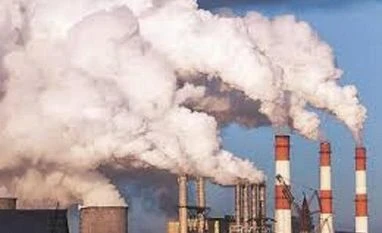 "India, China to benefit most from climate policy, reduced emissions: Study")
WebinarsNew
Deep DiveNew
Explore Business Standard
Strongest potential near-term health benefits are in China and India, which face among the highest death rates from air pollution
India and China, which face the highest burden of death from air pollution, will reap the biggest health benefits of a robust climate policy aimed at reducing carbon emissions, a study has found.
Researchers from the University of Vermont in the US and colleagues found that the price tag for cutting global emissions may seem expensive, until the human toll of deaths from air pollution and climate change are factored in.
The study, published in the journal Nature Communications, found that immediate, dramatic cuts in carbon emissions -- aggressive enough to meet the Paris Climate Agreement -- are economically sound if human health benefits are factored in.
"Reducing greenhouse gas emissions will also reduce deaths from air pollution in communities near the emissions reductions," said Mark Budolfson from the University of Vermont.
"These health 'co-benefits' of climate change policy are widely believed to be important, but until now have not been fully incorporated in global economic analyses of how much the world should invest in climate action," said Budolfson.
By factoring in these additional co-benefits and co-harms, the researchers identified a climate policy that would bring immediate net benefits globally, both in health and economic terms.
The strongest potential near-term health benefits are in China and India, which face among the highest death rates from air pollution, researchers said.
By adding air pollution to global climate models, Budolfson and colleagues found that economically, the optimal climate policy would be more aggressive than previously thought, and would produce immediate net benefits globally.
The health benefits alone could reach trillions of dollars in value annually, depending on air quality policies that nations adopt, to help offset climate investments, researchers said.
"We show the climate conversation doesn't need to be about the current generation investing in the further future," said Budolfson.
"By making smart investments in climate action, we can save lives now through improved air quality and health," he said.
The team's work builds on the RICE climate model, which was developed by Nobel laureate William Nordhaus.
Researchers considered the costs and benefits of air pollutant emissions, which produce aerosols.
Aerosols have never been fully incorporated into this type of modelling, and are important for two reasons.
Aerosol pollution worsens human health, but aerosols also act to cool the earth, counterbalancing some of the warming generated by greenhouse gases.
"Some developing regions have been understandably reluctant to invest their limited resources in reducing emissions," said Noah Scovronick from Emory University in the US.
"This and other studies demonstrate that many of these same regions are likely to gain most of the health co-benefits, which may add incentive for them to adopt stronger climate policies," Scovronick said.
The researchers find that the dramatic efforts needed to meet the Paris Agreement targets of limiting global temperature rise to two degrees Celsius is economically defensible.
This is because the health benefits resulting from air pollution reductions can offset the near-term costs.
Prior economic studies on this issue did not support such a strict climate target.
"The climate problem has several features that make it particularly difficult to solve," said Marc Fleurbaey of Princeton University in the US.
First Published: May 07 2019 | 6:05 PM IST


 Connect with us on WhatsApp