Associate Sponsors

Co-sponsor

Kaveri to Manik: India seeks to build fighter jet aircraft engines

Defence Minister calls for speeding up efforts to achieve self-reliance in combat aircraft engine manufacturing
3 min read
Updated On: Feb 17 2026 | 6:37 PM IST
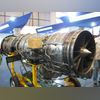
Representative image of Kaveri engine

Representative image of Kaveri engine

Defence Minister Rajnath Singh on Monday reviewed programmes to build an indigenous aero-engine, urging accelerated development so that the country can achieve self-reliance in combat aircraft power plants.
 
Singh was at the Gas Turbine Research Establishment (GTRE) in Bengaluru to review projects and witnessed a full-afterburner test of the Kaveri engine. India must not limit itself to fifth-generation engines and must start work on sixth-generation technologies, he said, setting an ambitious five-to-seven-year timeline for advanced engine development.
 
The GTRE — a nodal agency under the Defence Research and Development Organisation (DRDO) — is responsible for the design, development, testing and certification of gas turbine engines for military aircraft, unmanned systems and other defence applications.
 
Indigenous fighter engine effort
 
The GTRE’s first attempt at a military-grade jet engine was the GTX-35VS Kaveri. In 1989, it was sanctioned to produce 81 kiloNewtons (kN) of thrust, with the primary objective of replacing foreign engines with an indigenous power plant for the HAL Tejas Light Combat Aircraft (LCA).
 
Its “Kabini” core first ran in March 1995, followed by the first full prototype test in 1996. The engine later achieved a milestone in 2010 when it completed a maiden flight test on a modified Ilyushin Il-76 flying testbed in Russia.
 
The engine was officially delinked from the Tejas programme in 2008 after failing to meet the required thrust-to-weight ratios and high-altitude performance required for supersonic combat.
 
The project was redesigned as a “dry” or non-afterburning variant producing about 48 kN of thrust, planned for an unmanned combat aerial vehicle, including DRDO’s “Ghatak”.
 
Shift to missiles
 
GTRE started developing “Manik” as an indigenous Small Turbofan Engine (STFE) to power long-range subsonic cruise missiles and unmanned platforms. It was asked to build practical, lower-thrust propulsion systems after the Kaveri programme was delinked.
 
Manik is a 4.5 kN thrust-class, twin-spool bypass turbofan without an afterburner and is equipped with a Full Authority Digital Engine Control, a digital brain system.
 
It is designed to replace the imported Russian engine used earlier in the Nirbhay cruise missiles. It now powers the Indigenous Technology Cruise Missile and the Long-Range Land Attack Cruise Missile.
 
120 kN engine for AMCA
 
GTRE is tasked with the development of a high-thrust engine in the 110-120 kiloNewton class to power India’s planned fifth-generation stealth fighter, Advanced Medium Combat Aircraft (Amca).
 
In November, Defence Secretary Rajesh Kumar Singh said that India is close to finalising a collaboration agreement with the French aerospace firm Safran to jointly develop a 120 kN thrust jet engine that will power the Amca Mark 2.
 
The Amca Mk1 is expected to equip the first two Amca squadrons and will rely on the United States defence firm General Electric's F414 engine as an interim solution, allowing flight testing and early induction to proceed.
 
Under the proposed co-development model, India would retain full ownership of the intellectual property rights through the GTRE, including critical “hot section” technologies such as precision turbine blades and high-temperature materials, which are central to next-generation fighter-class engines.
 
Taken together, the timeline from the Kaveri to the Manik and now the proposed 120 kN engine reflects India’s shift from ambitious programmes to a phased, capability-building approach in aero-engine development.  
 
Premium ContentPremium ContentSubscription ExpiredSubscription Expired

Your access to Blueprint has ended. But the story is still unfolding.

No longer a subscriber? There’s a new reason to return.

Introducing Blueprint - A magazine on defence & geopolitics

Introducing Blueprint - A magazine on defence & geopolitics

Like what you read? There’s more in every issue of Blueprint

From military strategy to global diplomacy, Blueprint offers sharp, in-depth reportage on the world’s most consequential issues.

Exclusive pricing for Business Standard digital subscribers

Choose your plan

Exclusive Pricing

Choose your plan

58% off
₹6,000

Blueprint Digital

₹2,500

annual (digital-only)

₹208/Month

70% off
₹12,000

Blueprint Complete

₹3,500

annual (digital & print)

₹291/Month

41% off
₹6,000

Blueprint Digital

₹3,500

annual (digital-only)

₹291/Month

62% off
₹12,000

Blueprint Complete

₹4,500

annual (digital & print)

₹375/Month

Here's what's included:

  • Access to the latest issue of the Blueprint digital magazine

  • Online access to all the upcoming digital magazines along with past digital archives

  • * Delivery of all the upcoming print magazines at your home or office

  • Full access to Blueprint articles online

  • Business Standard digital subscription

  • 1-year unlimited complimentary digital access to The New York Times (News, Games, Cooking, Audio, Wirecutter, The Athletic)

Written By :

Martand Mishra

Martand Mishra has started his reporting career with defence coverage. He is a graduate of the Indian Institute of Mass Communication. He enjoys reading books on defence, history and biographies.
First Published: Feb 17 2026 | 6:19 PM IST

Next Story