A long shot

What India's Integrated Rocket Force would mean for deterrence, doctrine, and defence
18 min read
Updated On: Dec 10 2025 | 8:05 AM IST
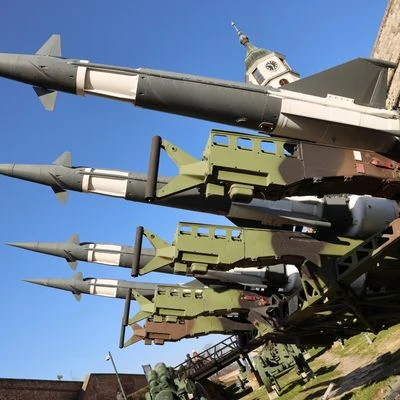
Representational image (Photo: Shutterstock)

Representational image (Photo: Shutterstock)

Long before the term “Rocket Force” entered the modern military lexicon, an Indian ruler was reshaping warfare in the Indian subcontinent — with rockets.
 
Mysore's Tipu Sultan introduced iron-cased rockets into battle during the Anglo-Mysore Wars of the 18th century. Known as the Mysorean Rocket, they were fired from wheeled launchers and pierced British lines and offered greater range and precision. He also pioneered “Cushoons”, India’s first rocket regiments, which rose to 5,000 personnel at its peak.
 
After Tipu's defeat in the Battle of Seringapatam in 1799, the British gathered some of his rockets, studied them, and then reverse-engineered them. The outcome was the infamous “Congreve rocket” developed by a British army officer, Sir William Congreve, that was later used in the 19th-century Anglo-Napoleonic wars.
 
More than two centuries on, India is thinking of a leap in rocket technology through the formation of an Integrated Rocket Force (IRF). 
 
The idea is to have a single unified command that brings together long-range precision strike capabilities comprising cruise, supersonic, and ballistic missile systems under one roof.
 
It was India's first Chief of Defence Staff, the late General Bipin Rawat, who first floated the idea of a rocket force to deter the growing missile threat posed by China's People's Liberation Army Rocket Force (PLARF). 
 
India perceives a persistent war-fighting asymmetry with China; and this idea emerged from India’s own operational experience, particularly its encounters with China along the Line of Actual Control (LAC).
 
China’s PLARF has now evolved into the biggest and most modern rocket force, possessing nuclear and conventional missiles capable of reaching any target from Tokyo to the Indian Ocean.
 
Former Indian Army chiefs such as General M M Naravane and General Manoj Pande have also spoken of the need for India's rocket force.
 
“India needs to develop a dedicated rocket force to strengthen its long-range strike capabilities,” Gen Pande said in an interview with Bharat Shakti, a defence news and information website.
 
"As to what the command control arrangements are, who they would be under, and whether it will be held centrally or given to the regional commands or theatre command, there are different options that can be discussed," he added. 
“It should be with the theatre commands. That is why we are creating theatres so that everything operational comes under them,” Gen Naravane told the Blueprint. “Any new organisation must add to operational efficiency; structures just for the sake of structures will serve no purpose.”
 
The purpose is clear: future wars will be contactless. Emphasis lies more on standoff firepower, precision targeting, and information warfare than on infantry assaults or armoured brigades.
This is not just theory. India's Operation Sindoor against Pakistan was marked by an increased reliance on missiles and rockets such as SCALP and BrahMos. Air defence systems, like the S-400 and Barak-8, played a decisive role in intercepting drones and the Fatah-1 and Fatah-2 missiles fired by Pakistan.
 
Only a few months after this conflict, Pakistan announced the creation of its own rocket command, the Army Rocket Force Command (ARFC), on August 13. It has been tasked with operating rockets and conventional missile systems.
The need for a dedicated rocket force also weighs on the fact that modern warfare is defined by missile power as was seen in Ukraine when Russia launched a massive barrage of around 40 missiles in a single attack, which “overwhelmed” parts of Kyiv’s air defences.
 
During the 12-day Israel-Iran war, Iran fired more than 150 ballistic missiles in waves of 40-50 each, overwhelming Israel’s Iron Dome. This shows how non-nuclear missile salvos can saturate air defence systems, and cause massive destruction without touching the nuclear threshold. 
 
The underlying message is that if the character of war is changing, the forces must evolve with it.
 
‘An operational necessity’
 
India’s missile journey has always mirrored its strategic anxieties primarily because of the threat posed by nuclear-armed neighbours China and Pakistan.
 
From the Integrated Guided Missile Development Programme, launched in 1983 under A P J Abdul Kalam, to today’s BrahMos Aerospace joint venture, India has built one of the most diversified missile industries in the developing world.
By the 2010s, India’s missile spectrum stretched from Pinaka rockets to intercontinental missiles. In theory, India possesses a vast arsenal of missiles, from the short-range Prithvi to the intercontinental Agni-V. In practice, the country’s conventional strike capabilities remain fragmented across services and commands.
 
This problem has been flagged in several expert studies.
 
A 2023 paper by Lieutenant Colonel Akshat Upadhyay of the Manohar Parrikar Institute for Defence Studies and Analyses (MP-IDSA) argues that consolidating missile assets under one command would improve India’s ability to wage non-contact warfare and deter adversaries like China more effectively.
 
The proposed rocket force would bring together various conventional missile systems — BrahMos, Pralay, Shaurya, and Nirbhay — along with advanced rocket artillery like the Pinaka Mk-II.
“The IRF will help India keep the Chinese on their toes by rendering their entire landmass vulnerable to Indian conventional missile strikes. Indian missiles lack variety and range,” Kartik Bommakanti, senior fellow at the New Delhi-based think-tank Observer Research Foundation (ORF), said.
 
“Numbers are equally important, with India needing missiles running into the thousands. China has mass, variety, and missile capabilities to strike at standoff ranges capable of deep interdiction, which India needs,” he added.
 
The IRF’s objective would not be to mirror China’s vast arsenal but to create a credible deterrent by denial, making it clear that any missile strike on Indian targets would invite an equally swift and proportionate response.
 
“The IRF aims to fill a gap between very localised engagements, say, in Ladakh or Aksai Chin, and the use of larger conventional forces. India needs a capability that allows for precision, standoff strikes against Chinese military infrastructure without suffering major physical losses,” Debak Das, assistant professor of peace and security at the University of Denver, said. 
 
“IRF is an operational necessity rather than a symbolic one,” he added.
 
The concept is rooted in India’s geography. The Himalayas do not allow fast-moving armour or heavy divisions. What matters there is precision, mobility, and range. Missiles fit that terrain better than tanks or jets. Unlike aircraft, missiles require no pilots and can be launched within minutes. 
 
In essence, the IRF is meant to sit between artillery and airpower, giving India the ability to strike deep into adversary territory with minimal risk 
to personnel.
 
Building blocks
 
The Pralay missile, successfully tested in 2022, sits at the centre of this vision. It is being seen as a stepping stone for India’s coming rocket force for multiple reasons.
 
A surface-to-surface quasi ballistic missile with a range of 150–500 kilometre (km), Pralay employs a solid propellant rocket that uses advanced guidance technology. 
 
Pralay is a derivative of the K-series missile, which is designed to be part of nuclear-powered ballistic missile submarines INS Arihant and INS Arighat. It bridges the gap between India’s long-range ballistic deterrents and short-range artillery rockets. Its operational range suits the Himalayan battlespace perfectly, putting Chinese logistics nodes, ammunition depots, and forward airbases in Tibet within striking distance.
 
Pralay relies on existing systems that are used in K-15 and K-4 submarine-launched ballistic missiles (SLBMs). This has brought down manufacturing and operational costs. “Pralay would likely form the backbone of such a force. This allows India to operate in that grey zone, below the threshold of an air campaign but above artillery fire, giving it both deterrent and operational flexibility,” Das said.
 
It is designed for rapid deployment, can carry different types of warheads, including runway-denial and bunker-penetrating munitions, and uses solid fuel for quick reaction.
 
Pralay “extends the range of Indian artillery beyond 90 km, bringing critical PLA infrastructure under threat while remaining within the conventional warfighting paradigm”, MP-IDSA’s Upadhyay wrote in his paper. 
 
The Pralay is seen as a prelude to the IRF because it provides the Indian military with its first quasi-ballistic missile designed specifically for high-precision strikes outside of the country’s nuclear arsenal. 
 
If the IRF comes to life, it may likely be organised across multiple “sectors”, some focused on China, others on Pakistan, with one reserve formation for flexible deployment.
 
Unlike artillery shells, these missiles are fired from mobile transporter erector launchers. These trucks can move into position, fire within minutes, and shift location quickly to avoid counterfire. Launch crews receive targeting information through satellites, radars, and other sensor feeds before a missile is cleared for firing.
 
Once airborne, ballistic missiles like Pralay follow a programmed flight path guided by onboard systems, while cruise missiles such as BrahMos fly low and use the terrain to stay out of sight of enemy radars. 
The move towards solid-fuel systems has also made launches quicker and more reliable, with less preparation time and fewer chances of the enemy spotting them beforehand. 
 
Paradigm shift
 
The IRF will represent a doctrinal shift as much as a technological one. For years, India’s military posture has rested on two pillars: massive retaliation for nuclear deterrence and limited conventional deterrence based on 
air-and-ground power. The rocket force idea inserts a third layer, a bridge between the two.
 
The IRF’s biggest promise is “deterrence by denial”. Instead of threatening massive retaliation, it would prevent aggression by making it clear that any strike or incursion would invite a swift, precise, and proportionate response. This strategy seeks to convince an adversary that aggression will yield no advantage because key military assets can be targeted swiftly and precisely.
 
“These capabilities come with escalation risks, especially vis-à-vis Pakistan, which may fear Indian efforts to attrite its nuclear forces or command and control with non-nuclear weapons,”  said Ankit Panda, senior fellow in the nuclear policy programme at the Carnegie Endowment for International Peace.
 
That is the paradox at the heart of deterrence: the more usable a weapon becomes, the more dangerous it gets.
 
“Unlike China’s rocket force, which mixes nuclear and conventional roles, India’s IRF is strictly non-nuclear. That clarity is important,” Panda said.
 
Critically, it also reflects an Indian recognition that deterrence today is about tempo, the speed at which you can detect, decide, and strike. A missile command, integrated with real-time surveillance and targeting, dramatically compresses that decision cycle.
 
“I see it (IRF) as fundamentally moving towards deterrence and war-fighting needs. Conventional missiles are an increasingly central component of modern warfare, and the success of joint operations in possible future conflicts with both Pakistan and China may hinge on the effective use of long-range fires,” Panda said.
 
“That said, there are also considerable escalation risks that must be considered as India embarks down this path,” he added.
 
In short, the IRF is designed to give India an option between doing nothing and going to war.
 
The technology frontier
 
Behind the organisational debates lies the technological question: what kind of weapons will define India’s rocket force?
 
That crucial question aligns with the direction the Defence Research and Development Organisation is already taking, developing the BrahMos-NG and Nirbhay missiles and the unmanned scramjet-powered aircraft Hypersonic Technology Demonstrator Vehicle.
 
For now, Pralay and BrahMos will likely be the IRF’s mainstays. Hypersonics may follow later.
 
Panda, however, is cautious about the hype: “There’s always a degree of technological determinism, a drive to develop the next capability simply because it’s the next step. India will move toward hypersonics, but their real strategic benefit remains to be seen.”
 
Artificial intelligence (AI) and automation could change things faster. “AI-enabled targeting is already being integrated into drones and artillery,” Das said. “For larger systems, manual control will remain, for both legal and strategic reasons.”
 
The biggest challenge for the IRF may not be technical — it is the institutional bottlenecks.
 
Missile assets today are scattered: nuclear systems are under the Strategic Forces Command (SFC), tactical rockets with the Army, and BrahMos with all three services. Integrating them under one command requires not just hardware but a new culture of jointness.
 
The rocket force will, in all likelihood, not be a part of the SFC. “We should keep the Strategic Forces Command out of it, because those are strategic weapons. At the theatre level, once you have a theatre, it automatically implies the Army, Navy, and Air Force all come under one commander,” Gen Naravane said.
 
As Das said, “The key will be doctrinal clarity. You must ensure a clear distinction between conventional and nuclear missile systems. A Pralay launch can never be mistaken for a nuclear event.” That means separate bases, distinct communication links, and clear visual signatures.
 
For now, the Army’s Corps of Artillery could be best placed to form the IRF’s core. But eventually, it will need representation from the Indian Air Force and Indian Navy, since both air- and sea-launched cruise missiles are central to India’s deterrence mosaic. Centrality of command is necessary to ensure clarity of command and avoid any miscalculation.
 
“It is precisely to reduce the chances of escalation or miscalculation that IRF should keep away from entanglement. Dual-use missiles under the same command and control architecture cause such risks,” Manpreet Sethi, distinguished fellow at the Centre for Aerospace Power and Strategic Studies, said.
 
“By ensuring such separation, India would in fact be reducing the risks. This would also be the best way to undertake their utilisation,” she added.
 
Integration will require sustained coordination between the Chief of Defence Staff and the Integrated Defence Staff, a task that India has often struggled with. That integration will demand more than training; it will require a shared professional military education system, new promotion pathways, and an acceptance that warfare is now multi-domain by default.
 
Unlike traditional artillery units, rocket force crews operate in a data-saturated environment, coordinating with space and cyber commands, analysing sensor feeds, and making split-second launch decisions.
 
Mirroring China
 
No conversation about India’s proposed rocket force can be separated from the shadow cast by its northern neighbour.
 
China’s PLARF, once a mere branch of the Second Artillery Corps, has evolved into a full-fledged military service. It now controls roughly 2,500 ballistic missiles, from short-range theatre weapons to intercontinental delivery systems, and hundreds of cruise missiles designed for precision conventional strikes.
 
Initially, the PLARF’s capability was designed keeping in mind the capabilities of the United States, but over time, its next-door neighbour, India, has become its focus. 
 
Chinese hypersonic missiles, like the DF-17 and DF-26, which travel from Mach 5 to Mach 10 speeds in their gliding phase, can reach New Delhi in minutes. India, at present, does not have any resources to deter these kinds of threats.
 
What makes the PLARF formidable is not just the quantity of its missiles but also the doctrine underpinning them. Chinese planners have long believed that a war can be fought and won without crossing the nuclear line.
 
China has a “no first use” (NFU) policy when it comes to its nuclear weapons. In that scenario the PLARF serves the dual purpose of being a strategic deterrence by involving conventional ballistic and cruise missiles while maintaining a credible nuclear second strike capability.
 
Tong Zhao, senior fellow at Carnegie China, said that one of the PLARF’s major advantages is bureaucratic clarity: “It raises the institutional importance of missile and rocket forces, giving them a more direct line of communication with top leadership. This ensures they compete more effectively for resources.”
 
By combining cyber operations, electronic warfare, and massed missile barrages, the PLA can paralyse an adversary’s military infrastructure within hours. The question confronting Indian planners, therefore, is not whether India can strike back, but how quickly, how credibly, and how conventionally.
 
Formidable as it may be, the much-lauded PLARF has not been free of friction. “There’s inter-service competition within the PLA. The army still operates some short-range missiles, creating overlaps with the Rocket Force. Coordination at the theatre level remains challenging,” Zhao said.
 
India may likely face similar turf battles. Its military culture, built around service autonomy, has historically resisted deep integration.
 
The creation of the Andaman and Nicobar Command two decades ago was an early experiment in jointness; the SFC was another. The IRF will test whether those lessons have sunk in.
 
“Coordinating command and control for both nuclear and conventional forces is complex. But doing it right can enhance deterrence. Doing it wrong can invite disaster,” Zhao added. 
 
Critics warn against reading the requirement of a rocket force purely through the lens of China.
 
While the PLARF remains the proximate trigger, the IRF could have broader strategic value — providing a rapid-response tool against any adversary, including non-state actors or high-value terrorist infrastructure across borders.
Its deterrent effect could also extend to the maritime domain. With longer range BrahMos variants and hypersonic systems, the IRF could also integrate coastal defence batteries and sea-denial missions, supporting the Navy’s expanding role in the Indo-Pacific.
 
Risks and realities
 
Every new deterrent instrument carries the risk of miscalculation. The challenge, then, will be communication. NFU remains a cornerstone of India’s nuclear policy. However, IRF falls outside the ambit of this, both operationally and symbolically.
 
“The very existence of such a force might create complacency or overconfidence in using it during low-level skirmishes. That could unintentionally trigger escalation spirals that are hard to control,” Das said.
The lack of proper diplomatic channels during times of conflict or miscalculation makes it extremely difficult to deescalate.
 
In 2022, India accidentally launched a BrahMos missile inside Pakistan. This incident exposed how fragile stability can be in South Asia; no functioning high-level talks or confidence-building measures were taken after the incident, and even the director general of military operations hotline was reportedly not used.
 
The only thing that prevented the crisis from snowballing was restraint. In such an environment, the introduction of a rocket force adds another level of uncertainty in a brittle security landscape.
 
Budgetary realities also remain a concern. Missiles are cheaper than jets in unit terms, but building an integrated force with dedicated logistics, command nodes, and mobility platforms will demand sustained investment.
 
Bureaucratic inertia could be just as costly. “The IRF has been hanging fire for years,” Bommakanti of ORF said. “It’s under-prioritised, maybe even viewed with apathy. But it would give India a potent arrow in its quiver.”
For India’s defence industry, however, the IRF could be transformative. It could accelerate production lines, demand standardisation, and even give the private sector a boost.
 
It would also cement the role of missiles as an export category, with systems like Akash and BrahMos already finding overseas buyers, experts said.The more immediate hurdle, however, may be conceptual: shifting India’s strategic imagination from “territorial defence” to “deterrence through precision”.
 
Dynamic, not reactive
 
In the end, the IRF is not about aggression — it is about autonomy. For decades, India’s deterrence posture has been reactive, designed to absorb and retaliate. The IRF represents an attempt to make it dynamic, to shape crises before they spiral.
 
It acknowledges that modern warfare is less about lines on a map and more about controlling time and tempo. A commander who can strike deep without crossing borders controls escalation, not provoke it. The IRF can provide India with much-needed autonomy by enabling no-contact warfare and bringing all its missile assets under a unified command and control. In the end, history has a way of coming back. 
 
When Tipu Sultan’s rockets streaked through the skies of Seringapatam, they terrified an empire and inspired another. They marked a moment when India led, not followed, in the evolution of military technology.
 
Ultimately, the IRF will shape India’s deterrence posture for decades. Whether it becomes a stabilising institution or creates new friction will depend on how India integrates technology and diplomacy into its rocket doctrine.
 
If raised, the IRF will not only address a strategic gap but also complete a historical cycle. As Das put it, “India needs a force capable of striking targets swiftly and decisively, without escalating to airstrikes, which are riskier and politically costlier. The IRF will give India that intermediate capability between artillery and airpower — precise, conventional, and effective.”
 
In other words, it is a long shot, but one worth pursuing.  
Premium ContentPremium ContentSubscription ExpiredSubscription Expired

Your access to Blueprint has ended. But the story is still unfolding.

No longer a subscriber? There’s a new reason to return.

Introducing Blueprint - A magazine on defence & geopolitics

Introducing Blueprint - A magazine on defence & geopolitics

Like what you read? There’s more in every issue of Blueprint

From military strategy to global diplomacy, Blueprint offers sharp, in-depth reportage on the world’s most consequential issues.

Exclusive pricing for Business Standard digital subscribers

Choose your plan

Exclusive Pricing

Choose your plan

58% off
₹6,000

Blueprint Digital

₹2,500

annual (digital-only)

₹208/Month

70% off
₹12,000

Blueprint Complete

₹3,500

annual (digital & print)

₹291/Month

41% off
₹6,000

Blueprint Digital

₹3,500

annual (digital-only)

₹291/Month

62% off
₹12,000

Blueprint Complete

₹4,500

annual (digital & print)

₹375/Month

Here's what's included:

  • Access to the latest issue of the Blueprint digital magazine

  • Online access to all the upcoming digital magazines along with past digital archives

  • * Delivery of all the upcoming print magazines at your home or office

  • Full access to Blueprint articles online

  • Business Standard digital subscription

  • 1-year unlimited complimentary digital access to The New York Times (News, Games, Cooking, Audio, Wirecutter, The Athletic)

Written By :

Mohammad Asif Khan

Mohammad Asif Khan is a Senior Correspondent at Business Standard, where he covers defence, security, and strategic affairs.
First Published: Dec 10 2025 | 8:05 AM IST

Next Story