Freedom of expression has been threatened more seriously in Gaza than in any recent conflict, with journalists targeted in the war-torn territory and Palestinian supporters targeted in many countries, a United Nations expert said Friday.
Irene Khan, the UN independent investigator on the right to freedom of opinion and expression, pointed to attacks on the media and the targeted killings and arbitrary detention of dozens of journalists in Gaza.
The banning of Al Jazeera, the tightening of censorship within Israel and in the occupied territories, seem to indicate a strategy of the Israeli authorities to silence critical journalism and obstruct the documentation of possible international crimes, she said.
Khan also sharply criticized the discrimination and double standards that have seen restrictions and suppression of pro-Palestinian protests and speech. She cited bans in Germany and other European countries, protests that were crushed harshly on U.S. college campuses, and Palestinian national symbols and slogans prohibited and even criminalized in some countries.
The UN special rapporteur also pointed to the silencing and sidelining of dissenting voices in academia and the arts, with some of the best academic institutions in the world failing to protect all members of their community, whether Jewish, Palestinian, Israeli, Arab, Muslim, or otherwise.
While social media platforms have been a lifeline for communications to and from Gaza, Khan said, they have seen an upsurge in disinformation, misinformation and hate speech with Arabs, Jews, Israelis and Palestinians all targeted online.
She stressed that Israel's military actions in Gaza and its decades of occupation of Palestinian territories are matters of public interest, scrutiny and criticism.
Khan earlier presented her report on the global crisis of freedom of expression arising from the conflict in Gaza to the General Assembly's human rights committee.
She said Israel responded to it, explained the country's laws, and took the position that the conflict in Gaza was not really of global significance, and my mandate should not engage with it. Israel's UN mission declined to comment on her press briefing.
The surprise attacks in southern Israel led by Hamas militants who controlled Gaza on Oct. 7, 2023, killed about 1,200 people, mainly civilians, and led to the abduction of about 250 others, around 100 of whom are still hostages. Israel's military offensive in retaliation has killed more than 42,000 Palestinians, according to the Gaza Health Ministry, which doesn't distinguish between civilians and combatants but says the majority were women and children.
Khan, a former secretary-general of Amnesty International, stressed that no conflict in recent times has threatened freedom of expression so seriously or so far beyond its borders than Gaza.
She said attacks on the media are an attack on the right to information of people around the world who want to know what is happening there.
Khan said she has called on the UN General Assembly and Security Council to take measures to strengthen the protection of journalists as essential civilian workers.
Journalism should be seen as essential as humanitarian work, she said.
The information industry has changed, Khan said, and the issue of access to conflict situations by international media representatives who have been banned from Gaza by Israel must also be affirmed. It has to be clarified that it is not okay to just deny access to international media, she said.
Without naming any countries, Khan asked why nations that pride themselves as champions of the media have been silent in the face of unprecedented attacks on journalists in Gaza and the West Bank.
My main message is that what is happening in Gaza is sending signals around the world that it is okay to do these things because it's happening in Gaza and Israel is enjoying absolute impunity and others around the world will believe that there will be absolute impunity, too, Khan said.

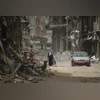 "Freedom of expression threatened most in Gaza as media targeted: UN expert")

