Make way for environment-friendly roads in India!

Latest methods are must for dust control, an environmental hazard, to ensure a better livable milieu
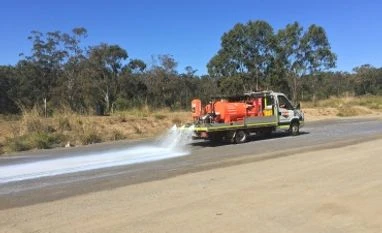
Dust suppression solutions offer a set of advantages & lucrative benefits
Ben James
Last Updated : Jun 02 2017 | 10:31 AM IST
Every year on World Environment Day, we find many people come out on streets to plant trees, talk about the difference between biodegradable and non-biodegradable objects, organise cycling marathons, talk about waste management etc. and all this fade away as soon as the curtains roll down on the 5th of June. Do we really need a dedicated Environment Day to shake us and make us realise that our planet is decaying with each passing day? 

World Environment Day is celebrated worldwide on the 5th of June and is United Nation’s important step to raise awareness and action for protection of our environment. So, this World Environment Day, we feel it’s imperative to put the spotlight on dust control - which is one of the major issues in India as well as road recycling and reflect upon these two neglected areas - and together think of deploying solutions that help restore our environment in a larger way.

Dust control
Introducing new eco-friendly products are the need of the hour in India. Compared to conventional processes, dust suppression solutions offer a set of distinct advantages and lucrative benefits, including easy application and long-life protection across extreme climatic conditions. There are some products that also offer toughness and flexibility, improving safety and eliminating dust complaints.

Today, there are state-of-the-art dust technologies available that can solve a range of dust control problems on all types of roads, from major highways and freeways to haulage, industrial and rural roads, tarmacs, hardstand areas and water repellent pavements. It can be easily applied to clay, silt, sand and gravel materials, immediately creating safer, more sustainable and cost-effective infrastructure. 

Dust pollution is the main air contaminant and environmental hazard, having extensive health, safety and environmental consequences. Airborne dust particles can pass through while breathing and travel to the deepest regions of the lungs, over a prolonged period, this can cause many serious respiratory conditions. So, it’s high time, the traditional techniques are replaced with recent and safer methods which in turn will ensure a better livable milieu. 

Road recycling
The stabilisation of soil/aggregate is being used worldwide towards optimal usage of scarce resources. Though soil stabilisation exists in Indian codes since last several decades, the concept is yet to be utilised on ground in any significance. The concept of ‘Cold in Place Recycling’ (CIPR) and cement treated base (CTB) have been approved by NHAI and provide a comprehensive solution for restoration of existing road network. The incorporation of proper stabilisation technique will ensure more durable, longer lasting roads. 

The road stabilisation process can be divided into three major components:
  • Design process and codes: Stabilisation and CIPR requirements in Indian design codes have been adopted from AUSTROADS (Australia) and need further updating with respect to requirements of materials to be stabilised. The use of CTB and CIPR provide far greater strength than conventional methods. This modification will allow engineers to utilize existing material to a large extent and allow usage of locally available marginal material. 
  • Stabilisation agents: The stabilisation process has a wide range of stabilisation agents, ie soil-aggregate mix, Lime, cement, fly ash, foundry sand, slag, foamed bitumen, emulsion, polymers and other proprietary chemical stabilisers. These materials are readily available in India and if incorporated properly in road construction, it can be prosperous for the infrastructure sector.
  • Stabilisation equipment: Specialised heavy road recyclers capable of cutting existing soil/aggregate/asphalt, mixing in place, adding water and other stabilisation agents as per requirement, speed independent stabilisation agent spreader (cement, lime, polymer etc), heavy Padfoot rollers (20t static and 40t dynamic capacity) and pneumatic tyre rollers are essential components of stabilisation process in general.  
Currently there are only a select few manufacturers with these types of machineries and capabilities in India. If more and more manufacturers come forward and deploy these environment and safety-friendly products, it’ll be excellent for our Indian roads and dust control, making livable surroundings for people of India all year round.  
__________________________________________________________________________________________________
Ben James is the CEO of Global Road Technology (GRT)

One subscription. Two world-class reads.

Already subscribed? Log in

Subscribe to read the full story →
*Subscribe to Business Standard digital and get complimentary access to The New York Times

Smart Quarterly

₹900

3 Months

₹300/Month

SAVE 25%

Smart Essential

₹2,700

1 Year

₹225/Month

SAVE 46%
*Complimentary New York Times access for the 2nd year will be given after 12 months

Super Saver

₹3,900

2 Years

₹162/Month

Subscribe

Renews automatically, cancel anytime

Here’s what’s included in our digital subscription plans

Exclusive premium stories online

  • Over 30 premium stories daily, handpicked by our editors

Complimentary Access to The New York Times

  • News, Games, Cooking, Audio, Wirecutter & The Athletic

Business Standard Epaper

  • Digital replica of our daily newspaper — with options to read, save, and share

Curated Newsletters

  • Insights on markets, finance, politics, tech, and more delivered to your inbox

Market Analysis & Investment Insights

  • In-depth market analysis & insights with access to The Smart Investor

Archives

  • Repository of articles and publications dating back to 1997

Ad-free Reading

  • Uninterrupted reading experience with no advertisements

Seamless Access Across All Devices

  • Access Business Standard across devices — mobile, tablet, or PC, via web or app

Next Story



