It could be any boutique on Fifth Avenue. Italian tourists in fur coats browse a selection of Chanel Classic 2.55 purses that flank a Gucci Dionysus, last year’s holy grail of handbags. Nearby, women with bouncy blowouts pore over Cartier Trinity rings and Kwiat diamond studs. For all the excitement, you’d never guess this stuff was all preowned.
In the RealReal store on Wooster Street in New York’s SoHo neighbourhood, you might find a $600 Balenciaga City bag, $800 Hermès Collier de Chien bracelets, even a $1,500 Fendi Baguette — the pint-size floppy rectangle that rocketed to “it” bag status in the late 1990s as Carrie Bradshaw’s carryall of choice on Sex and the City. That the items aren’t directly off the runway doesn’t detract from their value; it enhances it.
Almost 10,000 pieces are added to the RealReal’s website every day, and some make it to the storefront, which opened last fall and is decorated with velvet couches and flower arrangements from chic florist Fox Fodder Farm. Chief Executive Officer Julie Wainwright estimates that the consignment-clothing startup, with 8 million members worldwide, will double its revenue over the next two years, making the six-year-old enterprise a billion-dollar company.
Other high-end resale sites are growing at similarly exponential rates: ThredUp Luxe opened in September and already forecasts $10 million in sales for this year. Vestiaire Collective, a Parisian e-commerce store, raised $65 million in October and is expanding to China. The three-year-old site Rebag expects annual sales to double in 2018.
Long synonymous with thrift, consignment clothing is an $18 billion business, with about $2.3 billion spent on specialised secondhand apparel websites. (The bulk is at conventional, low-price consignment shops.) Still, “they’re part of an incremental chipping away of conventional retail,” says Deborah Weinswig, managing director of FGRT (formerly Fung Global Retail & Technology), a think tank.
As Wainwright was putting the finishing touches on the brand’s first brick-and-mortar store last fall, another billion-dollar brand was making a fashion statement of its own. Versace used its runway show in Milan last September to reissue some of the greatest hits that Gianni Versace designed in the early ’90s. Models swished down the runway in a butterfly pattern that Kristen McMenamy immortalised on the cover of a 1995 issue of Vogue. The Warhol-inspired Marilyn dress that Linda Evangelista donned in a 1993 ad also came back.
The house was riotously brought down when original supermodels Cindy Crawford, Claudia Schiffer, Helena Christensen, Carla Bruni and Naomi Campbell stormed the catwalk to the sound of George Michael’s Freedom 90! — all wearing looks that channelled Versace’s 1994 Metal Mesh collection. (Donatella Versace resurfaced these and other styles in a partial nod to the television show American Crime Story, which dramatises the murder of her brother 25 years ago.)
High-fashion labels have riffed on patterns from their extensive in-house archives for as long as the archives have existed, but the recent push by midmarket and luxury brands to rerelease almost identical replicas of decades-old pieces is new. It extends to both menswear and women’s wear, whether it’s a reissued Helmut Lang denim jacket from 2004 or Gucci bags pulled from the ‘70s. Prada built its 2018 collection around nylon, a fabric it hasn’t celebrated on runways in decades. Reverence for fashion’s good ol’ days might sound strange for an industry that prides itself on looking to the future, but the inspiration for retailers, designers and consumers is, at the moment, coming from the past. There are two possible explanations for this trend, Weinswig says. “In a world of near-unlimited product choice, these kinds of moves underscore a brand’s heritage and can strengthen a connection with consumers by emphasising their long-standing presence,” she says. Struggling retailers such as J Crew Group In, which is marketing the return of the rugby shirts it introduced in 1984, and Gap Inc, which introduced its Archive Reissue — Logo Remix campaign at last month’s Grammy Awards, are eager to revisit their glory days to remind shoppers of their strengths. In January, Ralph Lauren relaunched its Snow Beach collection, made famous in 1993 by Wu-Tang Clan’s Raekwon, who wore it for the music video “Can It Be All So Simple”.

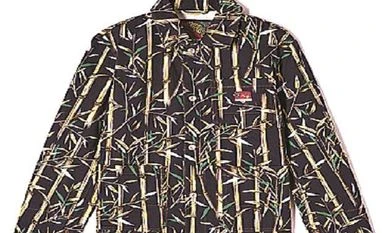 "Do not call it retro, 'archival' is the hottest new thing in fashion")











