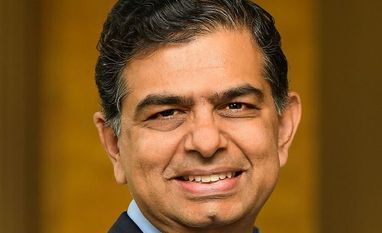
Seven months after taking charge, chairman Sanjeev Krishan has pressed the reset button at PwC India, as part of a global strategy rejig. Termed ‘The New Equation’, the India plan is to roll out an aggressive business expansion and company-wide upskilling drive over the next five years.
The multi-disciplinary audit-cum-consultancy major has announced plans to hire 10,000 fresh heads with focus on digital and emerging technologies, invest up to Rs 1,600 crore in upskilling people and capabilities, ramp up gender diversity within the organisation, among other things. In an interaction with Sudipto Dey, Krishan explains the impact of the new strategy initiatives on clients, employees and the marketplace. Edited excerpts:
Why was the need felt to come out with a fresh set of strategy initiatives?
Our strategy is a bet on India. As we come out of the pandemic there will be significant need for businesses to re-organise and transform themselves. We believe as a multi-disciplinary organisation we are well-placed to be part of the transformation journey.
The very ecosystem in which we operate has been dealing with a number of deep systemic issues over the last few years, including asymmetry, fractured geopolitics, polarisation, technological disruptions, and growing trust deficit. In many ways, the COVID-19 pandemic has exacerbated the situation and highlighted the unviability of many businesses and segments alike.
And this means that we need to change too - we need to adapt and do things differently. We commenced this journey with an outside-in approach – understood our clients’ needs and the market potential and then started reconfiguring our strategy.
In the post-COVID world, organisations are going to be challenged on every dimension of trust and will simultaneously need to deliver returns.
Our strategy centres around the two fundamental needs confronting our clients – the need to build trust with their stakeholders and to deliver sustained outcomes.
Companies that are unable to put in place processes that build trust will not win the buy-in from stakeholders necessary to deliver outcomes - these two are deeply interconnected needs which will define the success of organisations going forward.
What would that mean for employees, clients and other stakeholders?
Our people are a big component in bringing our vision to life. We will invest at least 1% of our revenues (each year) in upskilling our teams and partners. We are also looking at increasing our campus hires and expect to have 10,000 additional employees join us over the next five years.
A large proportion of the new jobs will be across select high-growth areas, including digital, analytics, cyber and emerging technologies. We expect to hire more STEM graduates.
We value diverse perspectives, encourage a growth mindset, and aim to have at least 40% gender diversity in our workforce over this period (as against current levels of 34-35%). In most of our business units the diversity ratio at entry level is pretty good. The challenge is we lose many of them in mid-career. One of our key focus areas would be to get some of that talent back. Diverse teams get you the best thinking and solutioning environment.
Additionally, we will be investing up to Rs 1,600 crore to develop and acquire capabilities in our chosen areas of focus. The areas we want to go long on – or make outsized investments – are cyber, digital, cloud, analytics, and emerging technologies. The critical thing is now we have a differentiated go-to-market approach. We are bringing the business together across four platforms: Deals, Transformation, Risk & Regulatory, and ESG. These four platforms will be pivotal to our success in the marketplace. The platforms will leverage the investments that we make on these focus segments to create outcomes for our clients.
Much of what we do, on both the trust and sustained outcomes front, would be embedded in technology. Our endeavour would be to have technology as the enabler to create outcomes or transformations for our clients. We will also be setting up a research institute to assist in identifying emerging trends across sectors.
In terms of contribution of audit and non-audit businesses to your overall India business, how do you see that changing over the next five years?
We are not looking at things from audit and non-audit lenses. The ‘New Equation’ is based on ‘trust’ and ‘sustained outcome’. Lot of activities we do would form part of the ‘trust’ equation and there are many others that are part of the ‘sustained outcome’ equation. The ‘trust’ part gets you a lot of relevance in the ecosystem and gets you proximity to some of the largest businesses domestically. Given the trajectory I suspect the ‘sustained outcome’ piece to potentially have a larger contribution to revenue over a period of time.