Covid-19 impact: Adani group asks AAI for more time on airport takeover

Cites second wave for invoking force majeure
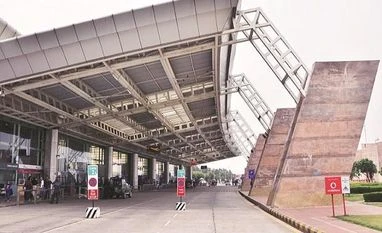
Jaipur Airport
The AAI board will decide on the matter in a meeting end of the month
Arindam Majumder New Delhi
4 min read Last Updated : Jun 18 2021 | 6:10 AM IST
The Adani group has deferred the takeover of three airports — Jaipur, Guwahati and Trivandrum — till December, citing disruptions caused by the second wave of Covid-19.

Sources aware of the matter said the Adani group had written to the Airport Authority of India (AAI) seeking to invoke the force majeure clause so that the takeover of airports could be postponed by six months. 

The company did not respond to a query on the matter.

The terms of the binding concession agreements, signed on January 19, mandate that the group should take over management and operational control of the airports within 180 days.

The AAI board will decide on the matter in a meeting end of the month. A government official confirmed that the company has sought to invoke force majeure due to the pandemic-linked disruptions in the aviation sector. ‘’There’s a clause in the agreement allowing takeover delay in case of an extraordinary situation beyond control of the parties concerned,” the official said.

In February 2020, the company had similarly invoked force majeure to defer the takeover of Ahmedabad, Lucknow and Mangaluru airports. Subsequently, AAI had extended the deadline by six months. The company took operational control of the three airports in November 2020.

In 2019, the Adani group had won the right to upgrade and operate the six AAI-owned airports by bidding aggressively. For instance, entrenched airport companies like GMR group, which operates India’s largest Delhi Airport, had bid Rs 85 and Rs 69 per passenger for Ahmedabad and Jaipur, respectively. Adani’s quote was significantly higher at Rs 177 and Rs 174 per passenger, respectively.

Sources aware of the company’s plan said while it was ready to acquire the airports, the second wave of the pandemic delayed the process. Verification of assets before change in management control and financial closure would involve a lot of logistics and manpower, they pointed out.

A senior industry executive who has been involved during the change of management control of Delhi and Mumbai airports explained that taking over management and operational control would entail tallying of all movable and immovable assets. Suppose the agreement said there were 50 x-ray machines in an airport, the Adani group must get it physically verified along with a quality check before a takeover, the executive said. Similarly, even minor details like air navigation instruments and fire trucks need to be vetted.  

However, the company has been proactive in acquiring the management control of Mumbai International Airport Limited (MIAL), which it took over from the GVK group last August. Karan Adani, son of Gautam Adani and CEO of Adani Ports SEZ Limited, and Gaurav Gupta, CEO of Adani Capital, have been appointed to the company’s board. The company has also rejigged many key positions of Mumbai Airport.

The Ahmedabad-based conglomerate--with investments in logistics, transportation, utilities, and energy--intends to spend Rs 12,000 crore in the airport business in FY 22. That would form a bulk of the conglomerate’s total capex of Rs 50,000 crore.

Credit rating agency India Ratings in a December report had said that for Ahmedabad, Lucknow and Mangaluru airports, the overall cost of expansion is likely to be around Rs 8,000 crore, including Rs 2,036 crore of the estimated capital work in progress, to be funded in a debt-equity ratio of 70:30. The construction is scheduled to complete in three-and-a-half years.

While the company will infuse Rs 2,400 crore directly or indirectly, it is also tying up external debt.
Analysts said it made sense for the Adani group to first settle things at MIAL and then take over smaller airports. Mumbai would be the centre of the company’s airport business, they reasoned.

“Without Mumbai Airport, it would have been difficult for the company to make money from the smaller airports. But Mumbai and Navi Mumbai Airport will help Adani’s airport business to be profitable on a standalone basis much faster than earlier anticipated. We expect the group to demerge the airport business and list it separately within two to three years,” the analyst said.

According to a presentation made by the company in an investor call with Bank of America, gateway airports of Mumbai and Ahmedabad will be connected with the feeder airports of Lucknow, Guwahati, Trivandrum, Jaipur and Mangaluru.

“Gateway airports offer an opportunity to create regional accessibility. Route management will be done to increase gateway operations during off-peak times by breaking existing monopolies and increasing consumer accessibility,” the Adani group said in the presentation reviewed by Business Standard.

One subscription. Two world-class reads.

Already subscribed? Log in

Subscribe to read the full story →
*Subscribe to Business Standard digital and get complimentary access to The New York Times

Smart Quarterly

₹900

3 Months

₹300/Month

SAVE 25%

Smart Essential

₹2,700

1 Year

₹225/Month

SAVE 46%
*Complimentary New York Times access for the 2nd year will be given after 12 months

Super Saver

₹3,900

2 Years

₹162/Month

Subscribe

Renews automatically, cancel anytime

Here’s what’s included in our digital subscription plans

Exclusive premium stories online

  • Over 30 premium stories daily, handpicked by our editors

Complimentary Access to The New York Times

  • News, Games, Cooking, Audio, Wirecutter & The Athletic

Business Standard Epaper

  • Digital replica of our daily newspaper — with options to read, save, and share

Curated Newsletters

  • Insights on markets, finance, politics, tech, and more delivered to your inbox

Market Analysis & Investment Insights

  • In-depth market analysis & insights with access to The Smart Investor

Archives

  • Repository of articles and publications dating back to 1997

Ad-free Reading

  • Uninterrupted reading experience with no advertisements

Seamless Access Across All Devices

  • Access Business Standard across devices — mobile, tablet, or PC, via web or app

Topics :CoronavirusLockdownAdani GroupAirports Authority of India AAIAirports in IndiaJaipurGuwahati airportAviation industryGMR group

Next Story



