Exchange-rate dynamics bringing down Chinese companies' cost benefits: Li Qi
Interview with chief representative (India), Dongfang Electric Corporation
Sudheer Pal Singh Chinese power equipment major Dongfang Electric Corporation (DEC), currently executing orders worth over Rs 1 lakh crore for 15,000-Mw capacity in India, is the largest imported electricity gear supplier for the country. But, the $7-billion company expects its plan to set up a local manufacturing facility here to be delayed. Against the backdrop of a probe by India into quality of Chinese machines, and an increase in import duty, DEC's chief representative in India,
Li Qi, says Chinese companies have lost their cost-competitiveness. He tells
Sudheer Pal Singh that the recent strengthening of the Chinese yuan against the dollar has eroded profits. Edited excerpts.
How has DEC's experience of doing business in India been? What is your sense of the general business environment in the power sector at present? We started operating in India in 2004 as one of the world's leading power equipment manufacturers in the thermal, hydro, gas turbine, wind, nuclear and solar space. As we complete a decade of our India business next year, we will have supplied for 30,000-Mw capacity, both in government and private projects, by the ways of engineering, procurement and construction (EPC) and boiler, turbine, generator (BTG). As the first foreign manufacturer, we introduced the 300-Mw unit in this market. In the initial years, we had a tough time due to our lack of experience here. We also had to make adjustments in align ourselves with the culture in India.
Business activity for us here, which picked up and peaked in 2008-2010, has slowed down considerably now. That's because very few new projects are being announced. Demand here is still huge and power business follows a cycle of high growth and then patches of low growth. The factors that have dampened business prospects here include lack of clarity on policies and fuel supply issues.
What is the current status of DEC's plan to set up a manufacturing facility in India? A delegation of 20 experts (department heads) from Dongfang's China headquarters had visited India recently. It was sent to carry out due diligence and assess the feasibility of the plan. It carried out a study of the Indian market and gave its report. Obviously, based on the current market condition, it is not a good time to launch a new facility. Also, we were looking for a suitable partner for the venture. We still have the plan, but we will need more time to work on it.
Chinese companies like DEC have traditionally used cost-competitiveness of their equipment as a major strength. Is that cost-competitiveness still working? Dongfang supplies high-quality machines at competitive costs around the globe. This is due to our large manufacturing base in China. However, there are two factors that have increased the cost of Chinese equipment in India recently. These are exchange rate (appreciation of the yuan against the dollar and depreciation of the rupee against the dollar) and the higher import duty of 21 per cent imposed by the Indian government last year. Despite these factors, we are still managing the prices of our machines at the same level as locals. The low-cost factor that helped us earlier is not applicable any more. A large part of our transactions are dollar-denominated and the appreciation of the yuan has made earning profits very difficult for Chinese firms.
The higher import duty levied by India last year impacts local customers, too. But a major advantage we have over local Indian manufacturers is the comparatively short time of delivery.
Our specialisation in large-sized super critical equipment with capacity of 660 Mw and above. In fact, Dongfang commissioned India's first supercritical unit at Adani Power's Mundra project in Gujarat with five units of 660 MW each. Also, we recently commissioned the world's first 600-Mw super critical CFBC unit in March 2013 in China.
There is a widespread view in India that Chinese equipment perform badly. What's your take? I think there is no basis for thinking Chinese equipment perform badly. In fact, our feedback from most customers has been positive. Unfortunately, it is not easy to establish this because Indian companies do not share data. For example, the equipment supplied by Dongfang to West Bengal's Sagardighi project is delivering more than 90 per cent plant load factor (PLF). Its first unit will complete five years of operation next month. The primary reason for the better performance of our equipment is that our technology allows us to provide higher and more stable design margin, compared with our competitors. For example, we supply equipment that's capable of meeting higher rate than the rated capacity. The additional margin makes up for loss of operating time due to maintenance. The client remains happy because he is able to generate more which leads to improved earnings.
The heavy industries ministry recently asked the prime minister to make it mandatory for power-generation companies to source equipment locally. Are you concerned? I think it would not be a good step. Before cutting off imported equipment, the Indian government must think whether the local manufacturing capacity is enough to take care of the huge domestic demand in time. India is going to need a lot of power. That will require huge equipment capacity. Also, healthy competition is good for India to catch up with the cutting-edge technology products in the world. When large investors decide on not putting new infrastructure capacities, it does not come as good news.
What is the significance of the Indian market for DEC's global business? What was its global turnover last financial year? What part of it comes from India? We have done more than 100 overseas projects in over 30 countries. We delivered 35,592 Mw equipment, clocking an annual turnover of around $7 billion in 2012 - that was the world's largest annual delivery since 2004. India is one of our most important overseas markets. We will constantly dedicate ourselves to offering better products and services to our Indian clients. The company is among the top 225 international contractors according to the US' Engineering News-Record.

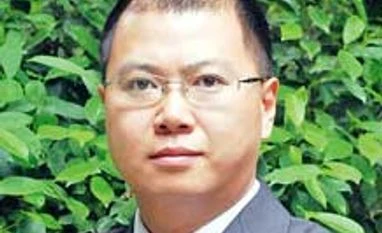 "Exchange-rate dynamics bringing down Chinese companies' cost benefits: Li Qi")


 Connect with us on WhatsApp