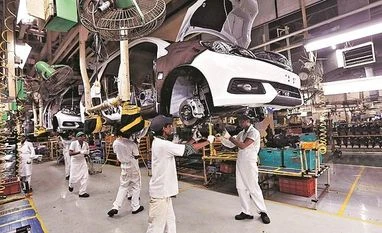
Greaves Cotton, a diversified engineering company and an engine maker for various automobile manufacturers, is evolving its mobility strategy to address the future needs of the vehicle industry, including CNG and electric vehicles. The company, which operates in four verticals -- mobility, farm, power and energy and after market -- expects mobility solutions to continue to play a major role in its future growth.
The company currently supplies around 400,000 engines a year to almost all original equipment manufacturers in the country and touches 100,000 passengers a day. It has 500,000 tonnes of cargo moving on its engines a day.
As part of expanding its reach to energy sources other than petrol and diesel, the company has entered the CNG engine segment in three-wheelers, and currently sells over 1,000 engines a month. It has also signed an pact with Pinnacle Engines to bring a state-of-the-art CNG engines to the Indian market within the BS-VI timeline.
The firm is also looking at hybrid and electric mobility and has started working with a few partners in the area of powertrain and charging and battery swapping technologies. Greaves Cotton has made some headway with these partners. It was as part of this expansion that the company bought majority stake in Coimbatore-based EV firm Ampere, in which Ratan Tata is an investor.
The move would help the company serve about 200 million people in the Rs 40,000-50,000 monthly income range, apart from reaching out to others looking for affordable mobility. Then there are those who commute between point A and Point B such as college students, who essentially want stylish, yet affordable vehicles such as two-wheelers, or housewifes looking for freedom and convenience. In diesel, the company is on its way to produce BS-VI engines, which has been mandated by April 2020.
"I think we are in an exciting phase of transition, where like a set diesel engine company is moving towards becoming a solutions and services company," said Nagesh Basavanahalli, chief executive officer and managing director of Greaves Cotton.
"The mobility segment is kind of evolved now. We have transitioned from being a diesel engine manufacturer to becoming a diesel plus CNG plus petrol plus hybrid/electric player in both two-wheeler and three-wheeler options. We are participating in the next wave of growth as EVs are beginning to take off," he added.
Greaves Cotton, with its numerous touch points across the country and service network, sees a synergy with Ampere, and seeks to develop technologies such as battery swapping or fast charging in future. It is working out the details of a five-year plan and to grow this business and reach Rs 1 billion. It achieved Rs 180-200 million last fiscal, and is expecting around Rs 400-500 million this year.
Ampere, promoted by Hemalatha Annamalai, has had investments from veteran industrialist Ratan Tata and Infosys Co-founder Kris Gopalakrishnan. Greaves Cotton will have up to 60-70 per cent of the total shares at a price of about Rs 770 million. It has option to go for 80 per cent in future.
The company had about 3,000 plus outlets a few years ago and has expanded pan-India to around 5,000 outlets. This would help it expand the distribution network for electric scooters and build the spares and aftermarket support through Greaves Care and service. Greaves Care, in fact, is also setting up the infrastructure for electric charging. As part of its mobility strategy, it can help the parent company scale up and offer a value proposition to the consumer, Basavanahalli said.
Apart from mobility, the company is present in the aftermarket business, light agri-equipments and mini tractors in the farm segment, and diesel pump sets and engines under its power and energy business. In gensets, the company is expanding its range from 500 KVA towards 1200 KVA, to becomer an end-to-end player in this market.
Almost 50 per cent of Greaves Cotton's business is engines and the rest is comes from other verticals.
"This trigger happened a couple of years ago when we came on board. I think the board was looking for profitable growth and it was in 2016 that we built a new management team. We are fortunate to have a lot of people from MNCs heading the different businesses...The trigger was then that we get into the profitable growth segments and become a diversified engineering company," Basavanahalli added.
While its cashflow is strong enough to fund some of its incremental technology and development, it is planning a capex of Rs 1 billion for the next 12-18 months, for new projects including engines programme.