Indian Oil investing over Rs 120 bn in Haldia refinery, pipeline

Firm seeks to improve Haldia refinery to roll out BS Stage VI fuel; pipeline will extend from refinery and link bottling plants in Durgapur, Kalyani and Budge Budge
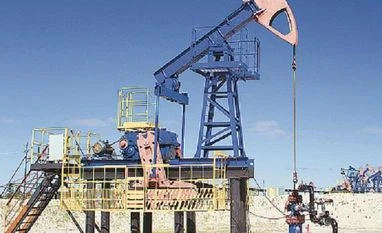
oil
Avishek Rakshit Kolkata
Last Updated : Jul 23 2018 | 8:22 PM IST
State-owned Indian Oil is in the process of investing Rs 120.85 billion in West Bengal to operationalise a liquid petroleum gas (LPG) pipeline, which will extend from its refinery in Haldia in this state and link its bottling plants in Durgapur, Kalyani and Budge Budge, and to improve the Haldia refining facility to roll out BS Stage VI compliant fuel for vehicles.

Dipankar Ray, the company’s executive director for West Bengal, said that Rs 43.25 billion is being spent on this pipeline project, which in effect will not only increase the logistical capability of the company as LPG can be transported directly from Haldia to the bottling plants without any hassles but will also help it reduce road accidents and other untoward incidents during the transportation process.

This pipeline, which is part of the Rs 13.42 billion Dhamra-Haldia-Paradip LNG (DHPPL) pipeline, originates in Paradip in Odisha, where the LPG is imported and is then sent to Haldia. From here, the LPG is distributed across the eastern part of the country.

“This pipeline will first connect Durgapur and Kalyani and then connect our Budge Budge bottling facility. At a later date, it will be extended to Muzzafarpur (in Bihar)”, he said.

In West Bengal, against the national average of 84 per cent, LPG penetration stands at 81 per cent and the centre has given it a target to cover another 0.5 million LPG connections in this state across 7,600 villages.


It is also setting up of a greenfield LPG bottling plant in Kharagpur at an investment of Rs 1.6 billion. It is expected to be completed by March 2019 and will be bottling around 24,000 cylinders per day in the first phase and will supply to the districts of East and West Midnapore.

Another Rs 76 billon is being spent to upgrade the technological capability of its Haldia refinery to produce BS Stage VI fuel to meet the April 1, 2020 deadline – the rollout date as mandated by the centre.

Indian Oil, with sales of 1002 TMT (thousand metric tonne) has a 61.6 per cent market share in West Bengal.

Subodh Dakwale, the company’s spokesperson said that all of its 27,009 petrol pumps pan-India will be automated by the end of this fiscal year. So far, 10,547 such petrol pumps have been automated so far.

Dakwale explained that automation of petrol pumps will imply that data of vehicles and the movement of fuel stocks available with the petrol pumps will get “recorded” and the available stock can be better monitored.


One subscription. Two world-class reads.

Already subscribed? Log in

Subscribe to read the full story →
*Subscribe to Business Standard digital and get complimentary access to The New York Times

Smart Quarterly

₹900

3 Months

₹300/Month

SAVE 25%

Smart Essential

₹2,700

1 Year

₹225/Month

SAVE 46%
*Complimentary New York Times access for the 2nd year will be given after 12 months

Super Saver

₹3,900

2 Years

₹162/Month

Subscribe

Renews automatically, cancel anytime

Here’s what’s included in our digital subscription plans

Exclusive premium stories online

  • Over 30 premium stories daily, handpicked by our editors

Complimentary Access to The New York Times

  • News, Games, Cooking, Audio, Wirecutter & The Athletic

Business Standard Epaper

  • Digital replica of our daily newspaper — with options to read, save, and share

Curated Newsletters

  • Insights on markets, finance, politics, tech, and more delivered to your inbox

Market Analysis & Investment Insights

  • In-depth market analysis & insights with access to The Smart Investor

Archives

  • Repository of articles and publications dating back to 1997

Ad-free Reading

  • Uninterrupted reading experience with no advertisements

Seamless Access Across All Devices

  • Access Business Standard across devices — mobile, tablet, or PC, via web or app

Next Story


