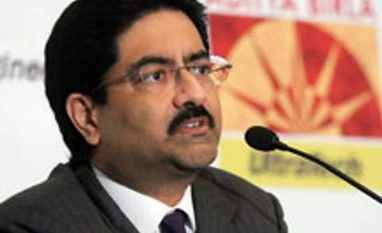
Kumar Mangalam Birla is the latest billionaire with plans to enter the burgeoning Indian online market that is set to grow sevenfold in four years.
The chairman of the $40 billion Aditya Birla group, which is engaged in businesses from mining and financial services to telecommunications, is open to either acquiring e-retailers or building one from scratch, Birla said in a November 10 interview at his Mumbai corporate headquarters.
"There's a lot of ground for new ventures in e-commerce," he said. "I am not saying that we can take an Amazon head-on. But there are a lot of green spaces." Surging internet access in the world's fastest growing smartphone market is buoying online shopping and luring investors including Amazon.com Inc's Jeffrey Bezos and SoftBank Corp's Masayoshi Son. SoftBank last month announced an investment of $627 million in Indian e-retailer Snapdeal.com, while Amazon said in July that it plans to spend $2 billion in India.
Birla, 47, joins peer Mukesh Ambani, whose Reliance Industries is planning to start "multi-channel shopping in the coming year," according to its annual report published in May. "The potential of e-commerce combined with the network of physical store locations" will offer its customers both choice and convenience, the report said without elaborating.
Birla declined to reveal more on his e-commerce plans. The group is looking at many business verticals and has "not zeroed-in on any" specific one yet, he said. Online sales in Asia's third-largest economy will jump sevenfold to $22 billion by 2018, according to estimates by CLSA Asia Pacific Markets.
Snapdeal runs an e-commerce marketplace where about 50,000 sellers offer a wide range of goods, from condoms to apparel and shoes. The company, founded in 2010, has raised $1 billion this year from investors including EBay, Indian billionaire Azim Premji and former Tata group chairman Ratan Tata, besides SoftBank. The Japanese company has said it intends to invest $10 billion in India in the coming years.
Market leader Flipkart Online Services, a rival of both Snapdeal and Amazon in India, in July raised $1 billion from existing investors including Tiger Global Management LLC, South Africa's Naspers Ltd., Singapore's sovereign wealth fund GIC Pte. and Russian billionaire Yuri Milner's DST Global.
Any consumer-facing industry is undergoing a lot of technology disruption right now," said Ankur Bisen, senior vice president for retail and consumer goods at Technopak Advisors, by telephone. "Earlier such changes were treated like blips on the radar by these conglomerates. Now, they draw serious attention from these investors. It is a sign of changing times."
Alibaba Group Holding, China's biggest e-commerce operator, saw a record $9.3 billion in sales on November 11 during its Singles' Day promotion. The annual event has also inspired Web retailers in India to replicate the same culture.
The first four pages of the Times of India newspaper's Mumbai edition on November 11 were devoted to advertisements by Amazon and Snapdeal, promising a big one-day sale. Flipkart did a similar promotion on October 6, and christened it the Big Billion Day sale, though the event was marred by server crashes and lost orders.
Retailers Adapt
Some of the traditional retailers in India are adapting. Kishore Biyani's Future Group has announced a partnership with Amazon India, through which it will exclusively sell its wares online. Amazon has expressed interest in tying up with local mom & pop stores in India, top government minister Ravi Shankar Prasad said Nov. 11 after meeting executives from the Seattle- based company in New Delhi.
The sector has the potential to grow 10 times to $30 billion in five years, allowing enough room for newer entrants such as Birla, said Bisen.
For every 100 rupees ($1.6) spent on e-commerce, about 35 rupees is spent on accompanying services, according to a Nov. 5 report by Motilal Oswal Securities Ltd. That benefits companies involved in third-party logistics, warehouses, payments and digital advertising, Motilal said.
The report drew parallels between India and China, where e- commerce has grown at a cumulative annual rate of 76 percent from 2003 to $306 billion.
Birla is looking for investors in his existing bricks-and- mortar retail businesses, which include the "More" chain of supermarkets and Pantaloons apparel stores. Still, he said e- tailing is the way forward.
'It reflects the new India. It's about new lifestyles, new spending patterns, it's about new family structures,'' he said. "And we want to be in that space." --With assistance from Adi Narayan in Mumbai.

 "Kumar Mangalam may join the Indian e-tail bandwagon")


 Connect with us on WhatsApp