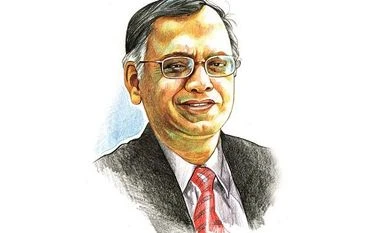
“I am disappointed,” came the terse note from N R Narayana Murthy in late October. The Infosys founder was unhappy with the decision made earlier in the day by Nandan Nilekani, his protege and co-founder at the helm as chairman, to not make public inquiry reports that looked into the severance pay given to former chief financial officer Rajiv Bansal and the $200 million acquisition of Panaya, an Israeli technology firm.
But the note also hinted at burying the hatchet in a fight that resulted in the company’s reputation taking a beating and questions being raised over its professional ethics. “Sadly, it appears we will no longer know the truth,” wrote Murthy as he drew curtains over the tumult and transition that plagued the information technology company for the better part of 2017.
The year saw Murthy making a come back to Infosys once again, this time from the outside. Murthy, who had built Infosys on the cornerstone of transparency and corporate integrity and won international admiration for it, had hoped the company would continue to uphold these values beyond the founders. So, when a slip in mandatory disclosures to shareholders and exchanges triggered allegations of wrongdoing, he couldn’t just watch from the sidelines.
At the heart of the problem was the irregularity in the Panaya deal, a company Infosys acquired in 2015. What lent itself to doubts was the exit of former chief financial officer Rajiv Bansal because of differences over the deal, and his subsequent Rs 23 crore severance package..
Murthy, who retired from the company in 2011, first raised the red flag last year. He asked why the board led by R Seshasayee and Sikka did not disclose the severance pay to Bansal —ten times the standard Infosys contract.
Fresh disclosures this year that compliance chief David Kennedy had resigned over disagreement with the severance package, brought things to a head, with Murthy bringing his differences with the board out in the open. He slammed the board for the lapses and asked Seshasayee for accountability. The Infosys board backed both Sikka and Seshasayee and asserted that there were no governance lapses. However, acting on a whistle-blower email to market regulators in the US and India seeking probe into the Panaya acquisition, Infosys hired Gibson Dunn & Crutcher, a US-based law firm, to conduct forensic investigations into the deal.
However, this wasn’t the only issue Murthy had with the board. There were other problems related to salaries of top managers. He raised the issue of increasing the compensation of Pravin Rao, chief operating officer, by 60 per cent while most employees were being given a 6-8 per cent increment. “This is grossly unfair to the majority of Infosys employees,” he wrote in April. The board and Sikka claimed harassment and termed his interference “continuous assault.”
Amid all this, Infosys’ financial performance nose-dived and it lagged behind industry growth. But Murthy’s activism hasn’t gone in vain. Infosys has begun to make its policies more transparent, including compensation packages.
In July, Gibson Dunn & Crutcher, gave a clean chit to Sikka on the deals, but Infosys cited confidential reasons for not making the report public. Murthy, of course, wanted everyone to see the findings. The fallout of all this was Sikka’s resignation in August. Infosys’ founders and investors reached out to Nandan Nilekani to steady the ship. Nilekani promised to lift the gloom. In October, he, too, gave a clean chit to Sikka, but shied away from making the report public. Murthy sees hope in Nilekani and seems to have put the matter to rest after the initial outrage.
“Absolutely, all is well,” Murthy said in November . “I said in my speech to investors that now we have Nandan (Nilekani) as chairman, we can all sleep well.”
Murthy did not want to comment on Infosys for this article. However, he was forthcoming with his views on good corporate governance. It’s a subject close to his heart and an obsession that he acquired from his school teacher father.
“A culture of fairness, openness to good ideas, meritocracy, speed, innovation, good work ethic, transparency and accountability are the bedrock of good governance. Good governance is not mere empty rhetoric,” he said.
“It is about admitting one’s mistakes proactively and early, taking quick and firm corrective actions however unpleasant they may appear to be, and learning from such mistakes.”