Tata Sons Chairman N Chandrasekaran sees 2019 as a year that will bring a number of macro challenges. In a year-end note to employees, Chandra cautioned everyone to brace for challenges and “run the marathon” instead of “getting distracted by other’s sprint”.
“As the economic cycle matures in developed economies, global growth will rely increasingly on momentum in the emerging markets,” he said, pointing out that this heightened concerns around country risk, liquidity trends and trade-related shocks at a time when China’s growth impulse is slowing. He also said global liquidity would be tighter going into 2019, while political uncertainty remained high with the upcoming elections in India.
Chandra’s statement comes amid global headwinds facing Tata Motors’ UK subsidiary, Jaguar Land Rover — the toughest since the Tata Group flagship acquired it from Ford Motor in 2008. The carmaker is battling multiple challenges from uncertainty around Brexit and contraction in volumes of diesel cars in Europe, to slowing sales in China, one of its largest and most profitable markets.
He said while most of the macro headwinds were beyond their control, the group needed to have a sharp focus on what could be controlled by managing costs, creating an operational and capital structure. The global shifts, he said, could also be managed by harnessing the scale, synergy, digital depth, operational focus and agility. He said the process of simplification, synergising and scaling, underway for almost two years, has yielded results. During the year, the group made significant headway in strengthening its balance sheet and building healthy cash flows. To meet these objectives, the group committed over Rs 700 billion to deleverage and restructure Tata companies, consolidate cross-holdings, acquire strategic assets, and infuse much needed capital for future growth. The group’s collective market capitalisation crossed Rs 10 trillion in 2018.
Among other things, Chandra, in his one-page letter, also assured staff of a safe, dignified and cordial working environment and the company’s zero tolerance on harassment. The assurance came in the wake of ‘MeToo’ allegations against an employee who was eventually eased out.
Chandra said that the group was one of the largest employers of women — 186,000 of the 702,000 employees are women.
“While talent is normally distributed, all too often opportunity is not and there is a need to fix this at individual, institutional and global level. The role of women in workforce and participation in decision-making structures is mission-critical for our collective future,” he said.
Read this article for free
Register to continue reading premium journalism and analysis from Business Standard.

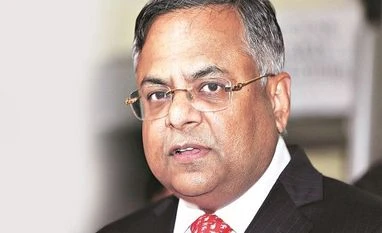 "Tata Sons chairman N Chandrasekaran cautions on macro challenges in 2019")











