Tata Steel achieves full ramp-up at Kalinganagar, plans cold rolling mill

The steel company has invested Rs 25,000 crore on Kalinganagar project
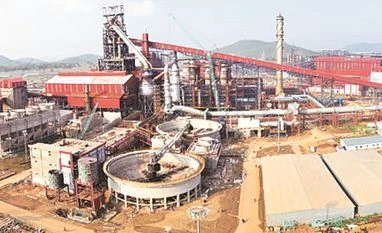
Tata Steel, Kalinganagar mill
Despite Kalinganagar mill being in ramp-up phase, 46% of Tata Steel's revenue is derived from branded products.
Jayajit Dash Bhubaneswar
Last Updated : Nov 14 2017 | 9:11 PM IST
Tata Steel said it has achieved full-ramp of its first phase envisaged capacity of three million tonnes at the Kalinganagar project in Odisha.

“We are now running with the full rated capacity (three million tonnes). There is 100 per cent capacity utilisation”, said Rajiv Kumar, vice president (Kalinganagar project), Tata Steel.

Tata Steel had started commercial production at Kalinganagar greenfield plant in May last year. Since then, the steel maker had not touched peak production capacity though it came almost close to the rated capacity levels.

The Kalinganagar steel project would be devoted entirely to manufacturing flat steel products. In the second phase operations, the steel major intends to develop a cold rolling mill for producing automotive grade steel, Kumar said.

Tata Steel is yet to take a call on the final capacity of the Kalinganagar steel mill. The capacity could be either six million tonnes per annum (mtpa) or eight mtpa. The final contours of the second phase operations are being worked out by the engineering team. Tata Steel board is actively considering the second phase plan.

The steel company has invested Rs 25,000 crore on Kalinganagar project. Asked on the second phase investments, Kumar said, the figure could be known after the board approves the expansion plan.

Justifying the need to expand, Kumar said, the country today has steel production of 90 million tonnes with Tata Steel having a share of 15 per cent. “There is enough demand for steel in the country and in the years to come, the demand will grow. If we don’t add capacity, our share in the overall steel production would not grow”, he added.

Ramp-up of Kalinganagar steel capacity is expected to enhance productivity for Tata Steel and potentially position it as the most productive steel unit in the country. The expansion is also poised to bring in cost savings through economy of scale.

“We are trying to emulate Posco in terms of productivity. As of now, Posco scores much higher on productivity as they have the advantage of scale. We intend to be the benchmark in productivity. The Kalinganagar plant is designed in such a way that movement of material from one spot to the other is achieved with minimal energy usage. There are many ways of reducing cost and we already have some of them at our plant”, Kumar explained.

The Kalinganagar plant is currently exporting 60,000 tonnes of normal grade steel. Higher grade is supplied domestically.
 

One subscription. Two world-class reads.

Already subscribed? Log in

Subscribe to read the full story →
*Subscribe to Business Standard digital and get complimentary access to The New York Times

Smart Quarterly

₹900

3 Months

₹300/Month

SAVE 25%

Smart Essential

₹2,700

1 Year

₹225/Month

SAVE 46%
*Complimentary New York Times access for the 2nd year will be given after 12 months

Super Saver

₹3,900

2 Years

₹162/Month

Subscribe

Renews automatically, cancel anytime

Here’s what’s included in our digital subscription plans

Exclusive premium stories online

  • Over 30 premium stories daily, handpicked by our editors

Complimentary Access to The New York Times

  • News, Games, Cooking, Audio, Wirecutter & The Athletic

Business Standard Epaper

  • Digital replica of our daily newspaper — with options to read, save, and share

Curated Newsletters

  • Insights on markets, finance, politics, tech, and more delivered to your inbox

Market Analysis & Investment Insights

  • In-depth market analysis & insights with access to The Smart Investor

Archives

  • Repository of articles and publications dating back to 1997

Ad-free Reading

  • Uninterrupted reading experience with no advertisements

Seamless Access Across All Devices

  • Access Business Standard across devices — mobile, tablet, or PC, via web or app

Next Story



