
Tata Steel forays into scrap business, to set up process unit in Gurgaon
The unit is expected to grow into a Rs 10 billion business in 6 to 8 years
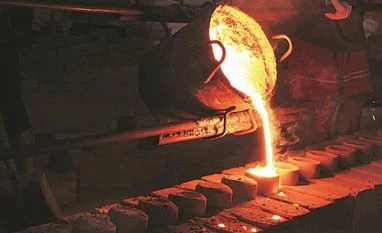 "Tata Steel forays into scrap business, to set up process unit in Gurgaon")
premium
Explore Business Standard

Associate Sponsors
Co-sponsor
The unit is expected to grow into a Rs 10 billion business in 6 to 8 years
The unit is expected to grow into a Rs 10 billion business in 6 to 8 years and mostly process the off-road cars, other vehicles and retired white goods in the NCR to produce scrap.
"Given the limitation of using scrap for steel making in the blast furnace route, 7-10% of our blast furnace charge can be scrap or scrap equivalent," said Anand Sen, President, TQM & Steel Business, Tata Steel.
Sen said, as the economy grows, the scrap inventory is going up. More than 100 million cars are sold every year world-wide. After sometime, these are retired. China has been producing more than 500 million tonne of steel per annum for last 10 years. At least 50 per cent of that comes back as scrap in a span of 8 to 10 years.
"Scrap so far has been an unorganised sector, with no control over quality, run by middlemen. We see an opportunity to do this in an organised way," Sen said on the side-lines of Asia Steel International Conference co-hosted by Tata Steel and the Indian Institute of Metals here.
If the Gurgaon unit works well, the company plans to set up similar units in Pune, Sanand, Chennai and other auto hubs and metro cities where possibility of scrap generation is high.
Tata Steel's Singapore arm NatSteel already has own scrap processing facility for its electric arc furnaces, which use higher quantity of scrap compared to blast furnaces, that run on iron ore and coking coal as feed.
With the government norms on CO2 emissions becoming stringent, steel making through electric arc furnaces, where the emission is comparatively less, has become an attractive proposition. "There are three main drivers we see making this possible. Among them, CO2 is the first. The second, we expect the cost of power, which electric arc furnaces will require more of, to get cheaper", Sen said.
He said, Tata Steel (Europe) and Rio Tinto have developed with the support of EUROFER (the European steel association) a new steelmaking technology called HIsarna, which is developed and tested at the company's Ijmuiden plant in Holland.
On the lines of patented technologies like Siemens VAI's Corex and Posco's Finex, the "breakthrough" technology doesn't require coking coal, which India mostly imports. Moreover, the CO2 emission is 20 per cent less, he said.
Sen said, Tata steel has developed a new high tensile steel product, HS 800 mpa, which has caught the imagination of the market and is doing extremely well. However, Rebars, which account for 64 % of sale had not been doing very well in the last 4-5 months
On products for the defence sector, he said, there are challenges in supply chain management, requiring specialised, high quality steel, but in very small amount. He said, the company has recently developed a new product to be used in armours which has got inquiries from the Indian army.
Already subscribed? Log in
Subscribe to read the full story →

3 Months
₹300/Month
1 Year
₹225/Month
2 Years
₹162/Month
Renews automatically, cancel anytime

Over 30 premium stories daily, handpicked by our editors


News, Games, Cooking, Audio, Wirecutter & The Athletic
Digital replica of our daily newspaper — with options to read, save, and share


Insights on markets, finance, politics, tech, and more delivered to your inbox
In-depth market analysis & insights with access to The Smart Investor


Repository of articles and publications dating back to 1997
Uninterrupted reading experience with no advertisements


Access Business Standard across devices — mobile, tablet, or PC, via web or app
First Published: Feb 12 2018 | 10:13 PM IST

