Startek, a US-headquartered business process management (BPM) services company, with a sizable presence in India, says over 90% of its employees in the country have resumed work with salaries fully restored. Post the lockdown, the NYSE-listed firm which mostly caters to domestic businesses in India, had furloughed 45% of its employees. In an interview, the company’s president, Rajiv Ahuja, talks about the firm's strategy in India during the lockdown and how successful it has been. Edited Excerpts:
Are you back at pre-Covid levels yet as far as your operations in India are concerned?
No, we are not back at pre-Covid levels as yet. A number of industries got hit due to the lockdown, including retail, automobiles, travel and hospitality. While demand has picked up after the lifting of the lockdown, it has not happened in these industries. However, it was balanced owing to surge in demand in e-commerce, BFSI, healthcare and food delivery. In order to meet this, we had to hire extra people and train them to work from home as in a number of cities, mass transportation is yet to resume.
You could have retrained your existing employees, who work for clients in sectors likes travel and hospitality. Why did you go for fresh hiring?
In many cases, clients decide where they want the employees working for them to be located. Let’s assume, I have a thousand people in Bengaluru working for clients belonging to a particular sector and they are all on the bench. I can redeploy them if the client wants to build a team to work out of Gurgaon. Secondly, if I shift this workforce to a new process, tomorrow when there is a pickup in these industries, I will have to go out and hire a fresh batch and train them all over again.
How are you managing the people who are not working on any project?
We’ve gone to a no-work-no-pay model. Around March 26, when the lockdown was imposed (in India), we realised that the health crisis would not go away in a few weeks. We knew, any decision we take, will become a precedent in times to come. We had to decide whether we could afford to carry on with the bench for the next 8-12 months (without any work), or put them on ‘no-work-no-pay’ mode without putting them in the ranks of the unemployed. We chose the second option in the interest of greater good so that a person will have that security that he is still a part of a company.
What is the percentage of furloughed employees, who are back at work now?
At the peak of the lockdown in April, we just had around 55 per cent of our workforce working for various clients. This has now touched 90 per cent. Around a third of our global workforce is located in India and 70 per cent of the work they do is for domestic clients. Around 55 per cent of our employees are working from home now and 36 per cent from brick and mortar centers.
Did your India headcount go up in past few months owing to the surge in demand?
Yes. In the past two months, we’ve hired about 1,500 people, largely to cater to demand from industries such as e-commerce, food delivery, financial services and insurance. And we continue to see, a month on month rise in these sectors. In fact, Startek is the first (BPM) company in India to Uberize this industry. In the last couple of months, over 800 people have joined our workforce with their own laptops, especially from smaller cities.
Is it basically, what is known as, BYOD (Bring your own device)? What is the rationale behind this?
Uber taught us that one can also run one of the largest cab companies without owing a single cab, being asset light. The reasons behind this were - we had to conserve cash and we also needed to change the way this business is run, in order to bring change. So if a guy from Bellary (a district in Karnataka) signs up with Uber, he buys the car for say $10,000 or gets it financed, why can’t his younger brother, who is coming and joining me, invest $400 to buy his own laptop? Moreover, when the ownership and upkeep of the laptop is mine and maintenance is also my problem, this leads to productivity loss.
Has your employee productivity gone up due to WFH?
There is some impact from the productivity standpoint, but there is no adverse impact as far as the quality of work is concerned. In fact, attrition numbers have dropped by more than a half. I think ‘work at home’ is a brilliant model for the future. If you look at the other side, at some point of time, we will be in a position to give up expensive real estate that we are occupying right now. The future of work, according to me, will be hybrid -- work from home and brick and mortar. We expect this ratio to be 30:70 for us.

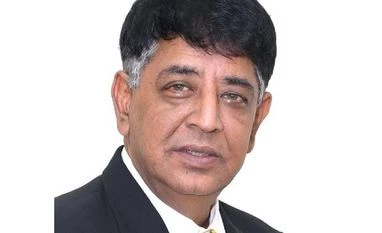 "We're seeing huge demand from ecommerce, BFSI, says Startek's Rajiv Ahuja")












 Connect with us on WhatsApp