
5 Bihar villages to be developed into human-carnivore coexistence zone
Five villages of the Valmiki Tiger Reserve in West Champaran district of Bihar will be developed into a model human-carnivore coexistence zone
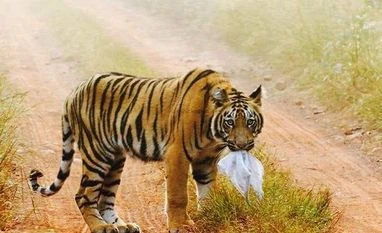 "5 Bihar villages to be developed into human-carnivore coexistence zone")
WebinarsNew
Deep DiveNew
Explore Business Standard
Five villages of the Valmiki Tiger Reserve in West Champaran district of Bihar will be developed into a model human-carnivore coexistence zone
Five villages of the Valmiki Tiger Reserve in West Champaran district of Bihar will be developed into a model human-carnivore coexistence zone, with the state government joining hands with the Wildlife Trust of India, a Nepalese organisation and a UK-based zoo for the project, officials said.
The objective of the project is to end the human-carnivore conflict in the Valmiki-Chitwan-Parsa transboundary landscape, they said.
The WTI, National Trust for Nature Conservation (NTNC-Nepal) and Chester Zoo (UK) had jointly applied for the project and sought a letter of support from the Environment, Forest and Climate Change Department, said P K Gupta, Bihar's Chief Wildlife Warden.
The department has given its go-ahead for the initiative, he told PTI.
The Chester Zoo has been actively working on human-wildlife conflict worldwide for the last several years, including in Terai in Nepal, where human-tiger conflict is a matter of concern, Gupta said.
Human-wildlife conflict is among the most severe threats to many species around the world, he said.
The project will focus on community engagement, develop methods to reduce livestock depredation and alter village practices and behavioral issues, Gupta said.
The three-year initiative will start in 2023.
The Valmiki Tiger Reserve was recently in news as a man-eater tiger that had killed nine people and scores of domestic animals, was shot dead in October this year.
The reserve plays a critical role in maintaining genetically robust populations of tigers, Gupta said.
According to wildlife experts, the forest corridors between India and Nepal are extensively used by tigers and other large mammals.
The state government has taken several measures to protect the habitats of the big cats and conserve its population based on the National Tiger Conservation Authority's guidelines, the official added.
The tiger population of the state jumped by over 50 per cent between 2014 and 2018, from 32 to around 50, official data showed.
(Only the headline and picture of this report may have been reworked by the Business Standard staff; the rest of the content is auto-generated from a syndicated feed.)
First Published: Dec 04 2022 | 6:35 PM IST


 Connect with us on WhatsApp