
Air pollution may trigger lung cancer in non-smokers, discover scientists
Scientists have discovered a new mechanism through which very small pollutant particles in the air may trigger lung cancer in people who have never smoked
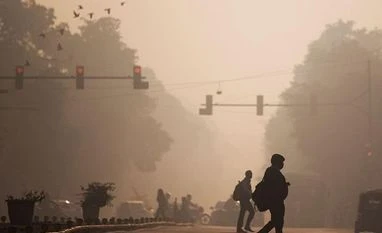 "Air pollution may trigger lung cancer in non-smokers, discover scientists")
WebinarsNew
Deep DiveNew
Explore Business Standard
Scientists have discovered a new mechanism through which very small pollutant particles in the air may trigger lung cancer in people who have never smoked
Scientists have discovered a new mechanism through which very small pollutant particles in the air may trigger lung cancer in people who have never smoked,
Particles linked to climate change also promote cancerous changes in airway cells, they found, paving the way to new approaches for lung cancer prevention and treatment.
Scientists of the Francis Crick Institute and University College London, funded by Cancer Research UK, presented the data at the 'ESMO Congress 2022'.
According to them, the particles which are typically found in vehicle exhaust and smoke from fossil fuels, are associated with non-small cell lung cancer (NSCLC) risk, accounting for over 250,000 lung cancer deaths globally per year.
"The same particles in the air that derive from the combustion of fossil fuels, exacerbating climate change, are directly impacting human health via an important and previously overlooked cancer-causing mechanism in lung cells," they informed.
The risk of lung cancer from air pollution is lower than from smoking, "but we have no control over what we all breathe".
"Globally, more people are exposed to unsafe levels of air pollution than to toxic chemicals in cigarette smoke, and these new data link the importance of addressing climate health to improving human health," said Charles Swanton from the Francis Crick Institute.
The new findings are based on human and laboratory research on mutations in a gene called EGFR which are seen in about half of people with lung cancer who have never smoked.
In a study of nearly half a million people living in England, South Korea and Taiwan, exposure to increasing concentrations of airborne particulate matter (PM) 2.5 micrometres (Im) in diameter was linked to increased risk of NSCLC with EGFR mutations.
In the laboratory studies, scientists showed that the same pollutant particles (PM2.5) promoted rapid changes in airway cells which had mutations in EGFR and in another gene linked to lung cancer called KRAS, driving them towards a cancer stem cell like state.
"We found that driver mutations in EGFR and KRAS genes, commonly found in lung cancers, are actually present in normal lung tissue and are a likely consequence of ageing," said Swanton.
However, when lung cells with these mutations were exposed to air pollutants, "we saw more cancers and these occurred more quickly than when lung cells with these mutations were not exposed to pollutants", suggesting that air pollution promotes the initiation of lung cancer in cells harbouring driver gene mutations.
"The next step is to discover why some lung cells with mutations become cancerous when exposed to pollutants while others don't," said Swanton.
Tony Mok from Chinese University of Hong Kong, who was not involved in the study, said that the research is intriguing and exciting.
"It means that we can ask whether, in the future, it will be possible to use lung scans to look for pre-cancerous lesions in the lungs and try to reverse them with medicines such as interleukin-1I inhibitors," said Mok.
"We don't yet know whether it will be possible to use highly sensitive EGFR profiling on blood or other samples to find non-smokers who are predisposed to lung cancer and may benefit from lung scanning, so discussions are still very speculative," he added.
--IANS
na/ksk/
(Only the headline and picture of this report may have been reworked by the Business Standard staff; the rest of the content is auto-generated from a syndicated feed.)
First Published: Sep 10 2022 | 4:13 PM IST


 Connect with us on WhatsApp