Covaxin doses 50% effective against symptomatic Covid: Real-world study

Research does not estimate vaccine effectiveness against hospitalisation, severe disease, and death.
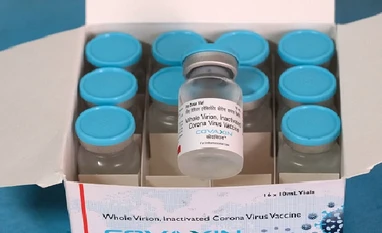
Covaxin
Covaxin
Sohini Das Mumbai
4 min read Last Updated : Nov 24 2021 | 11:28 PM IST
As an independent study by researchers based on real world assessment showed that Bharat Biotech’s Covaxin to be 50 per cent effective against symptomatic Covid-19 disease, experts say more real-world studies are required now. Real-world data, however, shows that vaccines are working against severe disease and hospitalisation, claimed experts.

The study titled ‘Effectiveness of an inactivated virus-based SARS-CoV-2 vaccine, BBV152, in India: a test-negative, case-control study’ assessed 2,714 hospital workers at the All India Institute of Medical Sciences (AIIMS) in Delhi, between April 15 and May 15. The workers were symptomatic and underwent RT-PCR test for Covid-19 detection. The results were published in The Lancet Infectious Diseases Journal.

Results of an interim study recently published in The Lancet showed that two doses of Bharat Biotech’s  Covaxin, also known as BBV152, had 77.8 per cent efficacy against symptomatic disease.

Explaining the difference between the headline efficacy number and the real world analysis on hospital employees, Jacob John, former head of Centre for Advanced Research in Virology at the Indian Council of Medical Research (ICMR) said that Bharat Biotech’s phase 3 trial was done on the general population, while the AIIMS study is on hospital employees who are highly exposed to the virus, especially during a raging second wave.

He added: “The vaccine efficacy against severe disease, hospitalization, ICU admission, or death is almost 100 percent. The 50% efficacy is against symptomatic Covid19 disease. No vaccine in the world is protecting against breakthrough infection. What is important to see is whether it is protecting against severe disease and hospitalizations.”

John feels that vaccines are more effective always after booster shots. The two-dose regimens are the initial dosing, and one needs to start giving booster doses to at least the vulnerable population, he feels.

The AIIMS study also noted that several factors might be responsible for the observation of a lower effectiveness in this study – study comprising only hospital employees who might have been exposed to higher risk of SARS-CoV-2 infection than the general population, research was conducted during the peak of India's second wave of COVID-19 with high test positivity rates for both hospital employees and residents of Delhi.Researchers also noted that the Delta variant was the dominant strain in India during the period this study was conducted. At that time the Delta variant approximately accounted for 80 percent of all confirmed Covid19 cases.

Of the 2,714 employees in the study population, 1,617 people tested positive for SARS-CoV-2 infection, the virus that causes COVID-19, and 1,097 tested negative.

Global Real-world vaccine studies:

In May 2021 Public Health England announced that two doses of AstraZeneca vaccine may be around 85% to 90% effective against symptomatic disease (which at that time was largely being caused by the Alpha variant). In an article published in Gavi in July, Linda Geddes notes that data from PHE suggests that Pfizer-BioNTech and Oxford-AstraZeneca vaccines were 96% effective against hospitalisation after 2 doses, whereas the Oxford/AstraZeneca vaccine was 92% effective against hospitalisation after 2 doses against the Delta variant.

A Chilean study of the Sinovac vaccine suggested that it was 65.9% effective at preventing infections, and 87.5% effective against hospitalisations.

Geddes noted that the reason why real-world effectiveness may vary is because of the emergence and spread of new variants in different countries.

“For instance, a vaccine effectiveness study from Qatar indicates that the Pfizer/BioNTech Covid-19 vaccine is 90% effective in preventing infection from the Alpha variant at least 14 days after the 2nd dose but 75% effective in preventing infection from the Beta variant at least 14 days after the 2nd dose. Data from health workers in Manaus, Brazil, where the Gamma variant accounted for 75% of infections, suggests that the Sinovac vaccine was 49.6% effective against symptomatic infection,” she explains.

  • Study conducted between April 15-May15
  • Assessed 2714 hospital workers at the  AIIMS, Delhi
  • AIIMS, Delhi vaccination started on January 16 exclusively with BBV152
  • Majority of approx 23,000 employees were vaccinated with Covaxin
  • Study shows 50% efficacy against symptomatic SARS-CoV-2 infection
  • 80% of cases during that period were infections caused by the Delta variant

One subscription. Two world-class reads.

Already subscribed? Log in

Subscribe to read the full story →
*Subscribe to Business Standard digital and get complimentary access to The New York Times

Smart Quarterly

₹900

3 Months

₹300/Month

SAVE 25%

Smart Essential

₹2,700

1 Year

₹225/Month

SAVE 46%
*Complimentary New York Times access for the 2nd year will be given after 12 months

Super Saver

₹3,900

2 Years

₹162/Month

Subscribe

Renews automatically, cancel anytime

Here’s what’s included in our digital subscription plans

Exclusive premium stories online

  • Over 30 premium stories daily, handpicked by our editors

Complimentary Access to The New York Times

  • News, Games, Cooking, Audio, Wirecutter & The Athletic

Business Standard Epaper

  • Digital replica of our daily newspaper — with options to read, save, and share

Curated Newsletters

  • Insights on markets, finance, politics, tech, and more delivered to your inbox

Market Analysis & Investment Insights

  • In-depth market analysis & insights with access to The Smart Investor

Archives

  • Repository of articles and publications dating back to 1997

Ad-free Reading

  • Uninterrupted reading experience with no advertisements

Seamless Access Across All Devices

  • Access Business Standard across devices — mobile, tablet, or PC, via web or app

Topics :CoronavirusCoronavirus VaccineBharat Biotech

Next Story



