
Covid-19 and diabetes: Different risks for people with type 1 and type 2
It is still unclear whether people with diabetes are more likely to catch the virus
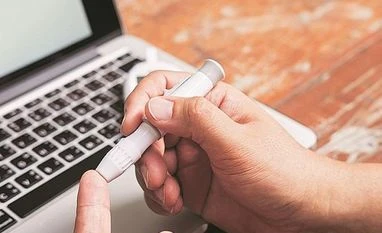 "Covid-19 and diabetes: Different risks for people with type 1 and type 2")
premium
WebinarsNew
Deep DiveNew
Explore Business Standard
It is still unclear whether people with diabetes are more likely to catch the virus
In early 2020, it seemed like people with diabetes were disproportionately dying with Covid-19, but the data provided more questions than answers. What type of diabetes did people have? Were people dying because the condition itself put them at greater risk, or because those with it tend to be older and have other illnesses? And what should people with diabetes do to protect themselves?
Now, researchers are harnessing data from NHS England to address these questions – and some of their findings are unexpected.
It is still unclear whether people with diabetes are more likely to catch the virus. We won’t know if this is true until sustained, widespread testing is rolled out. But we do know that a disproportionate number of people with the condition have been hospitalised with Covid-19. In the UK, data spanning February to April shows people with diabetes made up approximately 25% of hospitalised cases; that’s almost four times higher than the estimated rate of diabetes in the general population.
Once in hospital with Covid-19, data also shows that people with diabetes have worse outcomes than people without. The increase in risk is striking but isn’t necessarily surprising – people with diabetes are prone to worse outcomes from infections generally, as data from flu shows.
When it comes to Covid-19, early studies suggest people with diabetes are approximately twice as likely to be categorised as having “severe disease” and are more likely to be admitted to intensive care units. In England, one in four people who die in hospital with Covid-19 have diabetes.
Previous studies, however, didn’t shed light on the details behind these headline statistics, and didn’t break down data by diabetes type. We now have this information, and it shows a significant – and surprising – difference.
There are a number of possible explanations as to why outcomes are worse in type 1 compared to type 2.
First, the length of time someone has had diabetes might impact their vulnerability to Covid-19. Unlike type 2, people are most often diagnosed with type 1 at a young age (I was diagnosed at ten). In people hospitalised with Covid-19, someone with type 1 has likely had diabetes for much longer than someone with type 2. The longer someone has diabetes, the more likely they are to have complications, which include damage to the heart and kidneys.
Second, in type 1, your immune system attacks the cells that make insulin and you eventually stop making insulin altogether. Insulin is the hormone that helps the body process sugar in the blood. Type 2 isn’t a disease of the immune system. In type 2, your body makes insulin but is resistant to it. The immune systems of people with type 1 may be different from people with type 2, which could impact how people respond to infection.
Finally, data shows that higher blood sugar levels increase the risk of COVID-19. We know that on average blood sugar levels are higher in people with type 1 than with type 2 diabetes, because of the different nature of the diseases. Blood sugar levels can be even harder to manage when fighting infections.
But these are all just theories. We need more research before we know for sure how the type of diabetes impacts Covid-19 outcomes.
However, if the average 80-year-old is hospitalised with Covid-19, they have a 15% chance of dying. So, though diabetes does increase my risk, my age still remains the most important factor, by far, in determining my chances of dying with Covid-19. My risk at 80 would still be higher than someone of that age without diabetes, so both would need to be taken into account.
It is really important to note that these figures are not someone’s overall risk of dying from Covid-19, they are the risk of dying if they contract Covid-19 and if the infection is then severe enough to warrant hospitalisation.
But aiming for tighter blood sugar control can feel daunting. Now might be a particularly difficult time for people to manage diabetes, with disruptions in care, routines, activity, mental wellbeing and diet known to create challenges. Certain groups will face more challenges than others; both Covid-19 and diabetes disproportionately affect people from non-white ethnic groups and people from less advantaged backgrounds.
Support is available from healthcare providers and from organisations like Diabetes UK. Now more than ever, governments and healthcare systems need to ensure all people with diabetes get the support they need.
Jamie Hartmann-Boyce, Departmental Lecturer and Deputy Director of Evidence-Based Healthcare DPhil programme, Centre for Evidence-Based Medicine, University of Oxford
This article is republished from The Conversation under a Creative Commons license. Read the original article.
Already subscribed? Log in
Subscribe to read the full story →

3 Months
₹300/Month
1 Year
₹225/Month
2 Years
₹162/Month
Renews automatically, cancel anytime

Premium stories handpicked daily by our editors


News, Games, Cooking, Audio, Wirecutter & The Athletic
Digital replica of our daily newspaper — with options to read, save, and share


Insights on markets, finance, politics, tech, and more delivered to your inbox
In-depth market analysis & insights with access to The Smart Investor


Repository of articles and publications dating back to 1997
Uninterrupted reading experience with no advertisements


Access Business Standard across devices — mobile, tablet, or PC, via web or app
First Published: Jun 04 2020 | 10:53 AM IST


 Connect with us on WhatsApp