
Explainer: Why many farmers and politicians oppose govt's farm laws
Nearly 85% of India's poor farmers own less than 2 hectares (5 acres) of land, and they find it difficult to directly negotiate with large buyers of farm goods
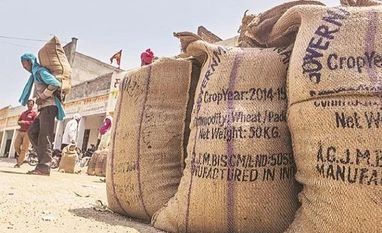 "Explainer: Why many farmers and politicians oppose govt's farm laws")
WebinarsNew
Deep DiveNew
Explore Business Standard
Nearly 85% of India's poor farmers own less than 2 hectares (5 acres) of land, and they find it difficult to directly negotiate with large buyers of farm goods
By Mayank Bhardwaj and Rajendra Jadhav
NEW DELHI/MUMBAI (Reuters) - India's parliament has approved new farm bills that the government says will unshackle farmers from having to sell their produce only at regulated wholesale markets and make contract farming easier.
Prime Minister Narendra Modi's cabinet had issued emergency executive orders in June to change the longstanding rules that govern the vast agriculture sector, which contributes nearly 15% of the output of the $2.9 trillion economy and employs around half of India's 1.3 billion people.
Opposition parties and farmers' organisations have criticised the government for rushing through the legislation by issuing the emergency orders and accused Modi's administration of getting parliamentary approval without proper debate, scrutiny and consultation.
WHICH IS THE MOST IMPORTANT FARM LAW AND KEY POINT OF CONTENTION?
Under the Farmers' Produce Trade and Commerce (Promotion and Facilitation) Bill, 2020 - one of the laws approved by parliament - growers can directly sell their produce to institutional buyers such as big traders and retailers.
Many farmer organisations oppose this, saying it will leave small growers with little bargaining power.
Nearly 85% of India's poor farmers own less than 2 hectares (5 acres) of land, and they find it difficult to directly negotiate with large buyers of farm goods.
Farmer leaders have said that wholesale markets, which play a crucial role in ensuring timely payments to small farmers, would lose their relevance and even gradually disappear if large buyers were allowed to buy directly from growers.
Without offering an alternative arrangement to small growers, such as private markets or direct-purchase centres, the new rule does not make any sense, growers have said.
India's grain bowl states of Punjab and neighbouring Haryana also fear that if big institutions start purchasing directly from farmers, the state governments will lose out on the tax that these buyers have to pay at wholesale markets.
BEFORE THE NEW LEGISLATION, WHAT PROHIBITED FARMERS FROM SELLING DIRECTLY TO LARGE BUYERS?
Under the Agriculture Produce Marketing Committee (APMC) Act, a law that dates back more than 55 years, it was compulsory for farmers to bring their products to more than 7,000 regulated wholesale markets where middlemen, or commission agents, helped growers sell harvests to either the state-run food procurement agency or private traders.
This was to protect farmers from being exploited by big institutional buyers.
The government now argues, however, that the middlemen of wholesale markets form an extra layer in the supply chain, and that their commission pushes up prices for consumers.
HOW DO REGULATED FOOD WHOLESALE MARKETS WORK?
Theses markets are run by local bodies which ensure the price of farmers' produce, including fruit and vegetables, is determined by auctions.
For rice and wheat, however, there is no auction as the government buys at guaranteed prices.
Every year, the government raises the price at which the Food Corporation of India (FCI) - India's state grain stockpiler and top buyer - buys rice and wheat from growers. Most farmers in Punjab and Haryana sell their rice and wheat to the FCI.
Some growers believe that, should wholesale markets start to lose relevance, private buyers could arm-twist farmers to sell at lower rates.
Commission agents help farmers grade, weigh, pack and sell their harvests to buyers. They also ensure timely payments to farmers.
For millions of rice and wheat farmers, the agents are also often a source of credit in hard times after drought, crop failure or even a daughter's wedding.
Many experts argue that agents, who form the backbone of wholesale markets, would lose their income if large buyers start buying directly from farmers.
(Reporting by Mayank Bhardwaj and Rajendra Jadhav; Editing by Pravin Char)
(Only the headline and picture of this report may have been reworked by the Business Standard staff; the rest of the content is auto-generated from a syndicated feed.)
First Published: Sep 21 2020 | 8:14 PM IST


 Connect with us on WhatsApp