
Extreme weather event seen on almost 90% days in first 9 months: CSE report
Himachal Pradesh logged the highest number of human deaths, according to a new report
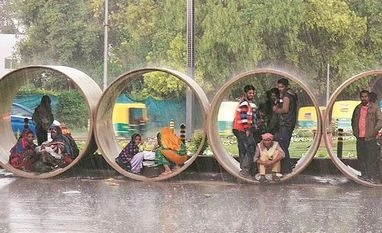 "Extreme weather event seen on almost 90% days in first 9 months: CSE report")
WebinarsNew
Deep DiveNew
Explore Business Standard
Himachal Pradesh logged the highest number of human deaths, according to a new report
India recorded an extreme weather event on almost 90 per cent of the days in the first nine months of this year, with Himachal Pradesh logging the highest number of human deaths, according to a new report.
These disasters claimed 2,775 lives, affected 1.8 million hectares (ha) of crop area, destroyed over 4,16,667 houses and killed close to 70,000 livestock, stated the report, 'Extreme Weather Report 2022', released by the Centre for Science and Environment (CSE).
This estimation of loss and damage is probably an underestimate as data for each event is not collated, nor are the losses of public property or crop loss calculated, the green think tank said.
"India recorded extreme weather events on 241 of the 273 days from January 1 to September 30 this year. This means that close to 90 per cent of the first nine months of this year, India had an extreme weather event breaking in one or more parts of the country," the report read.
At 140, Madhya Pradesh saw the highest number of days with extreme weather events and Himachal Pradesh logged the highest number of human deaths at 359. Madhya Pradesh and Assam saw 301 human deaths each.
Delhi reported four days of extreme weather events with lightning and storms, and three human deaths due to them. The national capital also logged two days with heavy rain, 28 heatwave days and seven coldwave days.
Assam reported the highest number of damaged houses and animal deaths.
Karnataka, which experienced extreme weather events on 82 days during the first nine months, accounted for more than 50 per cent of the crop area affected in the country, the report said.
Madhya Pradesh, according to official records, did not report any crop area damage. This could be due to gaps in loss and damage reporting.
The central region reported the highest number of days with extreme weather events at 198, followed by the northwest at 195.
In terms of human lives lost, the central region saw the highest number of deaths at 887, followed by the east and northeast region (783 deaths).
In 2022, India recorded its seventh wettest January since 1901. This March was the warmest ever and the third driest in 121 years. It was also the country's third warmest April, eleventh warmest August and eighth warmest September since 1901.
Eastern and northeastern India saw their warmest and driest July in 121 years. The region also recorded its second warmest August and fourth warmest September in 2022.
(Only the headline and picture of this report may have been reworked by the Business Standard staff; the rest of the content is auto-generated from a syndicated feed.)
First Published: Nov 01 2022 | 9:48 PM IST


 Connect with us on WhatsApp