
Gaganyaan: Isro's first manned space mission on schedule, says Raghavan
Initially, people asked why India was investing so much to send rockets in space, but Isro benefitted a lot from these investments, the principal scientific advisor said
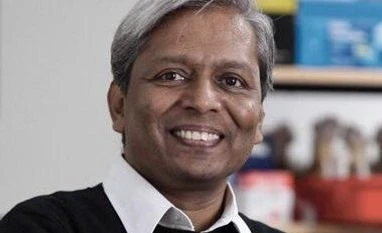 "Gaganyaan: Isro's first manned space mission on schedule, says Raghavan")
WebinarsNew
Deep DiveNew
Explore Business Standard
Initially, people asked why India was investing so much to send rockets in space, but Isro benefitted a lot from these investments, the principal scientific advisor said
The Indian Space Research Organisation will complete its first manned space mission on schedule as the programme was finalised a few years ago, K Vijay Raghavan, principal scientific advisor to the government of India, has stressed.
"This mission is not happening out of the blue, nor is it a coincidence. We were giving shape to this mission for a while," Raghavan told PTI-Bhasha in an interview.
One of the most distinguished biologists, Raghavan, 64, was appointed the principal scientific advisor in March.
The post of principal scientific advisor was created by the Atal Bihari Vajpayee government in 1999. The PSA is the topmost advisor to the government on scientific policy matters.
Since Prime Minister Narendra Modi announced on Independence Day this year that India will put a man or woman in the space on board 'Gaganyaan' by 2022, Raghavan said, Isro has been moving ahead to complete the mission as per the schedule.
He, however, acknowledged that the project is a challenge, but added India has the knowledge and expertise required to successfully complete this mission.
Asked about scientists advising the government to take help from countries such as the US and Russia for 'Gaganyaan' mission, he said the nature of science and technology is of collaboration.
"Russia and the US are leaders in space and science and technology. Discussions with them are natural," he said.
Raghavan dismissed questions raised about the money spent on expensive space missions. He said these questions are not new, questions were raised even during Isro's previous missions.
Initially, people asked why India was investing so much to send rockets in space, but Isro benefitted a lot from these investments, the principal scientific advisor said.
"We can anticipate the short-term and long-term benefits of this (Gaganyaan) mission," Raghavan said.
If India manages to link the manned mission with the startup sector and industry, it can become a leading technology mission anywhere in the world, he said.
India today has to import electronic spare parts and other equipment and "we can use this manned mission to promote domestic industry and science", he said.
Asked about training astronauts and developing the support system for the proposed manned mission, he said training is an important element as it helps in evolving the human psychology in challenging circumstances.
He stressed that the mission will propel India far ahead of others in the area of science and technology. It will also inspire the young generation and all Indians will be proud of it, he concluded.
First Published: Aug 27 2018 | 8:24 AM IST


 Connect with us on WhatsApp