Govt develops e-system for visitor access
Online entry pass app already launched; aimed at ensuring stricter monitoring and control of visitors
Surabhi Agarwal New Delhi The National Informatics Centre (NIC) has been quietly scripting history at its Lodhi Road headquarters over the past couple of months.
The state’s information technology (IT) arm has developed an application which will gradually replace the current cumbersome and leakage-prone system of visitor-pass generation by receptionists. Instead, this technology will allow visitors to register themselves online from anywhere and walk in through central ministries and departments with an ‘e-pass’.
The idea is to put in place a system with a mechanism for adequate screening of visitors when they enter government premises while de-congesting the front offices of these ministries, forever thronged by visitors. This initiative assumes importance, especially after the recent scandal involving theft of government documents from several offices.
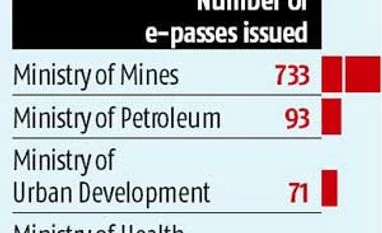
The application was launched a week ago and 67 central government offices are already on board, with about 3,500 officers and 4,900 people registering for it, said an official closely associated with the project. Through the application, a person can seek an online appointment directly through the portal with the officer concerned. Once granted an appointment, the person can print a receipt and get access to the ministry through the e-visitor pass. This will save people who already have appointments from waiting at the reception, which currently grants an access pass only after a confirmation call from the officer concerned.
The receipt will have bar codes printed on it. “The process of installing bar code readers is on,” added the official.
However, for now, the manual system of issuing passes will continue parallely with the online system.
The project was triggered after an IT-savvy bureaucrat requested NIC to develop the application for use by him. The cabinet secretariat gave directions to NIC to build one for all central government offices after an informal discussion on the success of the application.
A few months earlier, the government unearthed an alleged racket in stealing of documents from important departments and passing on confidential information to multiple users, including corporate houses, in return for monetary gains. The expose has led to severe tightening of access to government offices. Once the e-visitor pass application becomes popular among officials, it could become an effective tool for monitoring and controlling access.
The application could also arm the government with a centralised database on regular visitors to its various offices. Currently, some ministries and departments maintain computerised databases of their visitor profiles (containing the information such as address and phone number). However, the data is restricted to that ministry. The Supreme Court and high court here have already pioneered in an e-visitor pass system.
While the application is live, the challenge now is to get bureaucrats to use it, said the official quoted above. “It will require a big change in attitude, as well as process.”

 "Govt develops e-system for visitor access")


 Connect with us on WhatsApp